

How to avoid air holes during welding of NGW92-15-71 planetary gearbox base
The key to avoiding porosity in the welding of the NGW92-15-71 planetary gearbox base lies in strict pre welding cleaning, standardized welding material drying, optimization of process parameters, and improvement of environmental protection. Given the complex structure of this model and the need for long-term operation in high-temperature environments, any small pores may become stress concentration points, affecting sealing and safety. Therefore, it is necessary to implement a more stringent "zero defect" standard than conventional welding.1. Pre weld cleaning: eliminate gas sources
The primary causes of porosity are often oil stains, rust, and moisture on the surface of the workpiece. For precision components such as gearbox bases:
(1) Rust, oil stains, and oxide scales within a range of at least 20-30mm on both sides of the groove must be thoroughly removed until a metallic luster is exposed.
(2) If there is a coating or anti rust oil on the surface of the machine base, a special cleaning agent should be used to remove it, and direct welding is strictly prohibited. For machine bases made of cast iron or special alloy materials, attention should also be paid to removing surface adsorbed moisture.
Operation suggestion: It is recommended to use wire brushes, shot blasting or angle grinders for physical cleaning to ensure no dead corners.
2. Welding material management: Ensure dryness and purity
Moisture in welding materials is the main source of hydrogen porosity, especially for gearbox bases that require high strength:
Strict drying: Welding rods (especially alkaline low hydrogen type welding rods) must be dried according to the instructions. Normally, alkaline welding rods need to be dried at 350 ℃ -400 ℃ for 1-2 hours, taken as needed, and placed in an insulated cylinder.
Wire protection: If gas shielded welding is used, the surface of the wire must be free of rust and oil; The purity of protective gases (such as CO2 or argon) must meet the standard (argon purity not less than 99.95%). Before use, check whether the gas cylinder has accumulated water, and if necessary, invert and drain the water.
Flux treatment: If submerged arc welding is used, the flux must be dried at 250 ℃ -350 ℃ before use to prevent hydrogen porosity caused by moisture in the flux.
3. Process parameter optimization: controlling the behavior of the melt pool
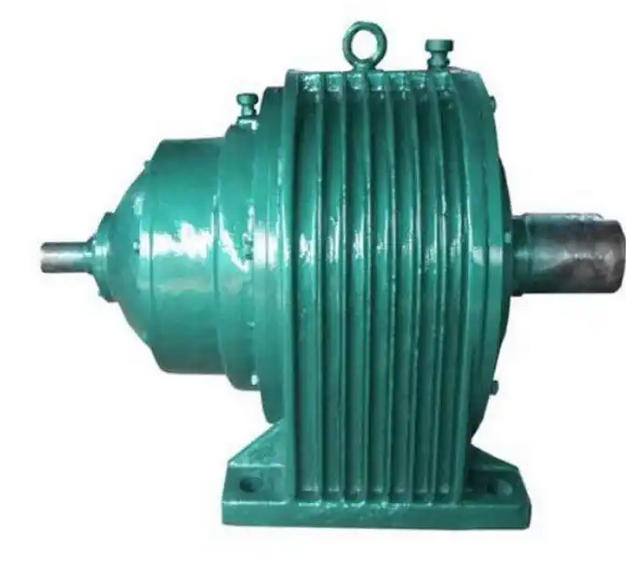
The NGW92-15-71 machine base has a large wall thickness and fast heat dissipation. It is necessary to match the parameters reasonably to ensure that the gas has enough time to escape:
Current and speed: Avoid welding with too little current or too fast welding speed, as this can cause the molten pool to exist for a short time and the gas to not float out in time. But the current should not be too high, so as not to cause gas to be trapped at the root of the weld due to excessive penetration.
Arc length: Adhere to short arc welding, especially when using alkaline welding rods. Long arc will damage the protective atmosphere and allow air to enter the molten pool.
Preheating and interlayer temperature: For thick walled machine bases, preheating before welding (such as 100 ℃ -150 ℃) can slow down the cooling rate, facilitate gas escape, and reduce the risk of cold cracks. When welding multiple layers, it is necessary to carefully remove each layer of welding slag to prevent slag inclusion from causing porosity.
Related News