
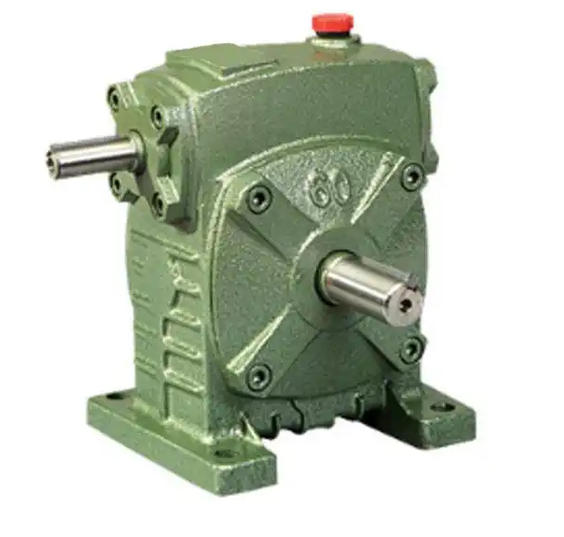
How to determine if the WP series worm gear reducer is overloaded
1. Abnormal temperature and heatingOverload is the most common cause of excessive temperature rise in gearboxes. When the gearbox continues to operate under conditions exceeding the rated torque, the gear contact stress and tooth surface friction power increase, and the heat generated will be greater than the heat dissipation capacity.
Touch judgment: You can make a preliminary judgment by touching the gearbox housing with the back of your hand. If the shell is too hot to be touched continuously for more than three seconds, it indicates that the heat dissipation has become unbalanced and the load is likely to exceed the standard.
Instrument temperature measurement: Use an infrared thermometer or thermal imaging device to monitor the temperature of the outer shell in the middle of the reducer. The normal temperature rise range is usually between 20 ° C and 65 ° C. If the temperature continues to rise or exceeds the warning value (>60 ° C), it is considered a dangerous temperature rise and the machine should be stopped immediately for investigation.
2. Increased abnormal noise and vibration
Overloading operation can alter the internal stress state of the gearbox, leading to mechanical noise and vibration.
Abnormal noise: When the device makes a buzzing or other abnormal noise, it is highly likely a signal of increased wear on the worm or worm gear. Overloading can cause increased friction on the tooth surface, resulting in abnormal sounds.
Vibration and jerking: Overload not only causes an increase in vibration values, but may also lead to an increase in reverse clearance. When switching between forward and reverse directions, if you feel a noticeable jolt or periodic abnormal noise, you need to be alert to whether the tooth surface has pitting or severe wear due to overload.
3. Load accounting and load shedding testing
Torque calculation: The most direct method is to calculate the actual load torque and confirm whether it exceeds the rated torque range of WP series reducers. It should be noted that when designing and selecting, one should not only consider the rated torque, but also take into account factors such as starting impact and continuous working system to avoid actual load exceeding the rated value due to "small horses pulling large vehicles".
Load shedding test: Trial operation can be conducted by reducing the operating load of the equipment. If the temperature of the gearbox decreases significantly and the abnormal noise disappears after reducing the load, it can be basically determined that the previous state was overload.
4. Internal wear and damage inspection
Long term overload operation can cause irreversible damage to the internal core components of the gearbox. If conditions permit, the machine can be stopped and opened for inspection:
Tooth surface condition: Check whether the worm gear tooth surface is severely worn, has adhesive points or pitting corrosion. Overload can cause excessive local contact stress on the tooth surface, disrupting the normal meshing state.
Bearing status: Overload will cause the shaft to bear additional radial force, resulting in increased operating resistance. If the bearing position is noticeably hot, even accompanied by low-frequency roaring sound, it may be due to bearing damage caused by overload or poor lubrication.
5. Abnormal lubrication system
The high temperature generated by overload operation will accelerate the oxidation and deterioration of lubricating oil. If it is found that the lubricating oil has turned black, thickened, and the acid value has increased, or if there is oil leakage (due to the increase in internal pressure causing oil leakage at the oil seal), this is also a typical characteristic of a chain reaction caused by overload.