
What factors in the external environment can affect the deformation of the joint surface of P2LA14-100 planetary gearbox
Temperature changes, lubrication status, installation foundation rigidity, and environmental temperature and humidity are the main external environmental factors that affect the deformation of the joint surface of P2LA14-100 planetary gearbox.1. Temperature changes lead to thermal deformation
The reducer generates heat due to friction during operation. If the heat dissipation is poor and the oil temperature is too high (exceeding 70 ℃), the thermal expansion coefficients of the housing and end cover materials will be different, resulting in uneven expansion and causing the joint surface to warp and deform. Frequent start stop or large temperature difference between day and night can exacerbate the risk of deformation due to repeated thermal stress.
2. Poor lubrication indirectly leads to structural instability
Insufficient lubricating oil or deteriorated lubricating grease can increase gear meshing friction, generate additional heat and wear particles, further disrupt oil film stability, lead to transmission nonlinearity, and increase joint surface stress. Meanwhile, pollutant particles may enter the binding area, affecting the bonding accuracy.
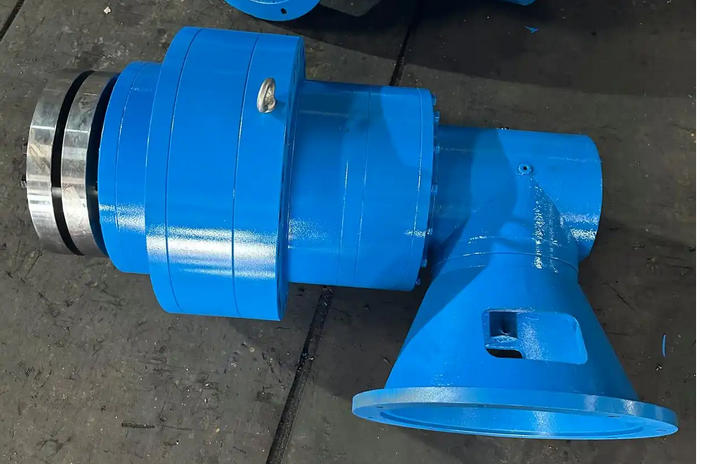
3. Insufficient rigidity of installation foundation to transmit external stress
If the reducer is installed on a base with insufficient rigidity or excessive flatness, the operating vibration will be transmitted to the shell through the base, resulting in uneven stress on the joint surface; Loose anchor bolts can also cause dynamic stress accumulation, leading to fatigue deformation of the joint surface.
4. Environmental humidity and pollution accelerate material degradation
High humidity environments can easily cause metal components to rust, with rust debris falling off and becoming abrasive particles, exacerbating internal wear and indirectly affecting the sealing and structural integrity of the joint surface, especially in coastal or humid conditions.
Related News