
How to repair or replace the damaged components of the cycloidal pinwheel reducer caused by motor steering error
Wrong motor direction can indeed cause serious damage to the cycloidal pinwheel reducer. Incorrect steering can damage the internal force direction, causing pitting corrosion on the cycloidal gear teeth, deformation or even fracture of the needle teeth, as well as the failure of the one-way oil seal, leading to oil leakage and possible damage to the gearbox's built-in backstop.In the face of this situation, it is recommended to follow the following approach for troubleshooting, repair, or replacement:
1. Preliminary diagnosis and investigation
Before deciding to dismantle, assess the extent of damage based on external performance:
Auscultation method: Start the motor (ensure correct steering) and carefully listen for any metal impact, whistling, or abnormal noise inside the gearbox.
Palpation method: Touch the gearbox casing to check for any localized overheating (exceeding 85 ℃), which usually indicates severe dry friction or bearing damage inside.
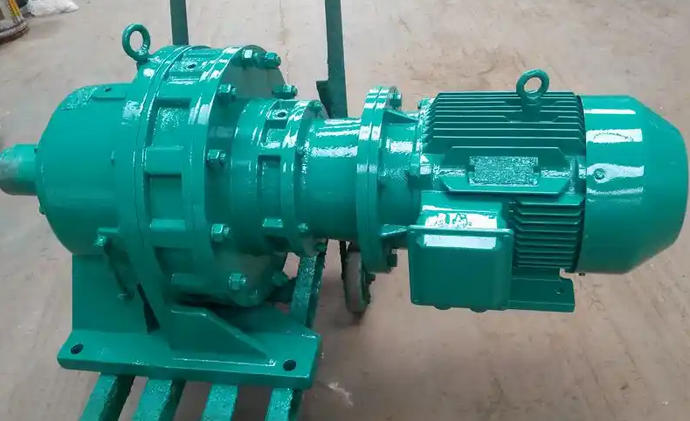
Observation method: Check for oil leakage marks on the output shaft end (incorrect steering can cause the oil seal lip to fail), and observe whether there is strong vibration accompanying the equipment during operation.
2. Maintenance and replacement plan
If preliminary diagnosis reveals abnormalities, further disassembly and inspection are required. The repair plan depends on the severity of the damage:
Option 1: Replacement of core components (suitable for moderate damage)
Disassembly and inspection: Cut off the power and disassemble the end cap bolts in diagonal order. Remove the internal components such as the cycloidal gear, needle gear sleeve, and eccentric bearing for cleaning.
Replace vulnerable parts: Focus on inspecting the cycloidal gear and needle gear housing. If pitting or peeling is found on the tooth surface, or if the needle gear sleeve is broken, the cycloidal gear must be replaced in pairs (not mixed with old and new, nor can it be replaced alone), and all skeleton oil seals and bearings must be replaced at the same time.
Standardized assembly: This is the most crucial step. When installing the cycloidal gear, the steel seal marks of the two cycloidal gears must face upwards and be offset 180 degrees from each other (i.e. aligned vertically on a straight line, not overlapping). After assembly, manually turn the wheel to ensure smooth rotation without any jamming.
Related News