
How to determine oil leakage in NGW122-8 planetary gear reducer
1、 Initial assessment of appearance and location of leakage points1. After cleaning, observe again: Thoroughly wipe off all oil stains on the outer surface of the reducer, run it without load for 10-15 minutes, track the starting position of the newly leaked oil stains, and avoid mistaking the splashing oil from surrounding equipment as oil leakage from the machine.
2. Key area investigation:
(1) If oil stains appear near the shaft extension, priority should be given to checking the input/output shaft oil seal to confirm whether the lip is aging or cracked, and whether there are wear grooves on the shaft neck.
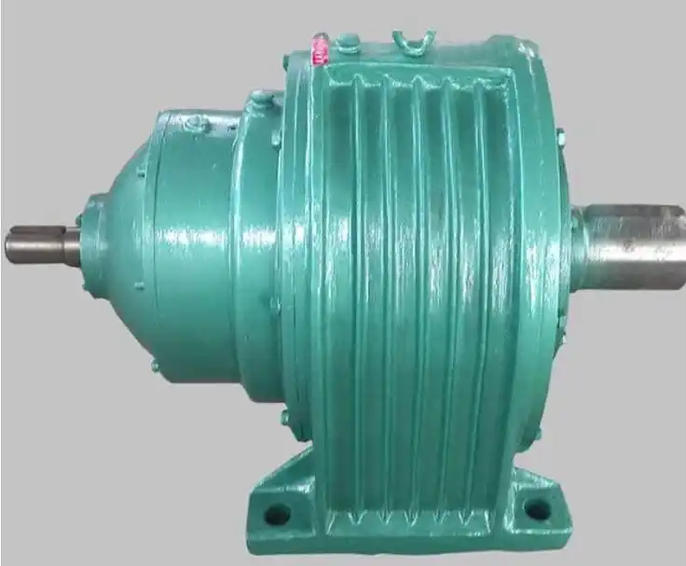
(2) Oil leakage at the joint surface of the box body and the joint of the end cover, check the condition of the sealant and whether the pre tightening force of the connecting bolts is uniform.
(3) Pay attention to the concealed annular static seal between the NGW series planetary carrier and the inner gear ring. If there is leakage at this position, the oil will slowly seep out along the end cap bolts and ventilation holes, which is easily mistaken as shaft oil seal leakage.
3. Basic indicator verification: Check the oil level window. If the oil level drops significantly in a short period of time, after ruling out normal consumption, it can be determined that there is substantial oil leakage.
2、 Operational status auxiliary verification
1. Temperature monitoring: Use an infrared thermometer to detect the temperature of the shell. If the temperature rises abnormally after continuous operation, after excluding factors such as load and bearing faults, it is highly likely that the temperature rise is caused by insufficient lubrication due to oil leakage.
2. Abnormal noise and vibration investigation: If there is sharp whistling, irregular collision sound, or vibration value exceeding the normal threshold during operation, combined with oil traces, it can assist in confirming that oil leakage has caused poor lubrication of gears and bearings.
3. Pressure state inspection: After clearing the ventilation hole, observe whether the oil leakage has eased. If the ventilation cap is completely blocked before, the internal high pressure will squeeze out the oil from all weak seals, which is a common cause of oil leakage even if the seal is intact.
3、 Accurate verification to eliminate misjudgments
1. Distinguish false oil leakage: After cleaning the surface, there are no new oil stains after long-term operation, mostly due to residual grease from assembly or lubricating oil spilled during early maintenance, which does not belong to faulty oil leakage.
2. Sealing accuracy testing: Use a feeler gauge to test the gap between the end cap and the shell joint surface, with a standard of ≤ 0.05mm; apply penetrant testing agent to suspected cracks in the box body to check for hidden sand holes or cracking defects.
3. Oil quality sampling analysis: Sampling and testing the viscosity and metal impurity content of lubricating oil. If the viscosity of the oil significantly decreases and the metal abrasive particles exceed the standard, it can prove that the oil leakage has caused abnormal wear of internal components.
Related News