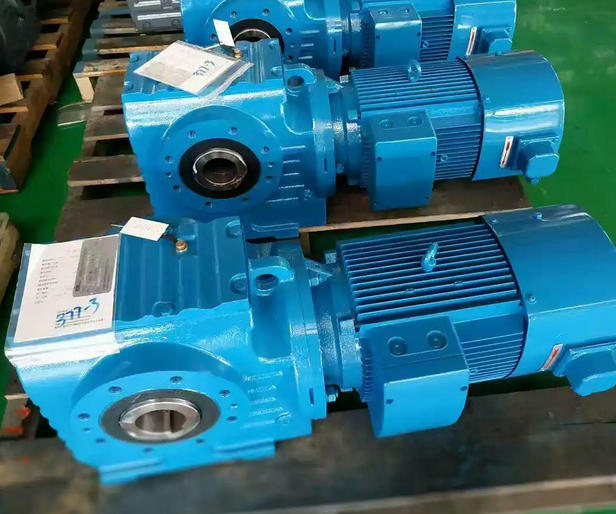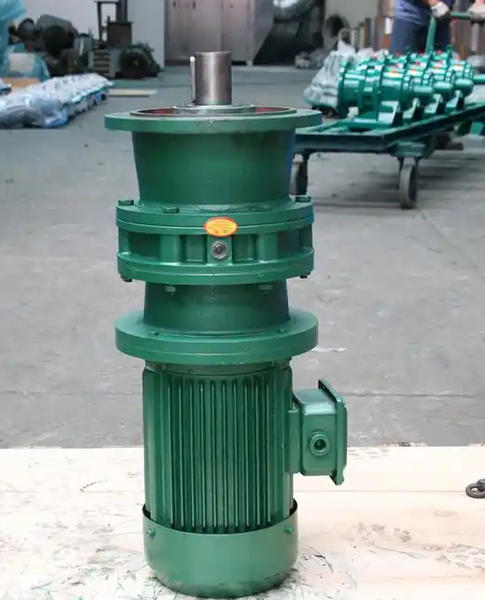

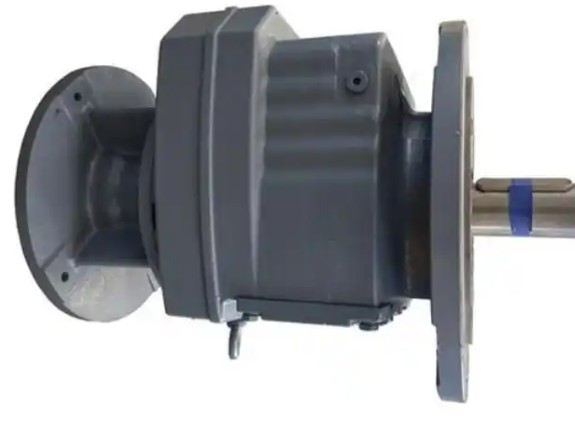
What are the selection suggestions for FB series planetary reducer?
The selection of FB series planetary gearboxes requires comprehensive consideration of core parameters such as reduction ratio, torque, accuracy, installation method, load-bearing capacity, and working environment to ensure compatibility with equipment operating conditions and ensure long-term stable operation. The following are specific selection suggestions:1. Determine the reduction ratio
The reduction ratio is the ratio of input speed to output speed, which directly affects the output speed and torque.
Calculate the required output speed and motor input speed based on the host equipment (such as CNC lathes, industrial robots):
Reduction ratio=motor speed ÷ required output speed.
The common reduction ratio range of the FB series is 3-1000, and some models can reach more than 1/1000 (achieved through modular series connection).
2. Calculate and match torque requirements
The rated output torque must be greater than the torque required for the maximum load of the equipment, and it is recommended to leave a margin of 20% to 30%.
The FB series has a wide range of rated output torque, up to 20-14000 N · m, suitable for high load scenarios.
At the same time, it is necessary to verify whether the instantaneous peak torque is within the allowable range of the gearbox to avoid overload damage.
3. Accuracy and return clearance requirements
High precision machining (such as IT6 level) requires selecting models with small return clearances:
The return clearance of single-stage FB reducer can be controlled within<1 arc minute (some models ≤ 3 arc minutes).
Dual level not exceeding 3-8 arc minutes, meeting the positioning requirements of most automation equipment.
It is recommended to achieve gear accuracy below ISO level 5 to ensure smooth transmission and low noise.
4. Matching input speed and power
The FB series supports high input speeds, up to 8000 rpm, and is compatible with mainstream servo motors.
The motor power should be greater than or equal to the required power of the reducer, and the transmission efficiency should be considered (single-stage efficiency ≥ 95%, two-stage efficiency ≥ 92%).
Pay attention to the matching between the output torque of the motor and the input torque of the reducer to prevent "big horse pulling small car" or "small horse pulling big car".
5. Installation method and structural adaptation
Common installation methods include flange installation, shaft installation, foot installation, etc., which need to be selected according to the equipment space layout.
The output forms include shaft output, hole output, spline shaft/hole output, and double bond output, ensuring compatibility with the load end coupling.
It is recommended to adopt an integrated design structure to improve torsional stiffness and installation accuracy.
6. Capacity assessment
It is necessary to verify whether the radial and axial force bearing capacity of the reducer meets the load applied by the cutting tool or transmission components.
For example, in a CNC lathe, it is recommended to choose:
Radial bearing capacity>20000 N
Axial bearing capacity>10000 N
High strength alloy steel material and overall hardening treatment can improve long-term stability.