
What Special Maintenance Should Be Performed on Refitted ZD40 Soft Tooth Reducer
When the equipment load or rotational speed is altered after the ZD40 soft tooth surface reducer modification, recalculation of lubrication requirements and component load capacity is mandatory. Changes in operating conditions will reshape the stress distribution on internal parts. Continuous overload operation should be prevented for soft tooth gears and bearings, which otherwise will suffer premature wear, fatigue and unexpected early failure.
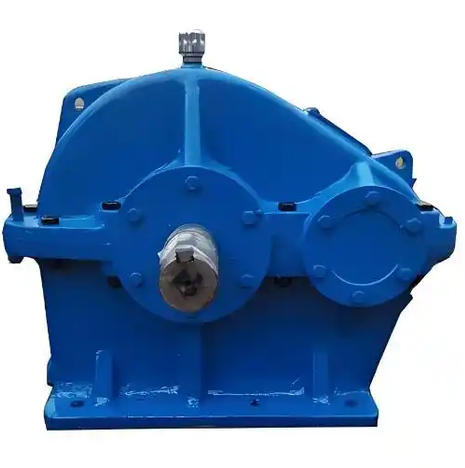
Soft tooth surface gears have poor resistance to impact loads. If the retrofitted reducer works under frequent start-stop or forward-reverse rotation conditions, buffer assemblies must be installed. Such accessories can effectively absorb transient shock loads generated during direction switching and startup, protecting gear tooth surfaces from impact pitting, chipping and accelerated deterioration.
All maintenance and inspection activities must be carried out after complete machine shutdown and power isolation. Markings shall be clearly made on all disassembled retrofit sections before disassembly. This practice prevents assembly misalignment during reassembly, maintains accurate gear meshing status, and avoids vibration, noise and abnormal wear caused by positional deviation.
For component replacement, especially gear and bearing replacement, genuine spare parts compatible with the ZD40 reducer model are required. Soft tooth gears need to meet strict tooth profile accuracy standards. Non-standard aftermarket parts are not recommended, as mismatched dimensions and low machining precision will trigger poor gear meshing, increased heat generation and shortened service life of the whole gearbox unit.
Related News