

How to deal with lubricating oil leakage in WB65-WD43-60W micro cycloidal reducer
The treatment method for lubricating oil leakage of WB65-WD43-60W micro cycloidal reducer is as follows:1. Shutdown pressure relief and safety preparation
Immediately cut off the power supply and wait for the reducer to completely stop running and the oil temperature to drop to room temperature to avoid injury caused by high-temperature oil splashing. Clean up the oil stains in the leakage area, prepare tools: wrench, screwdriver, oil seal extractor, new oil seal, sealant, and specialized lubricating oil for cycloidal pinwheel reducer (recommended L-AN32 full loss system oil).
2. Locate the leakage point
2.1 Check the shaft end: Observe the joint between the input shaft, output shaft, and end cover. If there are oil stains seeping out, it is likely that the oil seal is aging, deformed, or the lip is worn.
2.2 Check the joint surface of the shell: Check the connection gaps between the upper and lower shells, end caps, and shells of the reducer. If there are oil stains, it is mostly due to sealant failure, loose fastening bolts, or deformation of the joint surface.
2.3 Check the oil level plug/drain plug: Observe whether there are oil stains around the plug, which is often caused by loose plug or aging sealing ring.
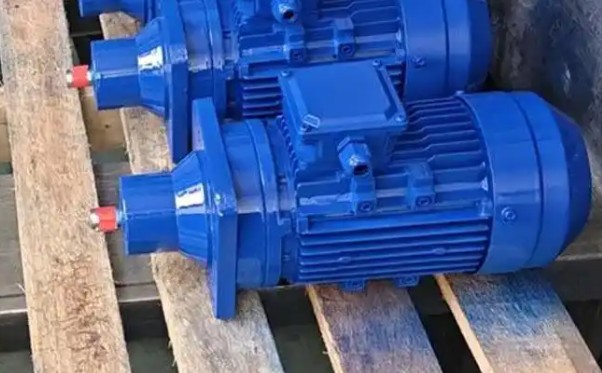
2.4 Check the connection between the motor and the reducer flange: If there is oil leakage at this point, it may be due to damage to the motor shaft extension oil seal or failure of the flange gasket.
3. Targeted handling of leakage faults
3.1 Treatment of shaft end oil seal leakage
Remove the reducer end cover and use an oil seal extractor to remove the old oil seal; Clean the oil stains and impurities on the shaft surface and end cover oil seal groove, and check whether there are scratches on the shaft surface (if the scratch depth is greater than 0.1mm, it needs to be polished and repaired); Choose an oil seal that is consistent with the original factory specifications (the commonly used oil seal specifications for WB65 models are 18 × 35 × 7 or 20 × 40 × 8), apply lithium based grease to the lip of the oil seal, and use a press to smoothly press it into the oil seal groove to avoid tilting the oil seal; When installing the end cap, apply a thin layer of sealant evenly on the joint surface and tighten the end cap bolts in diagonal order.
3.2 Leakage treatment of shell joint surface
Use a torque wrench to diagonally tighten the shell/end cap bolts according to the specified torque in the manual (generally 4-6N · m); If the bolt still leaks after tightening, remove the end cover or shell, clean the old sealant on the joint surface, and replace it with a new gasket (for models without gaskets, apply anaerobic flat sealant directly); After applying the sealant, it should be left to stand for 10-15 minutes before assembly to ensure that the sealant is cured.
3.3 Leakage treatment at the plug position
Tighten the oil level plug/drain plug, check the sealing ring of the plug, and replace it with a new ring if it ages; Apply a small amount of thread sealant on the screw plug thread during assembly to prevent loosening and oil leakage.
3.4 Leakage treatment at flange connection
Disassemble the motor, check the oil seal at the extension end of the motor shaft, and replace it if it is damaged; Replace the flange gasket, apply sealant on the flange joint surface, and tighten the flange bolts diagonally according to the specified torque to ensure that the coaxiality deviation between the motor and the reducer is ≤ 0.1mm.
4. Oil replenishment and trial operation verification
4.1 Unscrew the oil level plug, add special lubricating oil until the plug hole is level, and tighten the plug.
4.2 Conduct a 5-10 minute no-load test run and observe whether there are any oil stains leaking out from each leakage point; After no leakage, load and run for 30 minutes, recheck the oil temperature (normal ≤ 65 ℃) and leakage situation.
Related News