
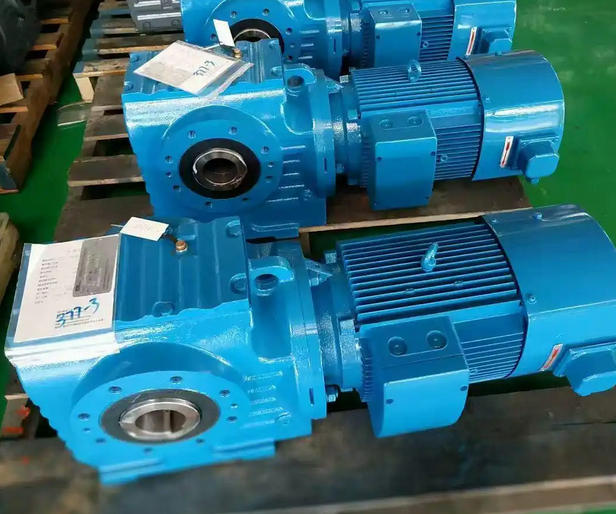
What is the replacement cycle of lubricating oil for SA97-40.38-4P-15KW reducer at room temperature
At room temperature (10 ℃~35 ℃), the replacement cycle of lubricating oil for SA97-40.38-4P-15KW reducer needs to be determined based on three core factors: lubricating oil type, operating conditions, and load status. The specific standards are as follows:1、 Basic replacement cycle divided by lubricating oil type
1. Mineral type gear oil (such as VG46 #/VG68 # universal type, containing EP extreme pressure additive)
Continuous work system (24-hour operation): 2000 hours or 6 months, whichever comes first;
Intermittent working system (daily operation ≤ 8 hours): 3000 hours or 9 months, whichever comes first.
2. Synthetic gear oil (such as PAO type, ester type high-temperature gear oil)
The high temperature oxidation resistance is 2-3 times that of mineral oil, and the replacement cycle can be extended to 1.5-2 times that of mineral oil;
Continuous work system: 3000-4000 hours or 12 months;
Intermittent work schedule: 4500-6000 hours or 18 months.
2、 Correction factors for working conditions (situations where the replacement cycle needs to be shortened)
1. If the gearbox operates at full load or slight overload for a long time (load rate>90%), the replacement cycle needs to be shortened by 10% -20%;
2. If there is a risk of dust and water vapor intrusion in the environment (such as high humidity and dust in the workshop), it needs to be reduced by 20% -30%;
3. If the oil temperature remains consistently high during operation (stable at 65-70 ℃, close to the upper limit of the optimal range), the replacement cycle will be shortened by 20%.
3、 Supplementary criteria for determining replacement cycle
Even if the above time/duration threshold is not reached, if the following situations occur, the lubricating oil should be replaced immediately:
1. The oil color turns black, cloudy and emulsified, or there are obvious impurities and metal debris;
2. Significant changes in oil viscosity (feel sticky or thin), or accompanied by odor;
3. The vibration and noise of the gearbox suddenly increase during operation, and other factors such as installation and load are excluded.
Related News