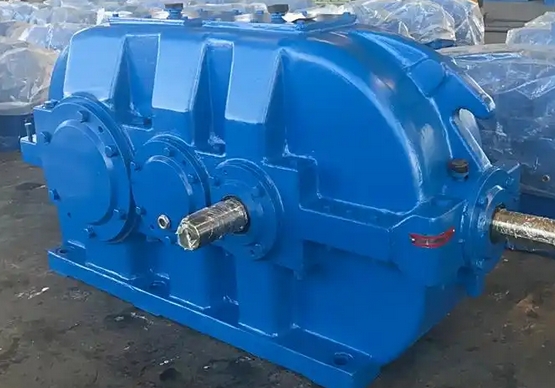

ZSY Hardened Gearbox: Principles and Applications Comprehensive Analysis
In the field of industrial power transmission, reducers play a key role in converting the high-speed and low torque output of the prime mover into low-speed and high torque input at the execution end. Among them, hard tooth surface gear reducers have become the preferred choice for many heavy-duty and precision transmission scenarios due to their high load-bearing capacity and long service life. The ZSY series hard tooth surface gear reducer is a typical representative in this technical field. To understand its principles and applications, one needs to start with the micro interface characteristics that form the basis of its performance.
The core of gear transmission lies in the interaction between two meshing tooth surfaces. For hard toothed gears, their tooth surfaces are treated with processes such as carburizing and quenching, and the surface hardness usually reaches HRC58-62. This feature is not just for "robustness", its deeper meaning lies in changing the stress distribution and failure mode of the tooth surface contact area. A high hardness surface can significantly enhance the contact fatigue strength of the tooth surface, making it less prone to pitting corrosion on the tooth surface when the gear is subjected to extremely high Hertz contact stress - a fatigue peeling phenomenon that begins at the surface. The combination of hard tooth surface and precision grinding technology can achieve high-precision correction of tooth profile and orientation, thereby distributing the load more evenly across the entire tooth width and avoiding stress concentration caused by edge contact.
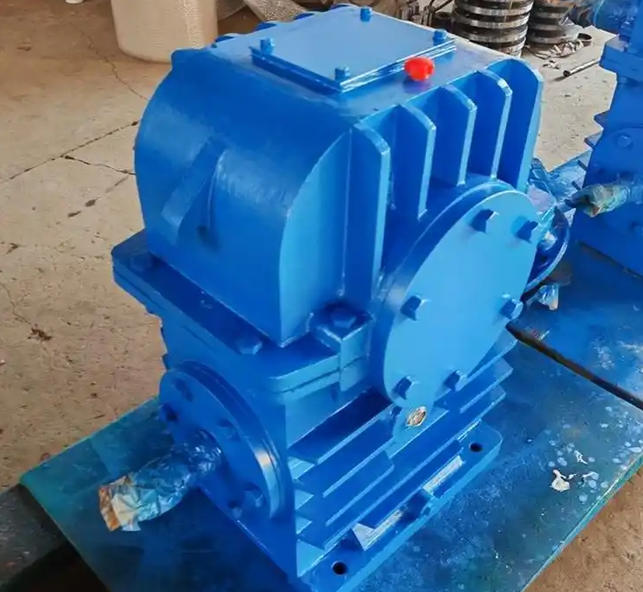
Mechanical Game of Microscopic Interface: Core Value of Hard Tooth Surface
The advantage of hard tooth surface technology is essentially the optimization of the mechanical properties of the material surface. When a pair of gears mesh, the contact area is actually a very small ellipse or rectangle, which will generate extremely high contact stress. Soft toothed gears are prone to plastic deformation or rapid pitting corrosion under this stress. And the hard tooth surface resists this deformation through a hard surface layer, converting more stress into elastic deformation and recovering after disengagement. This elastic contact behavior, combined with appropriate lubricating oil film, forms an elastohydrodynamic lubrication state, greatly reducing friction and wear.