

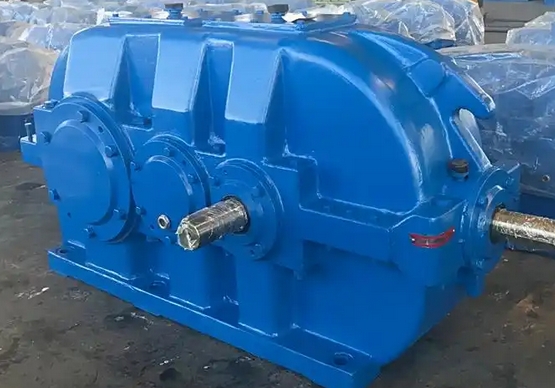
How to determine whether the installation position of WPDX120-30-A worm gear reducer is well ventilated
1、 Static space foundation verificationSurrounding clear distance meets the standard: the distance between the reducer housing and the wall or other equipment is ≥ 300mm, the distance between the top and the obstacle above is ≥ 500mm, and there is no obstruction covering the surface of the heat dissipation rib.
Environmental airflow unobstructed: The installation location should avoid closed dead corners and hot air reflux areas, and prioritize the main channel side of the workshop with natural ventilation. There should be no plastic film, dust cover, or other completely enclosed obstructions around the box.
Ventilation device compliance: The ventilation cap and cooling fan inlet/outlet of the gearbox are not blocked by debris, and the air duct of the supporting cooling fan is not bent or leaking.
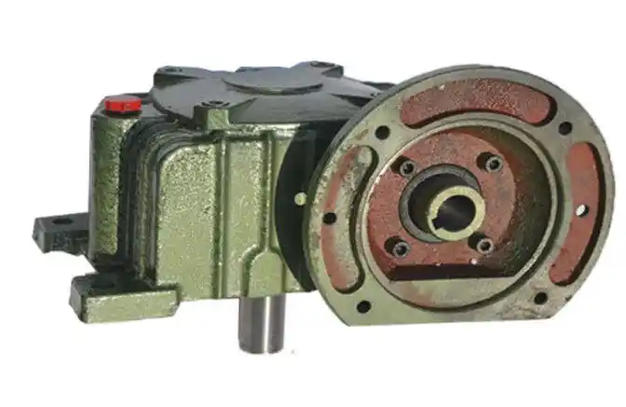
2、 Dynamic wind sensation measurement verification
Handheld anemometer detection: measured at the gap between the cooling ribs of the gearbox housing, with a wind speed of ≥ 0.5m/s indicating that the ventilation foundation is qualified; If the wind speed is below 0.2m/s, it indicates insufficient airflow fluidity.
Smoke/floating wire test: Release light smoke or hang fine floating wire on the air inlet side, and observe that the smoke/floating wire can smoothly flow around the entire surface of the box without obvious stagnation or dead zones.
3、 Temperature rise verification during loaded operation
Verification of temperature difference between environment and shell: After continuous operation at rated load for 2 hours, use a thermometer to detect the temperature of the shell at the corresponding position of the oil tank in the gearbox housing. If the temperature difference with the environment is ≤ 25 ℃, it indicates that the ventilation and heat dissipation are normal.
Extreme condition review: When the ambient temperature reaches 35 ℃ or above, and the maximum oil temperature of the gearbox does not exceed 85 ℃, and there are no local hot spots (local temperature rise exceeds the average temperature rise by more than 10 ℃), it can be determined that the ventilation fully meets the operating requirements.