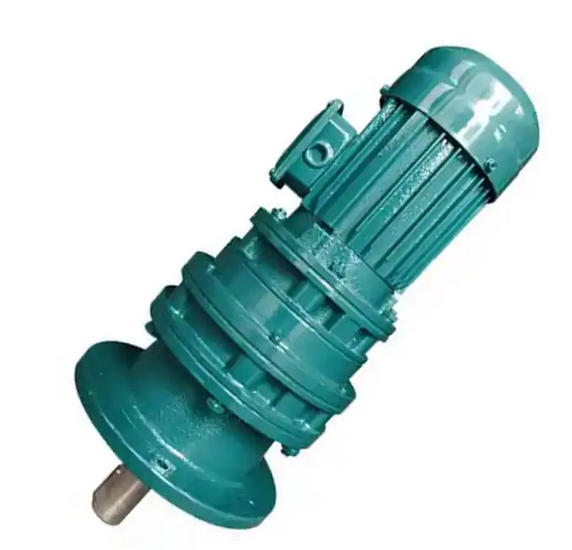


How to Determine the Oil Contamination Level Inside H Series Industrial Gearboxes
1、 Observe the appearance and equipment operation statusThis is the most basic preliminary judgment method, which detects signs of pollution through abnormal sensory and equipment performance:
Appearance: Normal gear oil is usually clear or slightly yellowish, with no impurities or emulsification. If the oil becomes turbid, it indicates the presence of solid particles mixed in; If the oil emulsifies and turns white (in the form of milk), it indicates a serious excess of moisture; If the oil turns black and dark, it may be due to oxidation deterioration or the inclusion of a large amount of metal debris.
Check the equipment status: If there is a sharp friction or clattering sound during the operation of the gearbox, it may be caused by solid particles in the oil leading to tooth wear, or a decrease in lubricity causing dry friction. In addition, if the outlet pressure or flow rate of the lubricating oil pump is unstable, it may be due to a large amount of air mixed in the oil, or the viscosity of the oil being too low due to oxidation and deterioration.
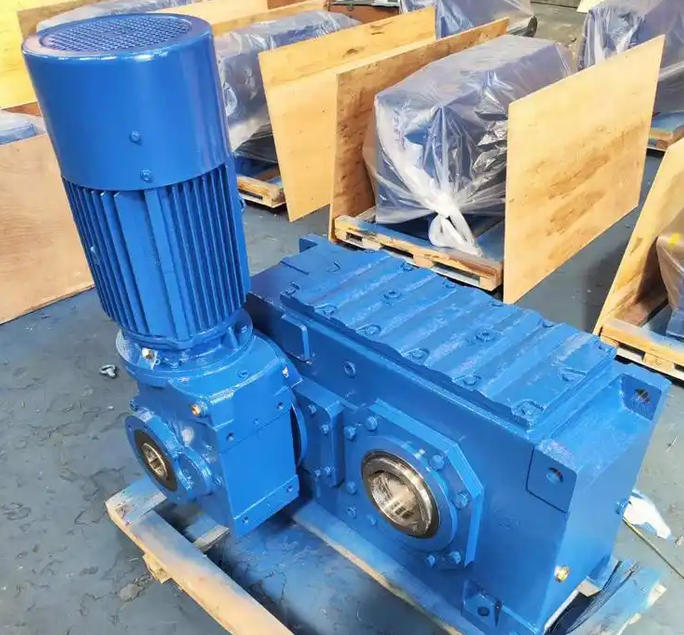
2、 Use simple tools for detection
In the absence of large instruments, qualitative analysis can be conducted through simple physical experiments:
Filter paper filtration method: Take a small amount of oil sample and filter it with clean qualitative filter paper, let it stand for 15 minutes. The oil spots of normal oil spread evenly, with no obvious impurities in the center and little color difference between the edges and the center. If the center of the spot is dark brown and the edge color is light, and the filter paper shows local transparency, it indicates that the oil molecular chain has become shorter, the polarity has changed, and the oil has been excessively oxidized.
3、 Professional Physical, Chemical, and Cleanliness Testing
In order to accurately grasp the type and content of pollution, it is usually necessary to extract oil samples and send them to testing institutions or laboratories with CMA/CNAS qualifications for professional analysis:
Particle pollutant counting: Using an automatic particle counter or microscope counting method to measure the quantity and size distribution of solid particles (such as metal shavings, dust) in oil, in order to evaluate the cleanliness level of oil products (such as ISO 4406, NAS 1638 standards).
Moisture and acid value detection: Use a Karl Fischer titration instrument to analyze the moisture concentration in the oil, determine the degree of emulsification and contamination; Use potentiometric titration to determine changes in acid value and monitor oil aging and additive consumption.
Metal element analysis: Detecting wear metal particles in oil through atomic emission spectrometer to identify wear sources and fault modes inside the gearbox.
Other performance evaluations include assessing viscosity changes using a rotational viscometer and testing oxidation stability using a rotational oxygen bomb method.
4、 Online intelligent monitoring
For large or critical gearboxes, an online monitoring system can be used for real-time evaluation:
Online particle counting sensor: installed in the oil circuit of the equipment, using optical resistance method or electromagnetic induction principle to collect oil samples in real time and automatically detect parameters such as particle counting, moisture and viscosity. The system can calculate the dynamic pollution rate based on the synergy between moisture and wear, detect anomalies in a timely manner, and achieve predictive maintenance.
Related News