
What impact does the load fluctuation of WP series worm gear reducer have on its working stability
Significant increase in vibration and noiseWhen the load fluctuates frequently, starts and stops frequently, or downstream equipment gets stuck, the meshing force of the worm gear will fluctuate greatly, and the box and shaft system are prone to intermittent impact vibration.
If the fluctuation frequency approaches the natural frequency of the gearbox, base, or connected equipment, it may also induce resonance, causing a sudden increase in vibration amplitude.
2. Tooth surface wear and fatigue acceleration
Fluctuating loads can subject the tooth surface to cyclic alternating stresses, especially when peak loads and impact loads occur, making it more prone to pitting, bonding, and tooth surface peeling.
Over the long term, the meshing state of the worm gear will deteriorate, the backlash will increase, and the transmission stability will further decrease.
3. The oil film is easily damaged and the lubrication conditions deteriorate
The WP series worm gear pairs are mainly in sliding contact and are sensitive to oil film thickness. When the load suddenly increases, the contact pressure in the meshing area rapidly increases, and the oil film may be squeezed out, locally entering the boundary lubrication or even dry friction state.
This will lead to an increase in friction coefficient, faster temperature rise, and significantly intensified wear.
4. As the temperature rises, the thermal stability deteriorates
When the load fluctuates greatly, the gearbox cannot work stably at the optimal efficiency point, and additional friction and impact will be converted into heat.
The WP series itself generates significant heat. If the heat dissipation area is insufficient, the ambient temperature is high, or the continuous operation time is long, the viscosity decreases after the oil temperature rises, and the lubrication ability further weakens, it is easy to form a vicious cycle of "temperature rise lubrication deterioration wear intensification".
5. Decreased transmission accuracy and reverse stability
Load fluctuations can cause elastic deformation of the shaft system, changes in bearing clearance, and dynamic changes in meshing clearance.
When reversing direction, sudden load drop, or struggling state reversal, it is easy to experience shaking, increased backlash, and unstable output. For devices with positioning requirements, this impact will be more prominent.
6. Shortened lifespan of bearings and seals
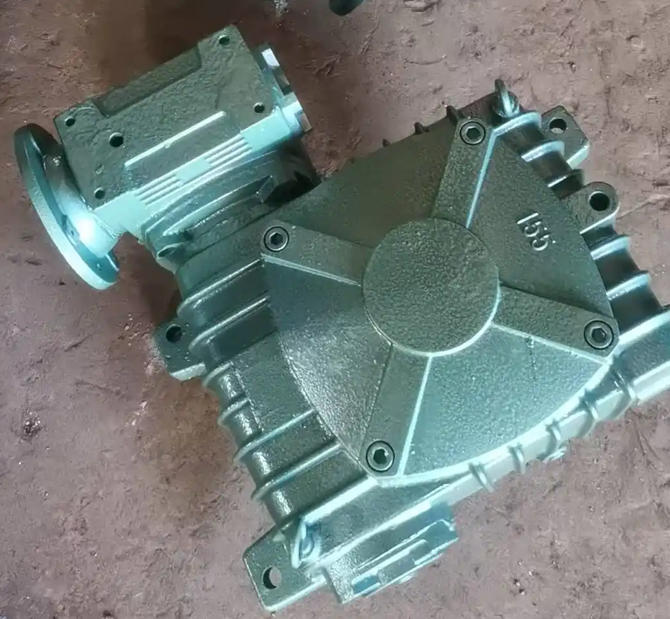
The impact load will be transmitted to the bearing through the worm shaft and worm gear shaft, causing the bearing to withstand greater radial and axial forces.
At the same time, an increase in temperature rise and vibration will accelerate the aging of the oil seal, increasing the risk of oil leakage. Oil leakage will further affect lubrication and reduce operational reliability.
7. In severe cases, there may be jamming or sudden shutdown
If the load fluctuation persists for a long time and is accompanied by poor lubrication, installation deviation, insufficient base rigidity, or downstream equipment impact, it may lead to abnormal meshing, bearing damage, shaft deformation, and in extreme cases, it may cause jamming, intensified abnormal noise, or even shutdown.
Related News