
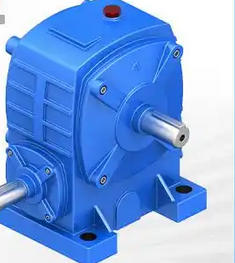
Is there still room for improvement in the efficiency of gear grinding processes for reducers in the future
1、 Existing efficiency improvement foundation and current levelBy 2025, the average yield rate of precision reducer gear grinding in China has reached 98.7%, and the average grinding time for a single reducer gear has been reduced from 4.8 hours in 2024 to 4.1 hours, with an efficiency improvement of 14.6%.
Top enterprises have achieved an 18% reduction in single tooth grinding time and a 25% reduction in grinding wheel consumption through the transformation of digital twin grinding workshops.
The mainstream process of using CBN grinding wheel five axis linkage for gear grinding has increased the material removal efficiency of hard tooth surface grinding by more than 50% compared to traditional alumina grinding wheels.
2、 Core efficiency improvement technology direction
Advanced feed strategy optimization: For wind turbine large modulus planetary gears, adopting A (X) variable feed strategy can compress the total cycle time of forming grinding from 82 minutes to 65 minutes, directly improving efficiency by 21% without increasing the risk of grinding burns.
New type of grinding wheel and high-speed grinding: The microcrystalline ceramic bonding agent CBN grinding wheel increases the grinding speed to 60-100m/s, increases the material removal rate by more than 50% per unit time, and the single tooth grinding cycle of the worm wheel can be compressed to tens of seconds.
AI and digital closed-loop control: Based on machine learning, automatic matching of process parameters can reduce the trial cutting process, synchronously improve processing yield and efficiency by 30%, and extend grinding wheel life by 25%.
Composite process replaces rough grinding: The metal removal rate of the hard tooth scraping process is 3-4 times higher than traditional grinding, which can replace the rough grinding process, leaving only a uniform small margin for fine grinding, greatly reducing the overall grinding time.
Dry/quasi dry grinding: eliminates the need for cutting fluid circulation and environmental treatment systems, reduces production energy consumption by 35% -40%, and reduces waiting time for auxiliary processes, resulting in a significant improvement in overall production efficiency.
3、 Quantitative potential for future efficiency improvement
The industry predicts that the comprehensive energy consumption of the gear grinding process will decrease to 0.83 kWh per 10000 teeth in 2026, a decrease of 8.8% from 0.91 kWh in 2025, and the energy efficiency per unit output will steadily improve.
The new generation Reishauer RZ series gear grinding machine is designed for planetary transmission DIN6-7 level internal gear machining, reducing grinding wheel wear by 18-22% and shortening cycle time by 12%.
After breakthroughs in domestic equipment such as Qinchuan Machine Tool, the procurement cost of gear grinding equipment is only 50% -60% of imported models. The economic efficiency of gear grinding processes for small and medium-sized production has been greatly improved, indirectly promoting the release of production capacity efficiency in the entire industry.
The compound annual growth rate of the global gear grinding machine market from 2026 to 2032 will reach 3.7% -4.8%, and technological iteration will continue to evolve towards high efficiency. It is expected that there is still 30% -50% room for improvement in the comprehensive machining efficiency of gear grinding in the entire industry in the next five years.
4、 The boundary and constraints of efficiency improvement
The core components of high-end CNC gear grinding machines (high-precision torque motors, grating rulers) still rely on imports, which to some extent limits the popularization speed of efficiency upgrades in the entire industry.