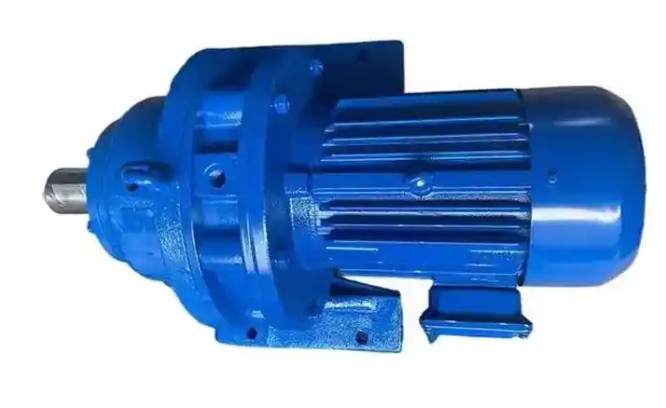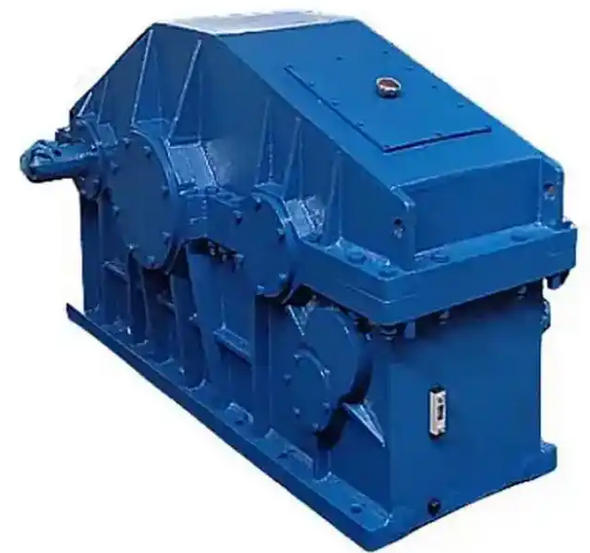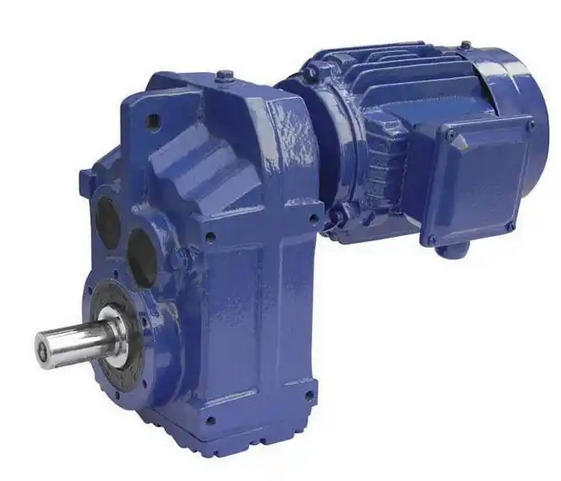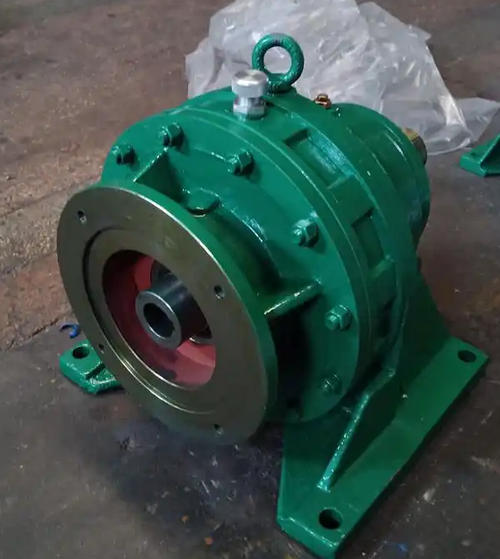

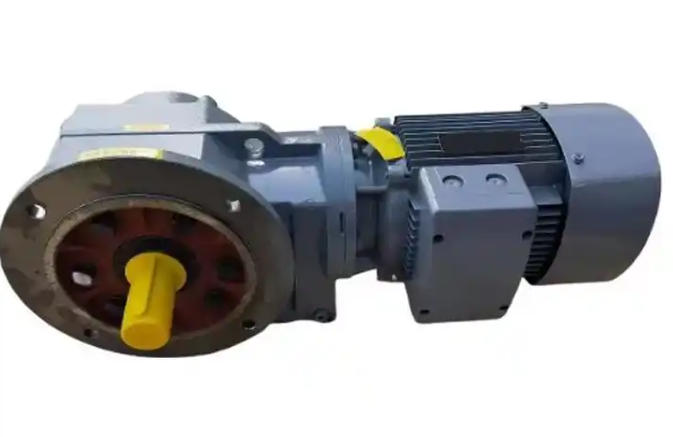
What influence does KF67-76.37-M4-A reducer load matching have on the splash lubrication system?
The load matching degree directly affects the oil supply capacity, oil film strength, and heat dissipation efficiency of splash lubrication. Mismatched load conditions will significantly exacerbate the risk of lubrication failure. Specifically, when the load is too light or too heavy, it will break the dynamic balance originally designed by the splash lubrication system, thereby affecting the lubrication status of gears and bearings.1、 Light load or no-load operation: Insufficient lubrication supply, difficult formation of oil film
When the KF67-76.37-M4-A reducer operates for a long time under conditions of less than 30% rated load, the low-speed large gear has low speed and torque, resulting in:
1. Reduced oil carrying capacity of gears: Splash lubrication relies on gear rotation to lift lubricating oil in the oil pool and throw it towards the meshing area and bearing seat. When loaded lightly, the speed fluctuates greatly and the amount of oil splashing is small, which cannot effectively cover the tooth surface and bearings, and is prone to local dry friction.
2. Insufficient oil film thickness: Under low load, the tooth surface contact pressure is small, and the lubricating oil is not easy to form a stable elastic fluid dynamic pressure oil film. Especially during the start-up and shutdown stages, the lubrication is in a boundary lubrication state, accelerating micro pitting and early wear.
3. Interruption of oil return path: The oil guide groove on the inner wall of the box relies on the gravity of oil droplets to return, resulting in less splashing oil under light load. Insufficient oil return in the bearing seat area leads to insufficient lubrication of the bearing and accelerated temperature rise.
The transmission ratio of this model is 76.37, with a low output speed and limited oil carrying capacity. The lubrication risk is particularly prominent during light load operation.
2、 Overloaded or overloaded operation: oil film rupture, increased temperature rise, seal leakage
When the load exceeds the rated torque (such as>110%), especially when there is an impact load, the splash lubrication system faces multiple pressures:
1. Insufficient oil film strength: Under high load, the contact stress on the tooth surface increases dramatically, causing the original lubricating oil film to be squeezed and become thinner or even broken, resulting in direct metal contact, leading to bonding, abrasion, and pitting.
2. The increase in oil stirring resistance leads to an increase in power loss: Heavy loads are often accompanied by high torque, which significantly increases the resistance of gear stirring oil, consumes additional motor power, and reduces transmission efficiency.
3. Rapid increase in oil temperature: The combination of intense friction and oil stirring heating may cause the oil temperature to exceed 70 ℃, leading to a decrease in viscosity and weakened antioxidant capacity of the lubricating oil, accelerating oil aging.
4. Increased oil mist and excessive sealing pressure: Under high temperature and agitation, the concentration of oil mist increases, and the pressure inside the box rises, which can easily cause shaft seal leakage and joint surface oil leakage. Especially in the M4 installation form, the sealing structure is more sensitive to pressure changes.
3、 Frequent load fluctuations: lagging dynamic response and poor stability of the lubrication system
If the equipment frequently starts and stops or experiences periodic load fluctuations (such as intermittent feeding of conveyor belts), the splash lubrication system may find it difficult to respond in a timely manner:
1. Discontinuous lubrication supply: low oil temperature and high viscosity during the initial start-up stage, making it difficult for gears to carry oil; After shutdown, the oil quickly flows back, and when restarted, critical parts may be in an oil-free state.
2. Thermal cycling stress exacerbates material fatigue: repeated temperature rise and cooling cause thermal stress in gear and bearing materials, coupled with uneven splash lubrication, accelerating fatigue crack initiation.
Related News