
Which Installation Accessories Are Included With the WPDKA Worm Gear Reducer?
The installation accessories for the WPDKA worm‑gear reducer can be grouped into two main categories: mechanical connection parts and auxiliary functional components.
Mechanical connection accessories are primarily used to fasten and join the reducer to motors, mounting bases and other mechanical equipment. The WPDKA is a universal reducer built with a rectangular housing equipped with fixing threaded holes on multiple sides. Subject to practical installation demands, users can choose vertical or horizontal mounting layouts fitted with a base plate, or secure the unit directly through threaded holes on the housing without a base plate. The letter “D” within the model code refers to the motor‑flange input connection. As a standard fitting for the WPDKA reducer, the motor flange enables direct flange coupling with a motor, which eliminates the need to install an extra shaft coupling. Standard fasteners such as bolts and nuts, for instance M6×12 and M8×20 bolts, are commonly adopted when assembling motor flanges, end caps or mounting base plates.
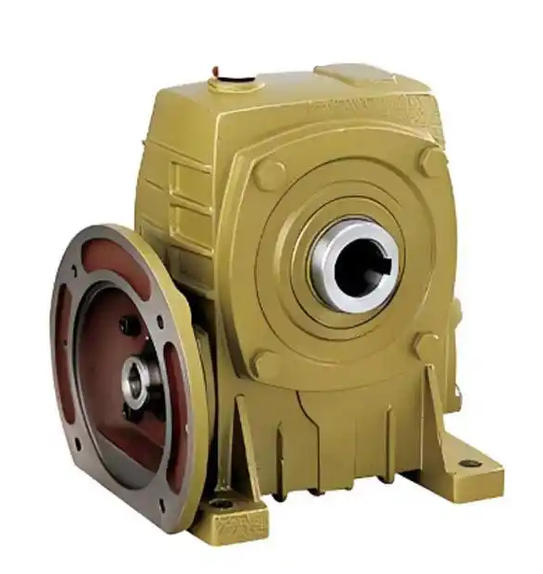
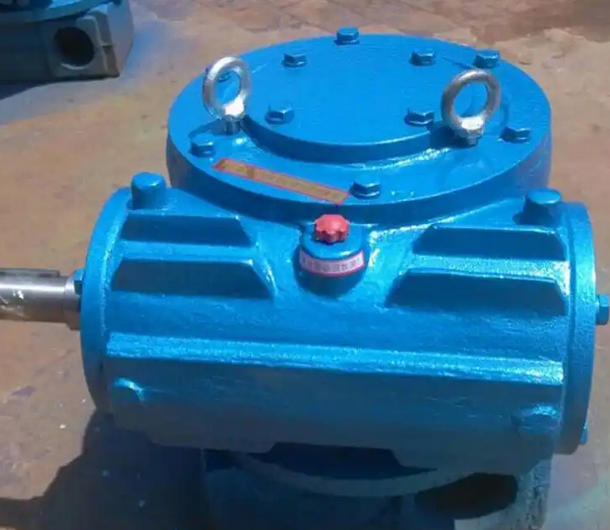
Auxiliary functional accessories ensure stable operation, proper lubrication and reliable sealing performance of the gear unit. Fitted onto the housing, the breather cap balances internal and external air pressure of the reducer, preventing oil leakage caused by pressure buildup as operating temperatures rise. An oil level indicator, available as an oil sight glass or dipstick, allows operators to visually inspect lubricant levels and maintain sufficient internal lubrication. Positioned at the bottom of the housing, the oil drain plug facilitates waste oil removal during routine lubricant replacement. Sealing components including oil seals and O‑rings seal the input shaft, extended output shaft and housing mating surfaces, so as to stop lubricant leakage and keep dust and impurities out of the reducer.
Apart from these accessories, core internal transmission parts such as the worm and worm gear, supporting components like bearings, as well as the external nameplate, form part of the reducer’s inherent structure. During on‑site installation, it is advisable to assess actual working conditions to confirm whether additional peripheral components, such as cooling fans, protective guards or couplings, should be prepared.