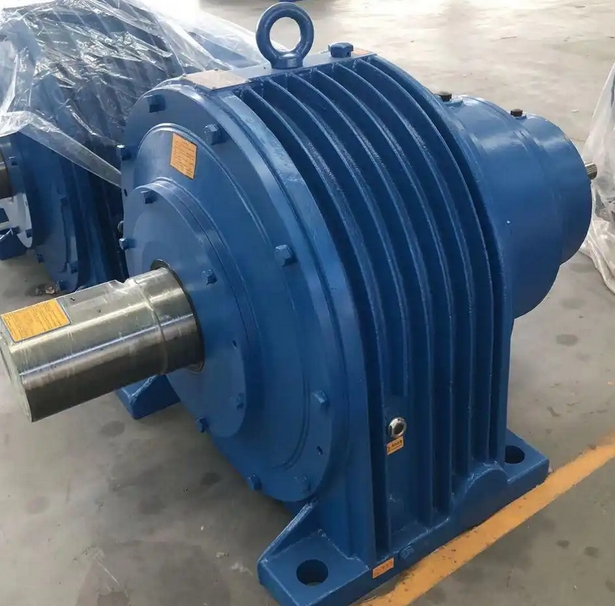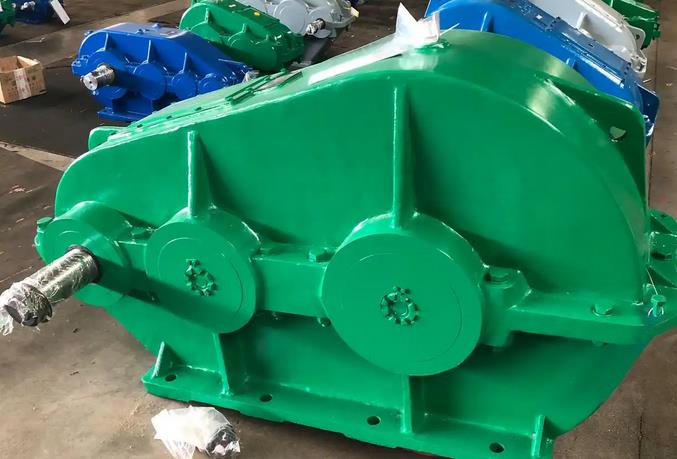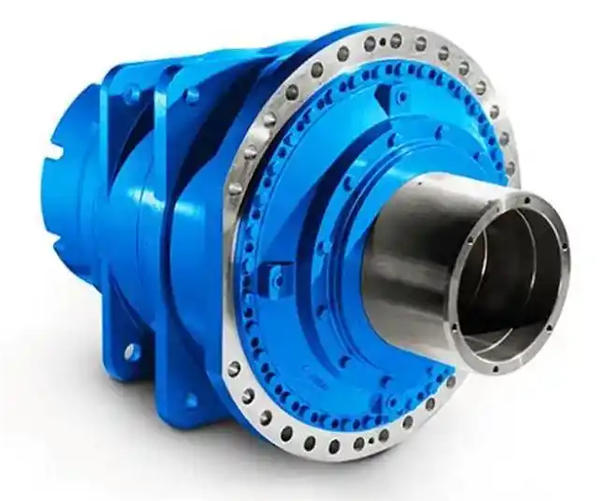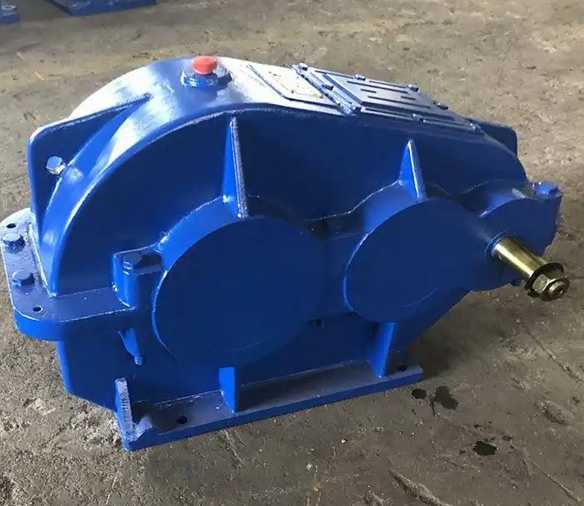

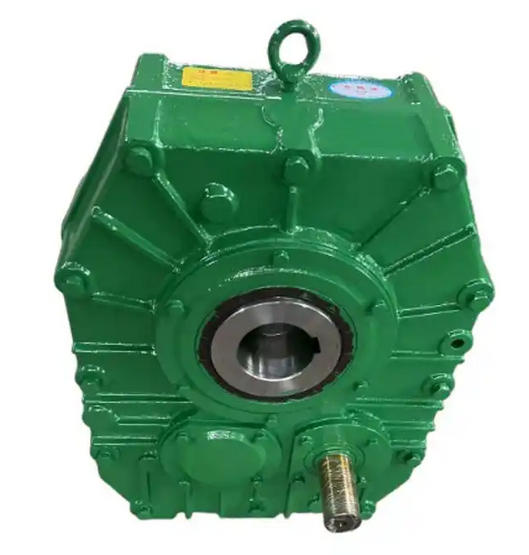
How to determine the fault location of the shaft mounted ZJY125-25-S reducer
The core strategy for fault location of ZJY125-25-S shaft mounted reducer is to follow the troubleshooting logic of "from outside to inside, from simple to complex": prioritize checking the installation alignment and load connection, then listen to the abnormal noise characteristics, and finally lock the internal damage through oil sample analysis and disassembly verification.1. Static inspection of appearance (no need to stop the machine, quickly troubleshoot surface faults)
Focus on observing the external state of the gearbox, preliminarily locate the fault range, suitable for rapid on-site screening:
(1) Check the connection part: The shaft mounted core is the expansion sleeve/key connection between the output shaft and the load shaft. Observe whether the expansion sleeve bolt is loose and whether the keyway is deformed. If the bolt is loose, it will cause transmission slip, and if the keyway is deformed, abnormal noise will occur. This is the most common type of connection failure.
(2) Check the lubrication system: Observe the oil level of the oil mirror (standard 1/2~2/3). If the oil level is too low, the oil is black/cloudy/has metal debris, or there is leakage at the oil seal, it is likely to be a gear or bearing failure caused by poor lubrication; If the ventilation cap is blocked, it will cause excessive pressure inside the box, accompanied by oil leakage and internal heating.
(3) Check for appearance damage: Observe whether there are cracks or deformations in the box, whether the shaft head is worn or displaced (axial displacement ≤ 0.05mm). If the shaft head is worn, it may cause transmission eccentricity, and box cracks may be caused by overload or installation deviation.
2. Operational characteristics auscultation and preliminary judgment
When the device is running, use a stethoscope or a long screwdriver to approach different parts of the bearing seat and housing, and preliminarily locate them through sound characteristics:
High frequency whistling sound: usually points to the bearing being assembled too tightly or poorly lubricated, resulting in increased friction between the raceway and the ball bearings.
Periodic "clanging" sound: often caused by loose bearing assembly, radial movement, or gear tooth breakage, frequency is related to speed.
Continuous rustling friction sound: If it occurs after the running in period of new equipment, it may indicate damage to the tooth surface or insufficient lubrication; If accompanied by high temperatures, be alert to the risk of being trapped.
3. Load isolation and manual turning test
If the motor rotates but the gearbox does not rotate (gets stuck), an isolation test must be performed:
Disconnect the load: Remove the coupling between the reducer and the load device, and manually rotate the input shaft. If the load end cannot rotate, the fault lies on the load side (such as material jamming or bearing locking), rather than the gearbox itself.
Internal stuck judgment: If the load end rotates easily but gets stuck after connecting to the gearbox, the fault is locked inside the gearbox and further disassembly and inspection are required.
4. Deep diagnosis of internal components (disassembly verification)
When external inspection is unsuccessful or the oil sample is abnormal, it is necessary to disassemble the machine for precise testing:
Lubricating oil analysis: Sampling observation. If the oil turns black, clumps, contains metal debris, or emulsifies, it directly points to gear pitting, tooth breakage, or bearing cage damage.
Gear set inspection: Focus on checking whether there is any bonding, pitting or tooth breakage on the tooth surface, and measure whether the meshing clearance is too large due to wear.
Bearing and keyway: Check whether the bearing ball is broken and whether the inner and outer rings are loose; At the same time, confirm whether the flat key is broken or the keyway is worn, which will cause interruption of power transmission.
Related News