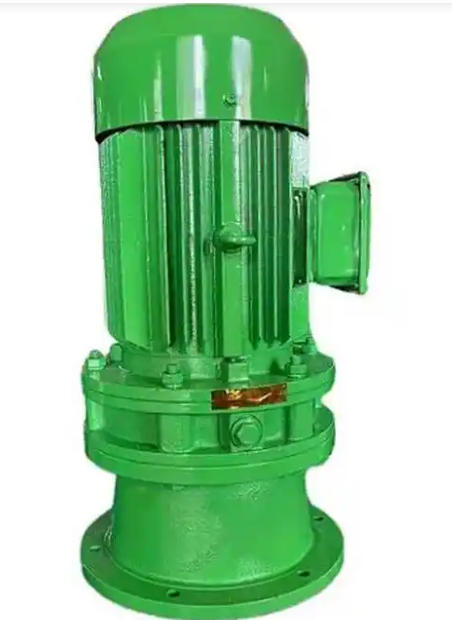

What are the detection methods for bending the output shaft of BLEY3322-4189-1.5KW cycloidal reducer
The detection methods for the bending of the output shaft of the cycloidal pinwheel reducer mainly include dial gauge measurement, micrometer measurement, visual inspection, and vibration analysis. Among them, the dial gauge measurement method is the most accurate and commonly used.1. Visual inspection method: Place the output shaft on a flat surface and observe whether its surface is flat or whether there is a height difference at both ends. If there is obvious unevenness or tilt, it may indicate that the shaft has been bent. This method is simple to operate, but has low accuracy and is suitable for preliminary judgment.
2. Dial gauge measurement method (recommended):
Preparation work: Clean the surface of the output shaft to a metallic luster, place it on a V-shaped iron or special bracket, and ensure that the axial movement is controlled within 0.10mm;
Install dial gauge: fix the dial gauge on the bracket, align the contact vertically with the center position of the axis;
Measurement process: Slowly rotate the shaft and record the maximum and minimum readings on the dial gauge. Half of the difference between the two is the curvature;
Judgment criteria: Generally, it is required that the curvature of the output shaft of the cycloidal pinwheel reducer be less than 0.2mm. If it exceeds this value, it needs to be straightened or replaced.
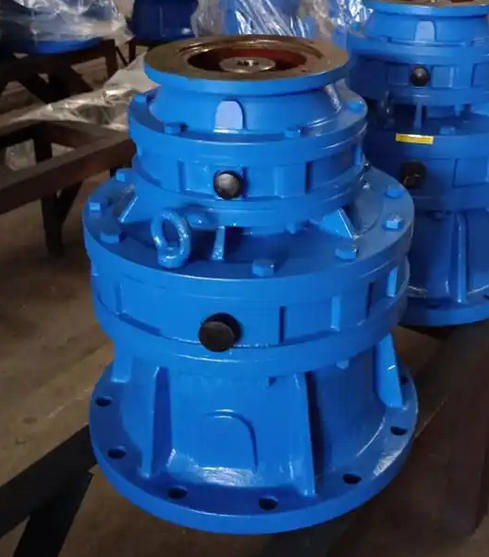
3. Micrometer measurement method: Use a micrometer to measure the diameter at different positions on the shaft. If there are significant differences in data from multiple points, it may indicate bending. This method requires multi-point sampling and is suitable for auxiliary verification.
4. Vibration analysis method: Install vibration sensors on the output shaft to collect signals during operation. If there is a significant 1-fold frequency component in the spectrum, it can be determined that the shaft is bent. This method relies on professional equipment, but has high accuracy and is suitable for online monitoring and fault diagnosis.
In addition, according to industry maintenance standards, when the straightness error of the shaft is greater than 0.1mm/m, calibration or replacement should also be carried out to ensure stable operation of the equipment.
Related News