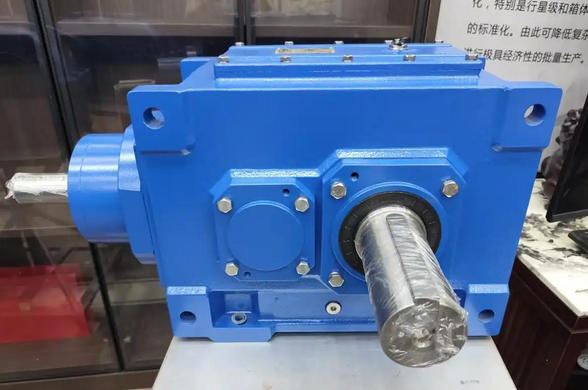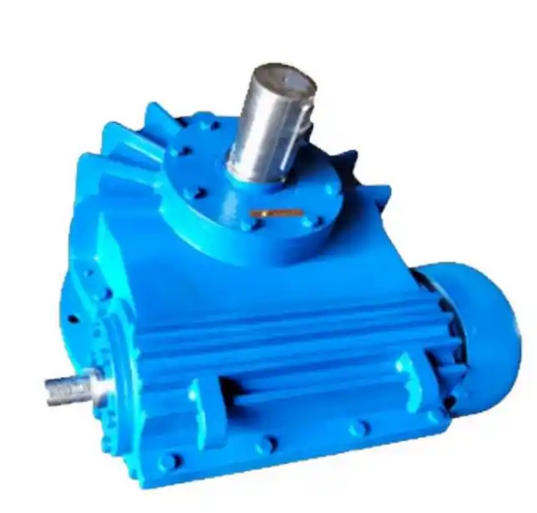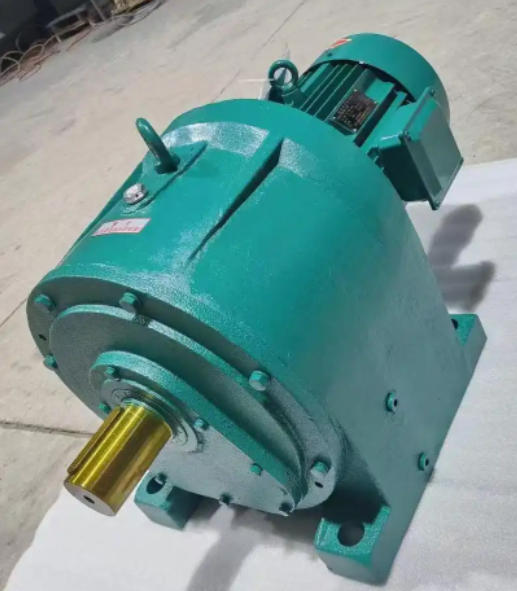

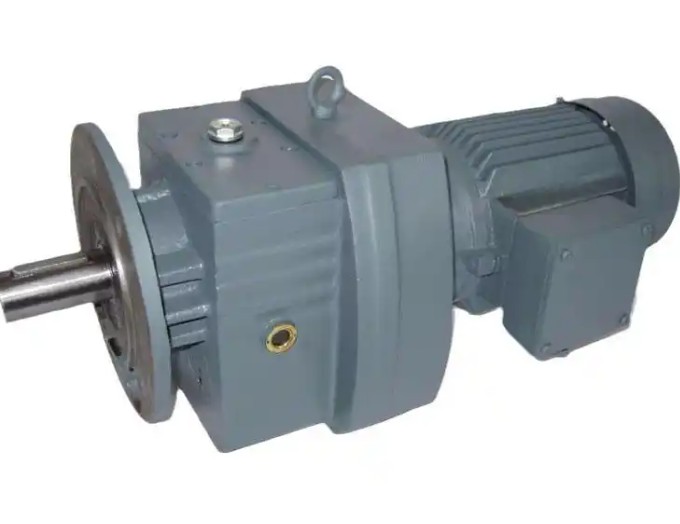
Why has the worm gear reducer become a leader in mechanical transmission?
From ship auxiliary machinery to heavy construction machinery, from lifting equipment to processing machinery, from automated production equipment to household appliances, the significant role played by worm gear reducers in reducing speed and increasing torque can be seen almost everywhere.Among various lifting and hoisting equipment, the worm gear reducer, with its unique self-locking performance, plays a role in preventing reverse load driving, maintaining stable position, preventing accidental falling or sliding, and locking position when there is no power input, making important contributions to the development of various lifting equipment.
1、 The principle and characteristics of worm gear reducer
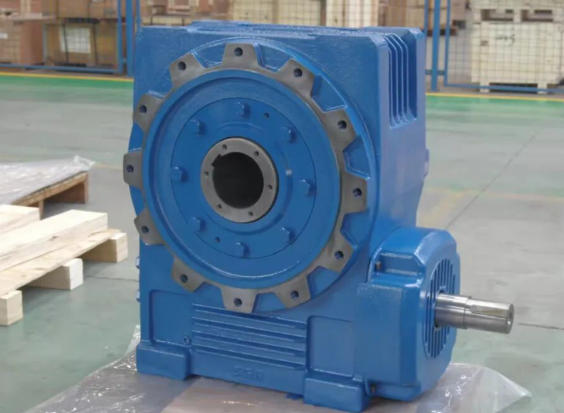
Worm gear reducer is a compact mechanical transmission device with a large transmission ratio and self-locking function under certain conditions. It is also the most common transmission equipment in China's current mechanical transmission system. The deceleration and torque increasing effect of a worm gear reducer is mainly achieved by the meshing of its worm gear and worm.
When the worm gear reducer is running, power is input from the worm gear, and the helical teeth of the worm gear will push the grooves of the worm gear to rotate. However, due to the small helix angle of the worm gear, the worm gear needs to rotate multiple times for each tooth it rotates. The asymmetry of this transmission ratio directly achieves a step like decrease in speed and greater output torque. In addition, due to the small lead angle of the worm gear, the worm wheel cannot drive the worm gear in reverse, thus possessing self-locking function.
The deceleration effect of a worm gear reducer is also affected by the friction characteristics of the material. By using high-quality worm gear and worm gear materials, not only can wear be reduced, but the contact area can also be significantly increased, making torque transmission more uniform and stable.
Related News