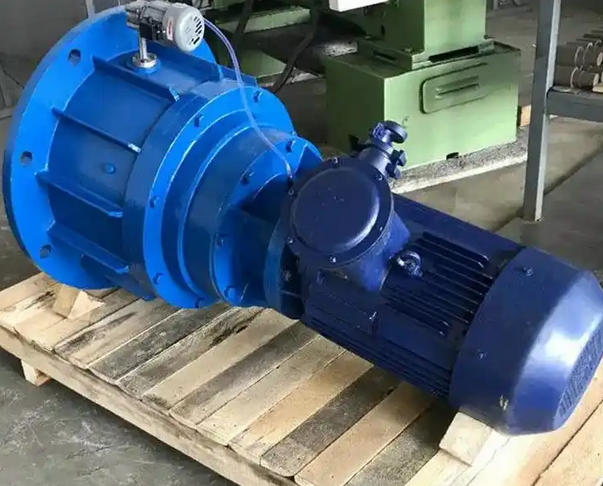

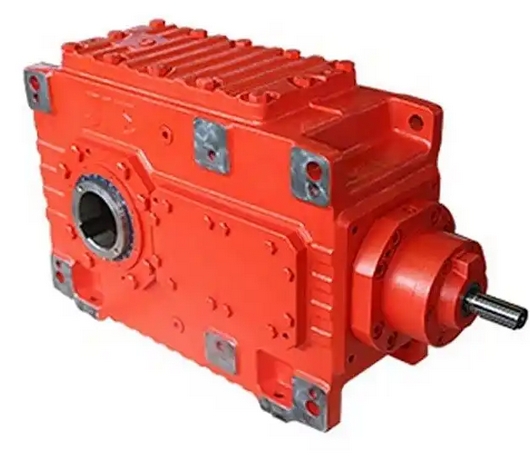
What are the common faults of JS gear reducer
Under long-term high load operation, the common faults of JS gear reducers mainly focus on four categories: abnormal noise, high temperature, oil leakage, and insufficient output torque. The following are specific fault manifestations and common causes:1、 Abnormal noise and vibration
This is the most intuitive manifestation of the fault, which can usually be preliminarily judged by "listening" and "touching":
Gear problem: Continuous buzzing sound during operation, mostly due to gear wear, tooth surface bonding, or excessive/insufficient meshing clearance; If there is an intermittent "clang" or "clang" impact sound, it is highly likely that the gear has broken teeth, cracked tooth roots, or internal connectors (such as bolts and key pins) have become loose.
Bearing failure: Sharp "squeaking" friction sounds occur, usually due to lack of oil in the bearing, wear of the ball bearings, fracture of the cage, or deformation of the inner and outer rings.
Installation and loosening: Loose anchor bolts, misaligned couplings, or uneven installation benchmarks can cause severe vibrations and irregular roars in the aircraft body.
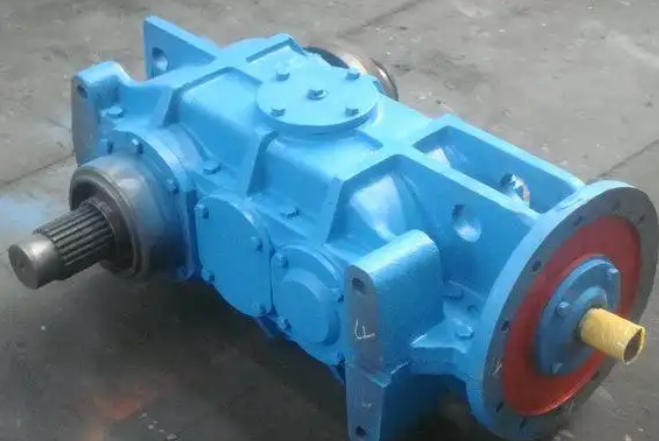
2、 Excessive temperature (abnormal heating)
When the temperature of the gearbox housing exceeds 80 ℃ or is much higher than the ambient temperature, immediate vigilance is required:
Lubrication issues: The lubricating oil model does not match (such as using light load oil for heavy loads), the oil quantity is too high (causing heating during oil agitation) or too low (causing increased friction), and the oil has aged and deteriorated.
Overload operation: The actual load exceeds the designed load-bearing capacity of the gearbox.
Poor heat dissipation: The heat sink or fan is blocked by dust or oil, or the ambient temperature is too high and the ventilation is poor.
Increased internal friction: Poor gear meshing, damaged bearings, or tight assembly lead to excessive internal operating resistance.
Related News