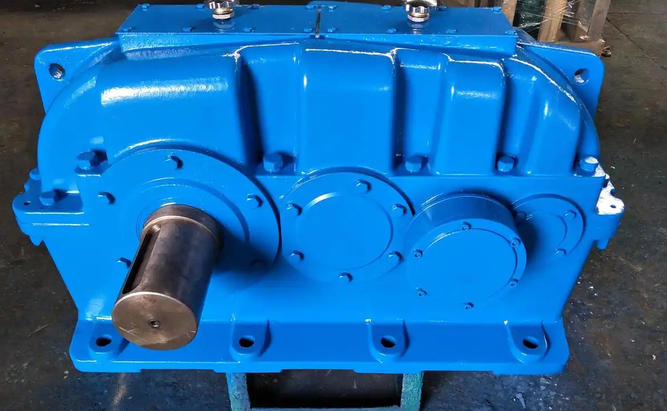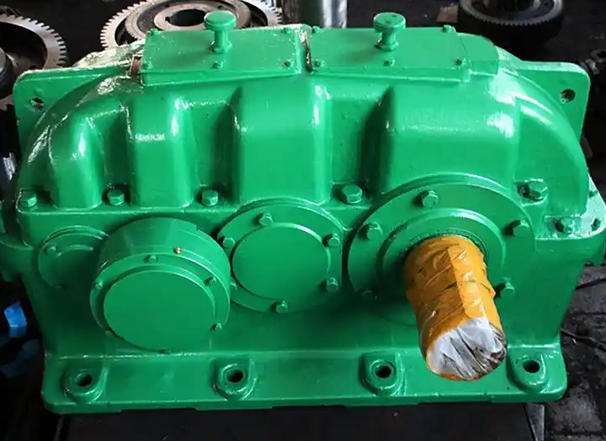

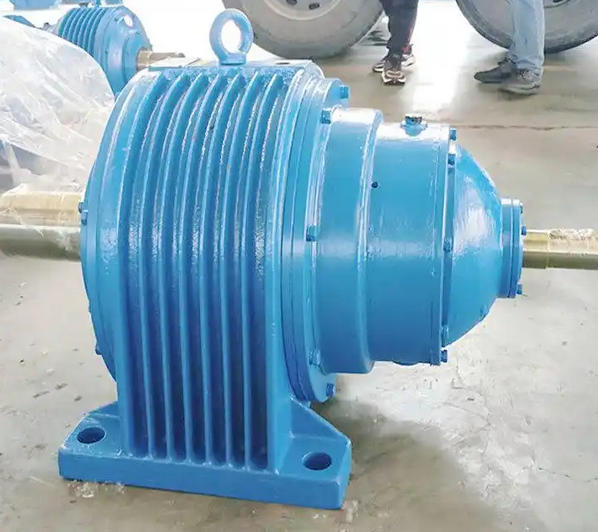
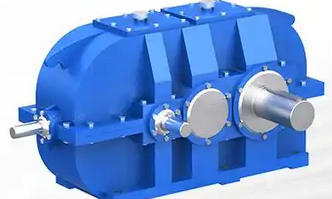
How to determine the model of DCY hard tooth surface conical cylindrical gear reducer
1. Determine the type of gearboxIf you need a hard tooth surface conical cylindrical gear reducer with three-stage transmission, then the type code is DCY.
2. Determine the nominal center distance (a)
This is selected based on the power and torque you need to transmit. The larger the center distance, the stronger the load-bearing capacity of the gearbox. The standard center to center distance specifications for the DCY series include: 160, 180, 200, 224, 250, 280, 315, 355, 400, 450, 500, 560, 630, 710, 800 (in millimeters). You need to choose the appropriate size from these specifications based on the device load.
3. Determine the nominal transmission ratio (i)
Calculate the required gear ratio: gear ratio (i)=input speed/output speed.
The standard nominal transmission ratios of the DCY series include: 16, 18, 20, 22.4, 25, 28, 31.5, 35.5, 40, 45, 50. Please select the standard gear ratio that is closest to your calculated value.
4. Determine the assembly type
Select the corresponding assembly type based on your device installation space and output shaft orientation requirements. DCY reducers mainly come in four standard assembly types: I, II, III, and IV, which define whether the output shaft extends to the left, right, or other directions.
5. Determine the rotation direction of the input shaft
Stand in front of the input shaft of the reducer (connected to the motor) and observe the direction of rotation of the motor shaft.
Clockwise rotation, code named S.
Rotate counterclockwise, code named N.
By combining the information determined by the above five steps, the complete gearbox model can be obtained.
Related News