

How long does it take to repair the NGW82-45 planetary gearbox after low-temperature damage
The repair time for NGW82-45 planetary gearbox after low-temperature damage depends on the degree of damage, spare parts inventory, repair site, and personnel configuration. The following provides accurate time intervals for four typical damage scenarios:1. Minor low-temperature damage (seal hardening and leakage, lubricating oil solidification and deterioration)
This type of damage only involves external or oil related components and does not require disassembly of the core transmission structure. The repair cycle is 0.5-1 working day. The specific process includes: releasing old oil after shutdown (0.5 hours), cleaning the oil tank and oil circuit (1 hour), replacing low-temperature resistant fluororubber oil seals/gaskets (1-2 hours), adding PAO type low-temperature synthetic gear oil (0.5 hours), and finally conducting a 30 minute no-load test run to verify the sealing and lubrication effect. If the on-site tools and spare parts are complete, skilled maintenance personnel can complete it within 4-6 hours; If temporary allocation of seals is required, the cycle may be extended to one working day, with the core time spent on spare parts in place and simple assembly, without complex disassembly and debugging steps.
2. Moderate low-temperature damage (bearing jamming, slight pitting/microcracks on the tooth surface)
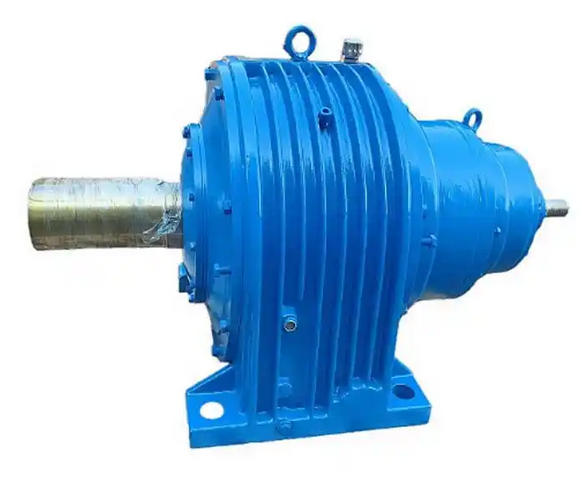
This type of damage requires dismantling the gearbox cover, replacing bearings or repairing gears, with a repair cycle of 2-3 working days. The first step is to stop the machine and disassemble the box (1 day). It is necessary to accurately remove the planetary carrier, sun gear, and inner gear ring to avoid secondary damage. At the same time, all components should be cleaned and the degree of damage checked; The second step is to replace the damaged bearing (preferably using low-temperature resistant bearing steel material), polish and repair the micro cracks on the tooth surface, or replace a single set of gears (0.5 days); Step 3: Reinstall and adjust the meshing clearance, and add low-temperature lubricating oil (0.5 days); Finally, conduct no-load and load tests (2-4 hours) to verify the transmission accuracy and operational stability. If the spare parts inventory is sufficient, it can be completed within 2 days; If customized gears are required, the cycle may be extended to 3 days, with key time spent on disassembly, testing, assembly, and debugging.
3. Severe low-temperature damage (gear brittle fracture, output shaft bending, box cracking)
This type of damage involves core structural components and requires deep disassembly and replacement of key components, with a repair cycle of 5-7 working days. The process includes: disassembling the reducer as a whole, separating the housing, planetary mechanism, output shaft and other components (1-1.5 days), detecting cracks in the housing (0.5 days for magnetic particle inspection), gear fracture and output shaft bending (0.5 days); Customized replacement of 20CrNiMoA low-temperature resistant gear and quenched and tempered output shaft, welding repair of box cracks or replacement of new box (2-3 days, with the largest proportion of spare parts customization time); Reassemble and adjust the meshing accuracy, calibrate the bolt pre tightening force (1 day); Finally, conduct a 24-hour no-load and load continuous test to monitor parameters such as oil temperature, vibration, and noise (1 day). If the core spare parts are out of stock, they need to be customized from the manufacturer, and the cycle may be extended to 7 days. The core time is spent on spare parts production and high-precision assembly and debugging.