
What is the difference between new and old printing and dyeing reducers? Double production capacity after upgrading and renovation
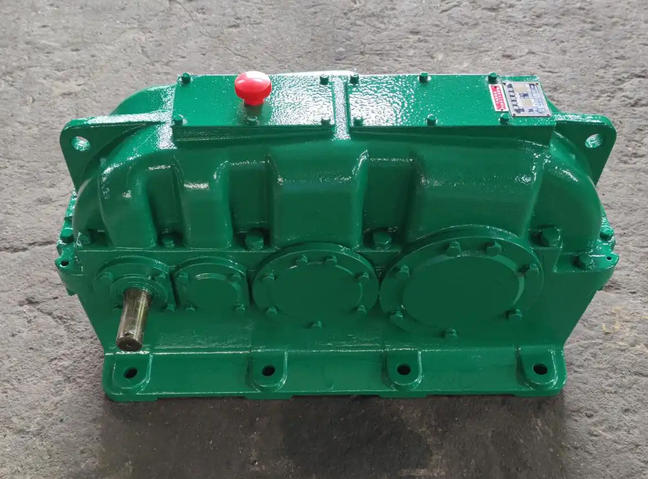
Firstly, there is a significant disparity in transmission efficiency. Old style printing and dyeing reducers mostly have ordinary soft tooth surface structures, outdated processes, low gear meshing accuracy, transmission efficiency of only 75% -85%, a large amount of electrical energy loss, insufficient power output, resulting in slow fabric feeding speed and limited production capacity of the printing and dyeing machine. The new type of helical gear and precision worm gear reducer, after modular optimization design, has a transmission efficiency of over 94%, with almost no loss in power transmission. Under the same motor power, the equipment runs faster and has higher production capacity.Secondly, there is a significant gap between stability and lifespan. The sealing structure of old-fashioned reducers is simple and lacks anti-corrosion and high-temperature resistant design. In the high-temperature and humid corrosive environment of printing and dyeing, they are prone to oil leakage, rusting, and wear, requiring maintenance on average every six months. Frequent shutdowns delay production. The new reducer adopts a thickened cast iron shell, double-layer sealing, anti-corrosion and wear-resistant technology, which is suitable for harsh printing and dyeing conditions. It can operate continuously for 24 hours for a long time, greatly extending the maintenance cycle and reducing the failure rate by more than 80%.
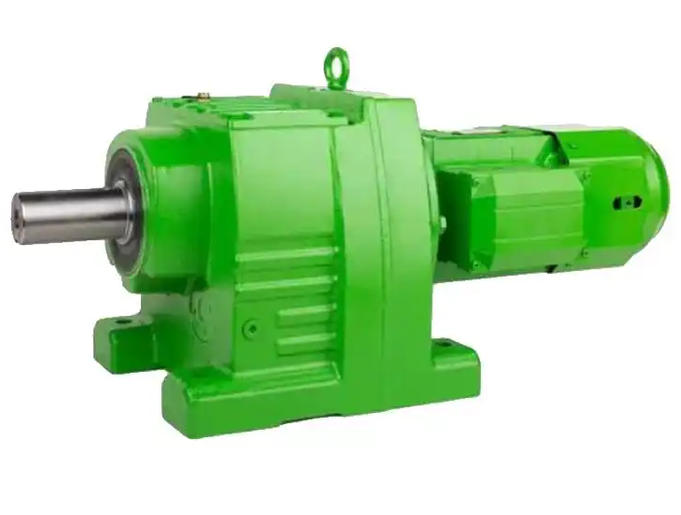
Thirdly, the ability to adapt precision to new processes varies. Traditional extensive printing and dyeing require low precision, and old-fashioned reducers are barely sufficient. But now, high-end digital printing, precision color matching, and seamless dyeing processes require extremely high transmission accuracy. Old style reducers have large transmission clearances, obvious vibrations, and rapid accuracy degradation, making it impossible to adapt and prone to problems such as printing misalignment, fabric wrinkles, and uneven dyeing. The new precision reducer has precise transmission and smooth operation, perfectly adapting to modern high-precision printing and dyeing processes.
Fourthly, there is a significant difference in operation and maintenance costs. Old style gearbox accessories are vulnerable and frequently replaced, coupled with downtime losses, resulting in extremely high annual maintenance costs. The modular design of the new reducer has strong universality, durable accessories, simple maintenance, and convenient replacement, greatly reducing labor and accessory costs. Its long-term cost-effectiveness far exceeds that of old equipment.
For printing and dyeing factories that want to improve quality, increase efficiency, and reduce costs, upgrading and renovating reducers is the most cost-effective and effective renovation project.
Related News