
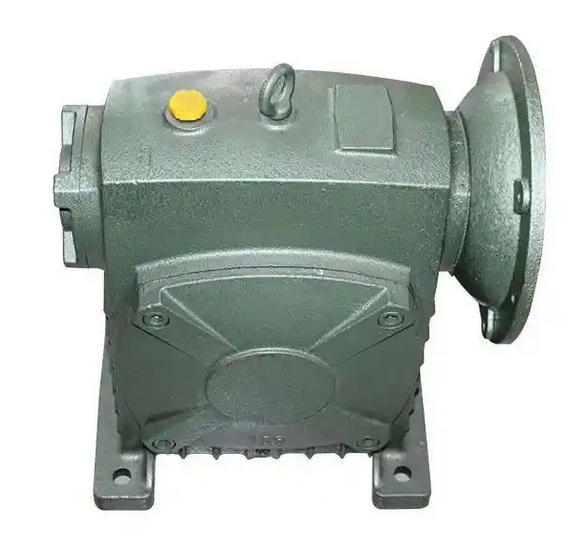
How to ensure stable oil replenishment frequency for WP series reducers with drip lubrication method
To ensure the stable oil replenishment frequency of the WP series reducer's drip lubrication method, the core lies in precise adjustment, continuous monitoring, and standardized management. You can start from the following three dimensions:1. Hardware adjustment and daily monitoring
Accurately adjusting the dripping speed: The key to dripping lubrication is to maintain a continuous and stable supply of oil droplets. You need to adjust the oil dripping speed to a suitable frequency of several to tens of drops per minute based on the current actual speed and load situation of the reducer.
Observe oil discharge and oil level: When replenishing lubricating grease or oil, if the equipment has oil discharge holes and fresh grease overflows, stop immediately; If it is oil bath or drip lubrication, it is necessary to monitor the oil level in real time through an oil dipstick or oil level gauge to ensure that the oil level is within the specified range.
Keep the equipment clean and sealed: Regularly clean the dust and dirt outside the reducer to ensure good heat dissipation. At the same time, regularly check whether the seals such as shaft seals are aging or leaking, to prevent the frequency of oil replenishment from being forced to change due to oil leakage.
2. Implement the "Five Determinations" management principle for lubrication
In order to ensure absolute frequency stability, it is recommended to establish a standardized lubrication management system, namely the "five determinations" principle, which can effectively avoid the arbitrariness of human operation:
Fixed point: Identify the specific lubrication point location of the gearbox.
Quality control: Lubricating oil of the manufacturer's designated brand must be used, and mixing different brands and brands of oil is strictly prohibited to avoid chemical reactions that may affect the lubrication effect.
Quantification: Use accurate measuring tools and strictly control the amount of oil added (usually the bearing filling is 1/3-1/2 of the internal space, and the gearbox is filled according to the oil level line). Too much or too little can affect frequency and heat dissipation.
Regular: According to the equipment manual and actual working conditions, clearly record and strictly implement the oil replenishment and replacement cycle.
Designated personnel: Designate a dedicated person to be responsible for lubrication work, ensuring standardized operation and traceable responsibility.
3. Introduce intelligent upgrade solutions
If you want to completely reduce manual intervention and achieve the most accurate frequency control, you can consider upgrading the equipment to intelligence:
Installing intelligent sensors: using contact type variable frequency capacitive sensors and other oil monitoring devices, which can capture the dynamic changes of lubricating oil in real time.
Realize automatic refueling: When the remaining oil level drops to the preset low level threshold, the sensor will automatically trigger the refueling system; Stop accurately after filling to the high liquid level setting value. This approach can upgrade equipment oil management from "manual monitoring" to "intelligent management", fundamentally ensuring the stability of oil replenishment frequency.
Related News