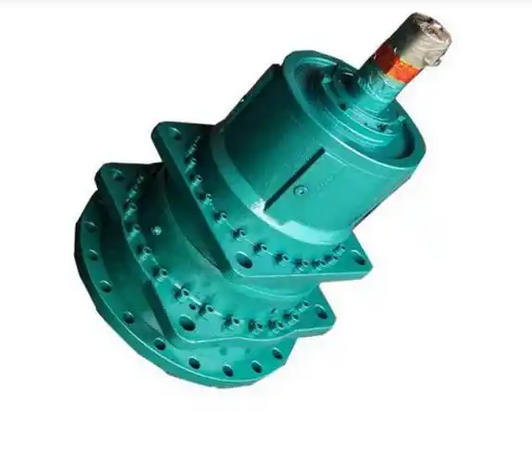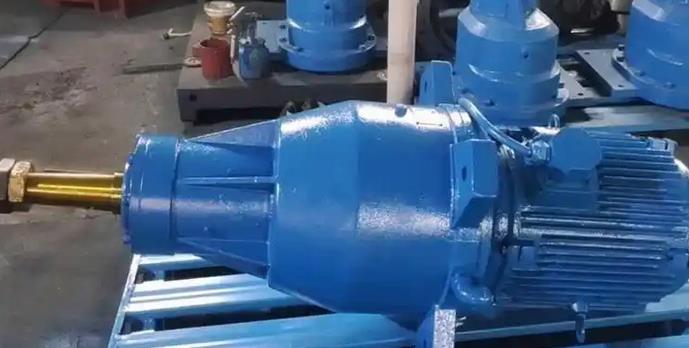

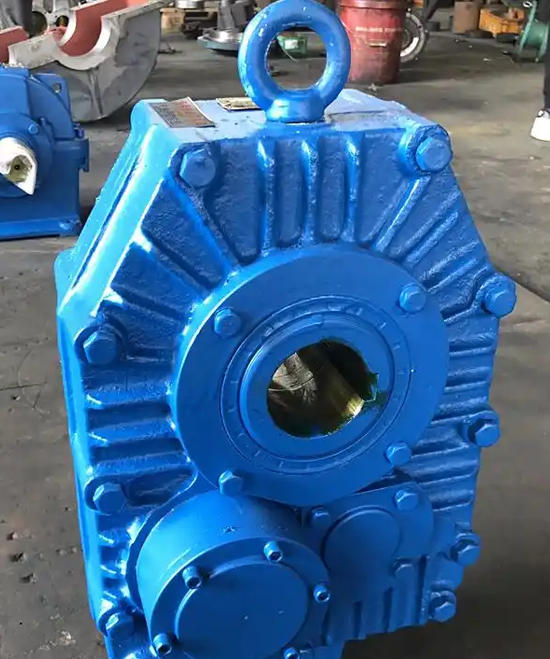
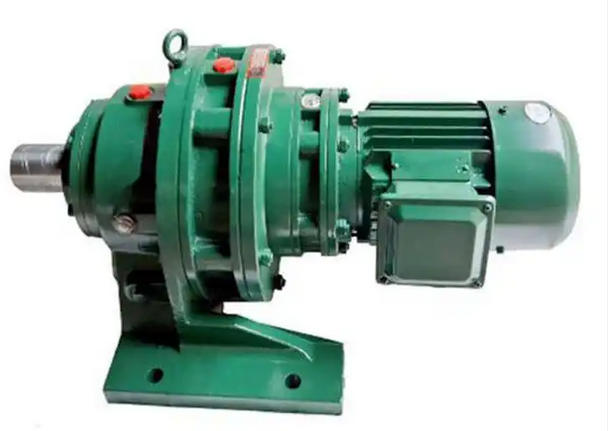
How to check the installation accuracy of BWED142-187-4KW cycloidal pinwheel reducer after fixing it
BWED142 is a high torque two-stage horizontal cycloidal pinwheel reducer. The 4KW power model experiences significant vibration and load during operation, and the installation accuracy directly affects the equipment's lifespan and operational stability. It is necessary to conduct step-by-step inspections from four core dimensions: levelness, coaxiality, fastening status, and operating conditions. The specific operation is as follows:1. Recheck the levelness of the machine base
Select a frame level with an accuracy of ≥ 0.02mm/m, and place it on the machining plane or flange end face of the machine base along the axis direction of the reducer output shaft (longitudinal) and perpendicular to the axis direction of the output shaft (transverse).
Observe the position of the bubble on the level, and ensure that the vertical and horizontal levelness errors are both ≤ 0.05mm/m; If the deviation of the bubbles exceeds the standard, the anchor bolts need to be loosened, and the thickness of the shim should be adjusted to correct it. It is strictly prohibited to level by forcibly tightening the bolts.
Perform multi-point retesting on the corresponding planes of the four anchor bolts of the machine base to avoid single point measurement errors and ensure that the overall level is free from warping.
2. Coaxiality inspection of output shaft and load shaft
This is the core item of installation accuracy inspection, and priority should be given to using the dial gauge method for detection: fix the dial gauge on the output shaft of the reducer, and place the gauge heads against the outer circular surface (radial) and end surface (axial) of the load shaft.
Slowly rotate the two shafts synchronously and record the changes in the dial gauge reading. The radial runout error should be ≤ 0.04mm and the axial runout error should be ≤ 0.03mm. If it exceeds the standard, adjust the position of the load equipment or replace the coupling buffer pad until it meets the requirements.
If an elastic coupling is used, it is necessary to check the clearance between the two ends of the coupling and the shaft to ensure that there is no interference or looseness, and that the bolts are tightened evenly.
3. Inspection of the fastening status of anchor bolts and shim plates
Use a torque wrench to recheck the torque of the anchor bolts in diagonal order. The bolts for the BWED142 model are mostly M14-M16 specifications, with a rated torque reference value of 35-45N · m. The torque attenuation should be ≤ 5%, otherwise re tighten and install anti loosening devices.
Use a 0.05mm feeler gauge to check the clearance between the shim and the bottom and foundation surfaces of the machine base, and insert it to a depth not exceeding one-third of the shim width; If there is a gap, the adapter pad iron needs to be replaced, and it is forbidden to fill it with thin gaskets stacked on top of each other.
Check the quantity and arrangement of shims, which should correspond one-to-one with the anchor bolts. Each group of shims should not exceed 2 layers, and there should be no displacement or inclination.
4. Inspection of no-load trial operation conditions
Manually rotate the output shaft of the gearbox to ensure flexible rotation without any jamming or abnormal noise, and uniform and no sudden changes in rotational resistance.
Perform a no-load test run with power on for 30 minutes, during which three key indicators are monitored: firstly, the operating noise should be ≤ 75dB (measured at a distance of 1m from the equipment), and there should be no obvious metal impact or whistling sound; The second is the bearing temperature, with a temperature rise of ≤ 40 ℃ and a maximum temperature of ≤ 80 ℃; The third is the vibration of the machine base. Use a vibration meter to detect the surface vibration velocity of the machine base, and the effective value is ≤ 2.8mm/s.
After the trial run is completed, stop the machine and recheck the levelness, coaxiality, and bolt torque to confirm that there is no change.
Related News