
DCY Reducer Selection FAQ: Choosing Gear Ratios & Fixing Oil Leaks
Q1: What is the difference between DCY and DBY?
The DBY is a two-stage reducer, while the DCY is a three-stage reducer. The additional stage in the DCY provides a wider ratio range (16–50) and higher output torque, making it suitable for heavy-duty applications. The DBY has a more compact structure and is better suited for moderate-load scenarios.
Q2: How do I determine the gear ratio?
Calculate it based on the motor speed and the required conveyor belt linear speed. Formula: Actual gear ratio = Motor speed ÷ Required output speed. Then select the nearest standard nominal ratio. For example, if the motor runs at 1500r/min and the required output speed is approximately 48r/min, select ratio 31.5.
Q3: How do I fix oil leaks?
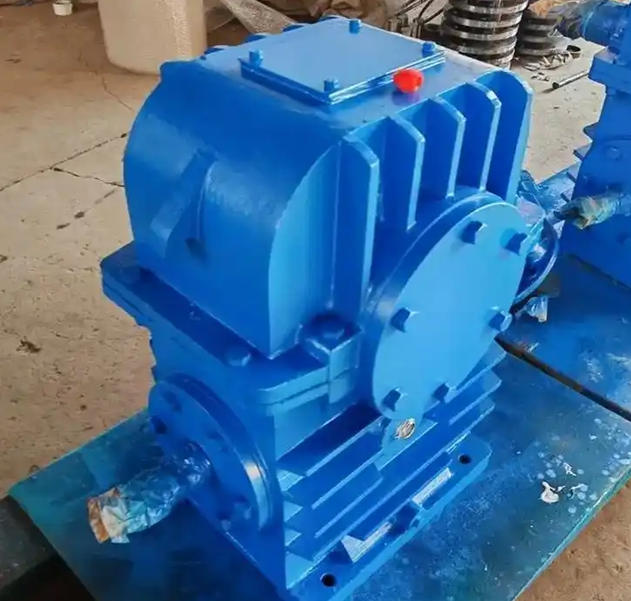
The three most common leak points are: shaft oil seals, housing joint faces, and drain plugs. Shaft seal leaks are usually caused by aged seals — replace with the same specification. Joint face leaks require removing old sealant, reapplying fresh sealant, and retorquing the bolts. Drain plug leaks are typically due to damaged gaskets. Additionally, an excessively high oil level or a blocked breather can also cause leaks — adjust the oil level and clear the breather accordingly.
The three most common leak points are: shaft oil seals, housing joint faces, and drain plugs. Shaft seal leaks are usually caused by aged seals — replace with the same specification. Joint face leaks require removing old sealant, reapplying fresh sealant, and retorquing the bolts. Drain plug leaks are typically due to damaged gaskets. Additionally, an excessively high oil level or a blocked breather can also cause leaks — adjust the oil level and clear the breather accordingly.
Q4: What should I do if the oil temperature is too high?
If the oil temperature exceeds 70°C or the housing exceeds ambient + 40°C, check the following: ① Is the oil level too high or too low? ② Has the lubricant degraded and need replacement? ③ Is the unit overloaded? ④ Are the cooling surfaces covered with dust? ⑤ Is the cooling system malfunctioning? For high-power models, consider adding cooling coils or switching to forced oil circulation.
If the oil temperature exceeds 70°C or the housing exceeds ambient + 40°C, check the following: ① Is the oil level too high or too low? ② Has the lubricant degraded and need replacement? ③ Is the unit overloaded? ④ Are the cooling surfaces covered with dust? ⑤ Is the cooling system malfunctioning? For high-power models, consider adding cooling coils or switching to forced oil circulation.
Q5: How do I choose mounting type Ⅰ/Ⅱ/Ⅲ/Ⅳ?
Type Ⅰ = left-hand output shaft; Type Ⅱ = right-hand output shaft; Type Ⅲ = left-hand output shaft with backstop provision; Type Ⅳ = right-hand output shaft with backstop provision. Choose based on the conveyor frame layout and whether anti-reverse (backstop) functionality is required.
Type Ⅰ = left-hand output shaft; Type Ⅱ = right-hand output shaft; Type Ⅲ = left-hand output shaft with backstop provision; Type Ⅳ = right-hand output shaft with backstop provision. Choose based on the conveyor frame layout and whether anti-reverse (backstop) functionality is required.
Q6: Can I start the reducer directly in sub-zero temperatures?
No. Below 0°C, the lubricant viscosity increases significantly. The oil must be preheated to above 0°C using an electric heater before startup; otherwise, dry friction will damage the gears and bearings.
No. Below 0°C, the lubricant viscosity increases significantly. The oil must be preheated to above 0°C using an electric heater before startup; otherwise, dry friction will damage the gears and bearings.