
How to avoid misunderstandings in selecting FADR series planetary reducers
After clarifying the requirements, key parameters need to be determined through precise calculations. Here are the three most common misconceptions and their solutions.Misconception 1: Only focus on motor power, ignore torque calculation
A common mistake made by beginners is to match the gearbox solely based on the motor power. This is completely wrong. It is necessary to convert power and speed into torque through formulas for verification.
The correct approach:
1. Calculate the required reduction ratio (i):
I=rated speed of motor (n ₁)/required output speed of equipment (n ₂)
2. Calculate the theoretical output torque (T_output) of the gearbox:
T output=rated torque of motor (T motor) x reduction ratio (i) x efficiency of reducer (η)
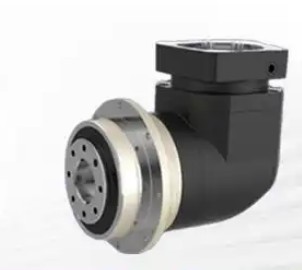
The efficiency (η) of planetary gearboxes is usually between 0.95-0.98 and cannot be ignored during calculation.
3. Verification torque:
The rated torque of the reducer is greater than or equal to the output value multiplied by the safety factor
The safety factor is usually taken as 1.5-2.0, and for scenarios with impact loads (such as punching machines), a higher value should be taken.
Misconception 2: Believing that a larger reduction ratio is better
Blindly pursuing a high reduction ratio not only increases costs, but may also lead to the motor operating in an inefficient range, resulting in energy waste and torque redundancy.
Correct approach: Based on the actual output speed and torque required by the equipment, accurately calculate the most suitable reduction ratio using the above formula. At the same time, the choice of reduction ratio is also related to accuracy. For high-precision applications, medium speed ratios (such as 10-30) can usually better control backlash.
Misconception 3: Confusing "rated torque" and "peak torque"
The gearbox model is usually labeled with the rated torque, which is the torque that can work continuously for a long time. The peak torque is the maximum impact torque that can be sustained in a short period of time, usually 2-3 times the rated value.
Correct approach: When selecting, it is necessary to ensure that the rated torque of the reducer meets the requirements for continuous operation of the equipment, and leave a safety margin. For working conditions with frequent starting, stopping, or impact loads, it is necessary to additionally calculate whether the peak torque is within the range that the gearbox can withstand.
Related News