
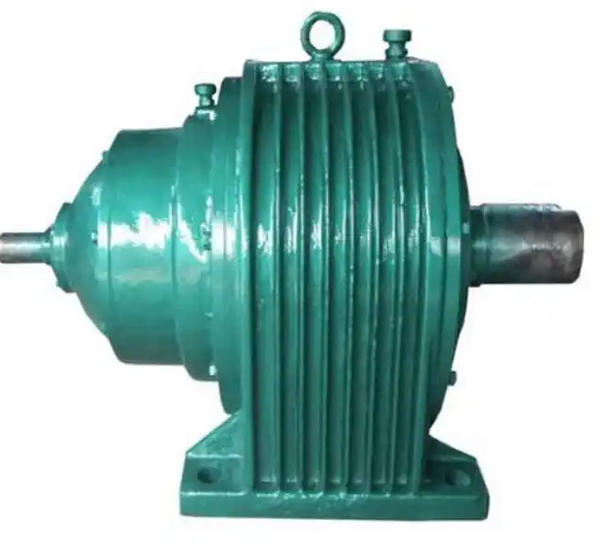
What are the repair methods for damaged planetary gear bearings in the NGW11 reducer
1. Maintenance and Replacement of Bearing BodiesDirectly replace the new bearing: For bearings with non-adjustable clearances, if the clearance exceeds the standard or is damaged, the most straightforward repair method is to replace it with a new bearing of the same model.
Reinstallation and Preload Adjustment: If the bearing damage is caused by excessive tightness during installation or uneven preload, disassemble the bearing and clean the contact surfaces. When reinstalling, apply the preload evenly to prevent deformation of the bearing.
II. Repair and Replacement of Bearing Positioning Components
Bearing damage is often accompanied by issues with positioning components, requiring simultaneous inspection
Repair or replace the locating components: If the retaining ring or spacer is loose or deformed, replace it with a new one and ensure it is tightly fitted against the bearing end face with no clearance during installation.
Repair the bearing housing bore: If the bearing housing bore is worn, minor wear can be restored by electroplating to adjust the bore dimensions; if severely worn, the housing or bearing housing must be replaced directly.
3. Adjustment of Axial Clearance and Related Components
The damage to the planetary gear bearing may be related to improper axial clearance and requires recalibration
Recalibrate the axial clearance: Measure the total axial clearance between the sun gear, planetary carrier, and output shaft. If the clearance is excessive, compensate by adding thin shims; if the clearance is insufficient, thin the spacer or replace it with a shim of reduced thickness. After adjustment, manually rotate the input shaft to ensure no binding sensation and that the axial play remains within the permissible range.
Tighten loose positioning components: Inspect and secure the relevant parts. For instance, if the planetary gear is loose in the planetary carrier shaft (failure of interference fit), the planetary gear must be re-pressed or replaced with one equipped with a lock sleeve. If the shaft diameter is worn, it can be repaired by electroplating before reassembly.
4. Investigation and Handling of Operating Conditions and Loads
Bearing damage may also be caused by abnormal external loads, which requires root cause resolution:
Reduce axial load and impact: Inspect whether the load-bearing equipment has abnormal axial forces (such as belt pulley misalignment or excessive screw lead). Adjust the load-end structure (e.g., adding thrust bearings to share axial forces) to ensure the input/output axial load does not exceed the reducer's rated value. If frequent impacts occur, install buffer devices at the input end or optimize the operating program.
Repair worn components: If accompanied by gear tooth surface wear or pitting, minor wear can be mitigated by surface grinding to reduce meshing impact. For severe wear, gear replacement is required. If the planet carrier is deformed, minor deformation can be rectified by plane grinding to restore the reference surface, while severe deformation necessitates direct replacement of the planet carrier.
Related News