


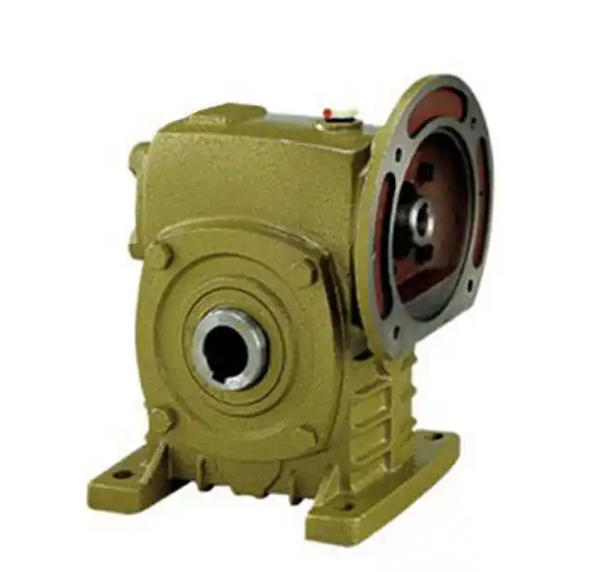
How to prevent oil film rupture in the gearbox of WPDKS135-30 worm gear reducer under low load
1、 Accurate selection and performance enhancement of oil productsL-CKE/P 220 # worm gear special extreme pressure oil must be selected, containing sulfur and phosphorus extreme pressure additives. It can still form a high-strength chemical adsorption film on the tooth surface under low load, avoiding the oil film from being squeezed out of the meshing area.
It is prohibited to use ordinary industrial gear oil as a substitute. Ordinary oil has no targeted extreme pressure formula and is prone to rupture due to insufficient oil film strength under low load.
When the ambient temperature is below 10 ℃, it can be switched to 150 # low pour point special oil to avoid uneven oil film distribution caused by high low-temperature viscosity.
2、 Optimization of oil level and fuel supply status
Control the oil level at the centerline of the oil window to ensure that the lowest tooth surface of the worm gear is completely immersed in the oil. During meshing operation, the oil can continue to enter the contact area, avoiding the inability of the oil to effectively adhere to the tooth surface under low load.
Do not allow the oil level to be too high, otherwise it will increase the stirring resistance and cause the oil temperature to rise rapidly, resulting in a sudden drop in lubricating oil viscosity and synchronous attenuation of oil film strength.
Before the first start-up, manually rotate the gear for 2-3 turns to allow the lubricating oil to pre coat the entire tooth surface of the worm gear, avoiding dry friction damage to the oil film during initial operation.
3、 Adaptation and adjustment for low load operating conditions
To avoid continuous operation of the decelerator under extremely light load conditions where the rated load is below 10% for a long time, the load can be slightly increased through the rear mechanism to ensure the contact stress of the meshing area foundation and maintain the conditions for oil film formation.
The input speed should be controlled within the range of 500~1000r/min. If the speed is too low, it will cause insufficient relative sliding speed of the tooth surface and prevent the formation of a dynamic pressure oil film; Excessive rotational speed can cause a rapid increase in oil temperature and damage the stability of the oil film.
Reduce frequent start stop operations, as the oil film is not fully established at the moment of startup, and the tooth surface is prone to direct boundary friction under low load. It is recommended to run at low speed without load for 1-2 minutes for preheating and lubrication before each startup.
4、 Temperature control during operation
Real time monitoring of the oil temperature in the meshing area ensures that the operating oil temperature is ≤ 70 ℃. When the oil temperature exceeds 90 ℃, the viscosity of the lubricating oil will decrease by more than 50%, and the oil film is prone to direct rupture.
When the ambient temperature is above 35 ℃, install an axial fan on the cooling rib side of the box for forced air cooling to promptly remove the frictional heat from the meshing and avoid oil film failure caused by excessive oil temperature.
Regularly clean the oil and dust on the surface of the cooling ribs of the box to ensure heat dissipation efficiency and prevent abnormal oil temperature rise caused by heat accumulation.
Related News
