
The consequences of choosing the wrong explosion-proof reducer are unimaginable! One article explains the selection criteria and level verification core
In flammable and explosive working conditions, the selection of reducers not only affects the operational efficiency of the equipment, but also directly determines production safety. Selection and explosion-proof level verification need to follow rigorous standards and processes, which can be carried out from the following two core dimensions:1、 Selection criteria for explosion-proof working condition reducers
On the basis of conventional gearbox selection (such as calculating load torque, matching input and output speeds, determining installation methods, etc.), explosion-proof working conditions must additionally consider the following special standards:
1. Suitable for special explosion-proof environments: In flammable and explosive scenarios such as chemical and mining, specialized reducers that meet explosion-proof standards must be selected to eliminate safety hazards from the source. The junction box and heat dissipation structure of some reducers (such as NMRV Ex explosion-proof type) need to be specially designed.
2. Pay attention to thermal power and heat dissipation: The thermal power of the reducer needs to be checked with emphasis during continuous operation. If the explosion-proof reducer accumulates heat during long-term operation, it may cause the lubricating oil to fail or the surface temperature to be too high, leading to danger. In high-temperature workshops or heavy-duty applications, it may be necessary to choose a larger gearbox or an additional external cooling fan.
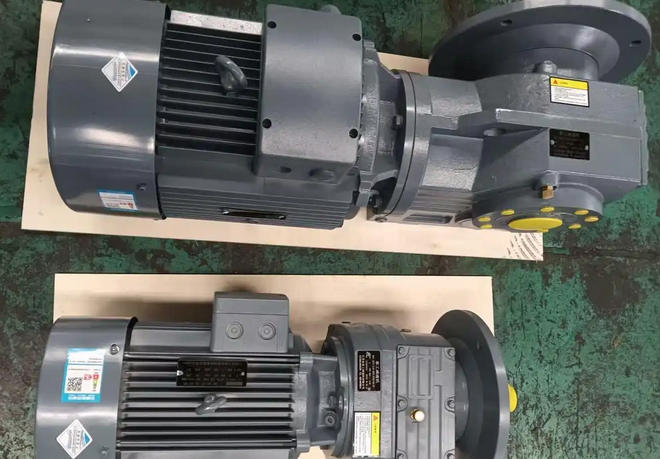
3. Mechanical structure and impact resistance: Explosion proof reducers need to have impact resistance and reliable operating performance. For frequent start stop or severe impact conditions (such as C-type loads), a "service factor" needs to be introduced for correction to ensure that the allowable torque meets the requirements.
4. Compliance with international/domestic mandatory standards: Selection must strictly comply with relevant explosion-proof safety requirements, such as the ATEX Directive (2014/34/EU) of the European Union or relevant mandatory standards in China, to ensure safe operation of equipment in potentially explosive environments.
2、 Guidelines for Checking Explosion proof Grades
The most crucial method to verify the explosion-proof level is to check the equipment nameplate and match it with the on-site environment. A complete explosion-proof sign usually contains multiple key information, all of which are indispensable.
1. Disassemble explosion-proof signs (taking Ex db IIB T4 Gb as an example)
(1) Ex: The "ID card" of explosion-proof equipment cannot be used without this symbol.
(2) Explosion proof type (db): represents explosion-proof technical means, such as d/db for explosion-proof type, e for increased safety type, and i/ia/ib for intrinsic safety type.
(3) Equipment category (IIB): represents the applicable hazardous substance type:
Class I: Underground coal mines (gas environment).
Class II: Explosive gas environments other than coal mines, subdivided into IIA<IIB<IIC (IIC is the most dangerous, preferred for hydrogen and acetylene environments).
Related News