
Difference in Protection of Dry and Wet Grinding Machine Reducer: Analysis of Special Sealing Structure for Water Mist and Dust Environment
1、 Core sealing structure designMaze type and multiple sealing structures: In the dynamic and static joint surfaces (such as the joint surface between the box cover and the box seat, the bearing end cover) and the shaft extension end, maze type seals or multiple sealing structures are preferred. Maze seals can effectively block the direct invasion of external water mist and dust by forming tiny tortuous channels, while allowing components to move relative to each other without friction.
Double lip skeleton oil seal: The connection between the output shaft and the load is the critical path for moisture infiltration. Double lip skeleton oil seals should be used instead of single lip oil seals, and the elasticity of the oil seals should be checked regularly to prevent moisture and dust from entering the interior of the box through the shaft extension gap.
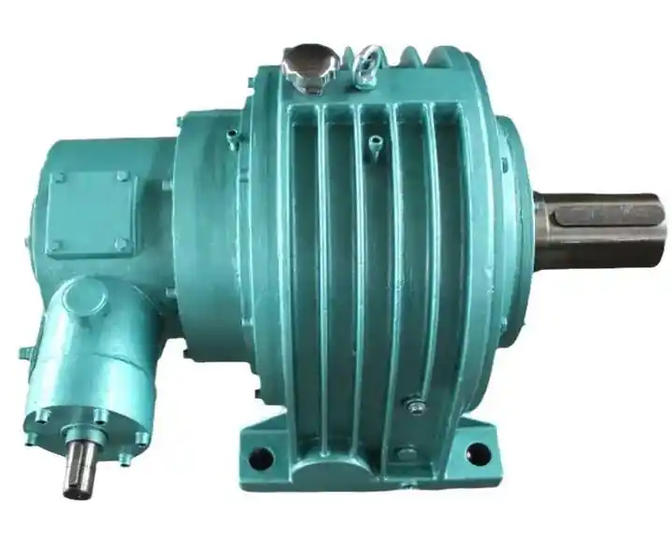
Fully sealed and interface protection: Electrical interfaces such as junction boxes are weak links for moisture intrusion. After the wiring is completed, waterproof sealant (such as silicone sealant) should be used to seal the gaps in the wiring holes, and the terminal block should be coated with moisture-proof insulation grease; All external interfaces should be equipped with rubber sealing rings or waterproof covers to ensure that a sealed space is formed after insertion and removal.
2、 Protection level and material requirements
High IP protection level: For dust and water mist environments, the protection level (IP code) of the gearbox needs to reach IP65 or above (completely dust-proof and anti low-pressure water spray). If facing strong flushing environments such as high-pressure water gun flushing, it needs to be upgraded to IP66.
Corrosion resistant materials and coatings: In humid and corrosive environments, the gearbox casing and key internal components (such as gears and bearings) should be preferably made of 304 or 316L stainless steel. For cast iron or steel materials, special surface treatment is required, such as spraying epoxy zinc rich primer and polyurethane topcoat, or using processes such as Dacromet and galvanizing to form a dense anti-corrosion protective layer.
3、 Lubrication and Temperature Control Protection System
Water resistant lubricating medium: High humidity environments can easily lead to emulsification failure of lubricating oil. High temperature resistant synthetic gear oil or water-resistant lubricating grease with good water resistance and rust prevention properties should be selected to ensure the formation of an oil film that isolates moisture on the metal surface.
Anti condensation and heat dissipation design: Due to the frequent temperature differences in water mist environments, condensation is prone to occur inside the gearbox. An anti condensation heating device can be installed inside the gearbox to maintain the internal temperature above the dew point temperature to prevent condensation; Simultaneously equipped with heat sinks or forced air cooling system to improve ventilation conditions and prevent moisture accumulation inside.
Respirator and Drainage Design: Equipped with high-quality breathable plugs (respirators) to balance internal and external air pressure, preventing the inhalation of external pollutants due to pressure changes; Design drainage holes at the bottom of the gearbox or in areas prone to water accumulation to ensure smooth discharge of any moisture or condensation that may enter.
4、 Special anti leakage structure for powder environment
For dry grinding scenarios with extremely high dust concentration, an innovative powder environment rotating shaft sealing structure can be used. This structure is equipped with a dust chamber and a sealed chamber on the outside of the oil seal. The air flow is continuously blown into the chamber through a gas pipe, and the dust attempting to penetrate from the oil seal is continuously blown back to the dust chamber, forming an air flow barrier, thereby achieving the circulation barrier and leakage prevention of dust.
Related News