
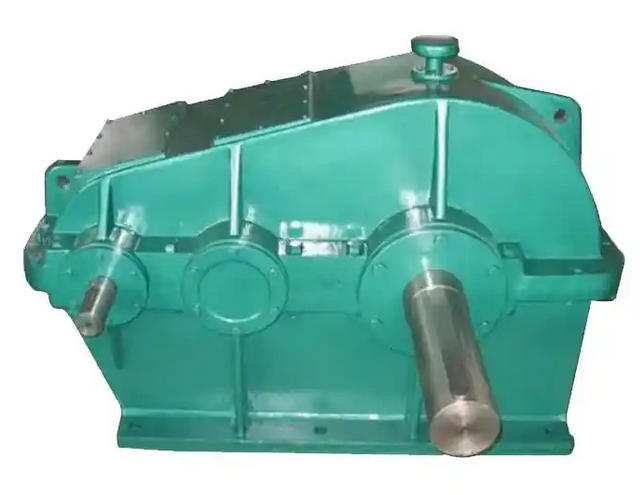
How to detect the parallelism of the shaft system of QJS450-80 gear reducer
The core of testing the parallelism of the shaft system of QJS450-80 gear reducer is to measure the parallelism between its internal high-speed shaft and low-speed shaft axis. The measurement is usually carried out by inserting a simulated shaft (process core rod) into the bearing hole of the box, and there are mainly two methods:Method 1: Centimeter measurement method (traditional method)
This is a classic and reliable on-site measurement method that is suitable for most situations.
1. Preparation work
Ensure that the gearbox body is clean and there are no burrs or foreign objects in the bearing holes.
Prepare two high-precision and smooth surface process core rods that match the bearing holes, and simulate high-speed and low-speed shafts respectively.
Prepare a precision tablet, an equal height gauge block, and a set of dial gauges and gauge holders.
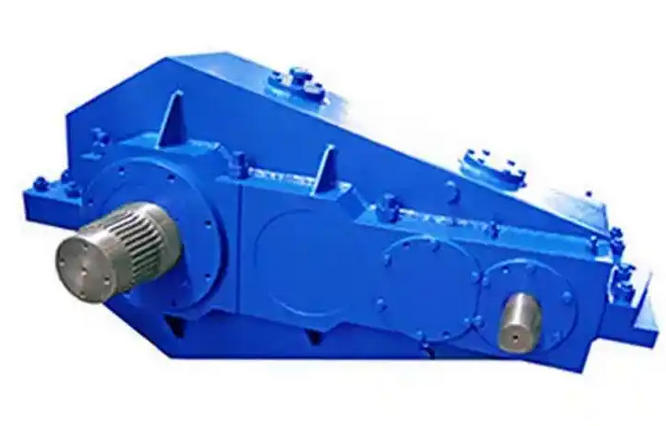
2. Install the core rod
Insert two process core rods into the bearing holes of the high-speed shaft and low-speed shaft of the gearbox housing, respectively.
3. Establish benchmarks
Support the installation base (bottom) of the gearbox housing smoothly on a precision flat plate with equal height blocks.
Usually, a longer axis (or an axis with a larger span) is chosen as the reference axis. Adjust the position of the box and use a dial gauge to align the upper line of the reference core rod, making it parallel to the precision flat plate.
4. Measurement of parallelism error
Place the measuring head of the dial gauge against one end of the upper line of the other (tested) core rod and record the reading.
Move the dial gauge to the other end of the core rod and record the reading again.
The difference between two readings is the parallelism error of the measured axis relative to the reference axis in the vertical direction within the measured length.
In order to conduct a comprehensive evaluation, similar measurements need to be taken in the horizontal direction to check the parallelism (i.e. "skewness") of the axis in the horizontal plane.
Method 2: Three coordinate measuring machine method (high-precision method)
If conditions permit, using a coordinate measuring machine (CMM) can obtain higher precision measurement results.
1. Clamping and benchmark setting
Securely clamp the gearbox body onto the worktable of the coordinate measuring machine.
Measure the installation base of the box with a probe and set it as the reference plane for measurement.
2. Measurement axis
Use probes to separately detect the inner walls of the bearing holes of the high-speed shaft and low-speed shaft, and fit the actual axes of the two holes through software.