
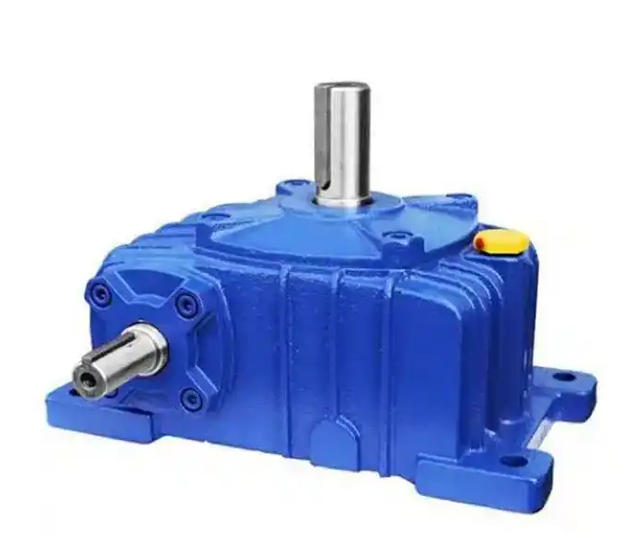
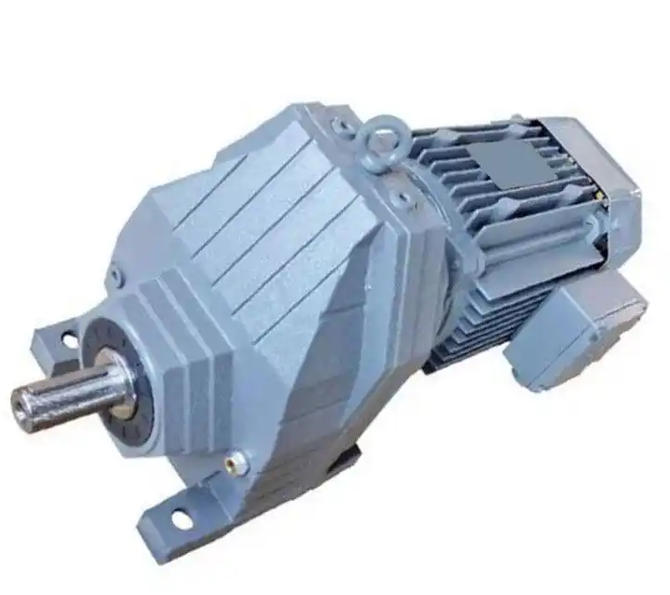
Emergency Handling for Lubricating Grease Failure of RX97‑2.64‑22KW‑M1 Gearbox
Core principle: First shut down the unit to stop fault escalation, perform emergency measures for temporary operation, and carry out thorough rectification to prevent recurring issues. This procedure applies to on‑site sudden lubrication failure response.
1. Immediate Shutdown for Loss Control (Priority Step to Avoid Core Component Scrapping)
- Perform emergency shutdown and power cut. Post a "Do Not Close" warning sign to avert accidental startup. If abnormal noise, overheating or jamming occurs, forced startup or shutdown is forbidden to prevent gear tooth fracture and bearing seizure.
- Allow natural cooling. Do not carry out follow‑up operations until the gearbox housing temperature drops below 40 ℃, so as to avoid hot grease splashing and scald injuries. Disassembly under high‑temperature conditions is strictly prohibited.
- Preliminary fault symptom inspection: Check for grease leakage, housing cracks and loose foundation. Manually rotate the unit after shutdown to confirm jamming conditions. Document fault manifestations including abnormal noise, temperature and vibration, to support subsequent troubleshooting.
2. Emergency Troubleshooting (Remove Degraded Grease to Prevent Secondary Damage)
- Drain failed grease: Locate the bottom drain plug of the gearbox and position an oil collection basin underneath. Unscrew the plug to fully drain degraded grease and oil inside the housing. Gently agitate the gearbox during draining to ensure complete removal of residual degraded grease, metal particles and sediment at the bottom.
- Simple housing cleaning: If large amounts of metal debris and flocculants are mixed in the failed grease, flush the gearbox interior 2‑3 times with clean thin‑bodied gear oil of the same grade (e.g. 220# gear oil). Let the oil settle for 10 minutes after each flushing cycle before draining. Repeat until no visible impurities appear in the drained fluid. Filtered fresh oil may be used for emergency flushing if dedicated flushing oil is unavailable.
- Seal performance check and temporary protection: Rapidly inspect shaft‑end oil seals and housing mating surfaces. Apply sealant for temporary remediation if oil seal aging, damage or gasket leakage is found, to avoid contamination of newly added lubricant. Cover uncovered oil filling and drain ports with clean rags for dust protection.
3. Emergency Lubricant Refilling (For Urgent Production Resumption and Temporary Operational Reliability)
- Proper emergency lubricant selection: This is a hard‑tooth helical gear reducer. For gear sets, L‑CKC 320# medium‑duty closed gear oil is recommended for ambient‑temperature conditions, while L‑CKC 460# is adopted for high‑temperature and heavy‑load scenarios. LGMT 3# extreme‑pressure lithium‑based grease shall be applied separately for bearing lubrication. Inferior lubricants and cross‑grade oil mixing are strictly forbidden.
- Standard refilling operation: Clean the filler port before refilling. Filter fresh lubricant through a ≥100‑mesh screen and pour slowly via a funnel. Maintain gear oil level at the midpoint between upper and lower marks on the oil level gauge. Fill bearing cavities with grease to 1/2‑2/3 of total cavity volume; over‑filling is not permitted.
- Ventilation and no‑load running‑in: Securely tighten oil filler and drain plugs after refilling. Run the gearbox under no‑load conditions for 5‑10 minutes. This enables fresh lubricant to fully coat gear teeth and bearing raceways and expel trapped internal air. Monitor for leakage and abnormal noise throughout the cycle. Stop the unit and hold for 2 minutes, then re‑verify oil level. Top up to standard level if lubricant volume is insufficient.
Related News