
How to judge whether the bearing lubrication of WPDX120-15-1.5KW worm gear reducer is normal
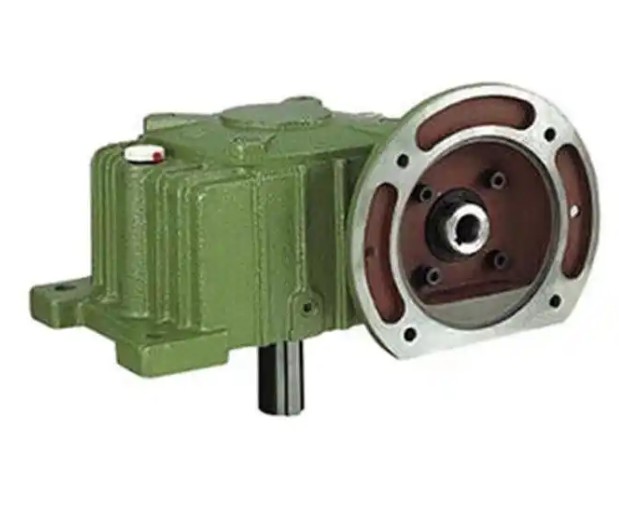
To determine whether the bearing lubrication of WPDX120-15-1.5KW worm gear reducer is normal, the core revolves around three dimensions: static inspection before startup, dynamic monitoring during operation, and disassembly and inspection after shutdown. The bearings of this model are only rolling bearings at the input/output shaft end caps, lubricated with lithium based grease, and have no other lubrication parts. The judgment criteria are based on no abnormal heating, no abnormal noise, no jamming, and the lubricating grease meets the standard and is in good condition. The judgment method is as follows:1. Static visual inspection before startup (performed per shift): Check the grease injection nozzle, oil drain hole, and oil seal of the bearing end cover for any grease leakage or dry agglomeration, and ensure that the dust cap of the grease injection nozzle is intact; Manually rotate the input/output shaft smoothly without any jamming or jerking, without any metal friction noise in the bearing parts, and without significant shaking of the shaft body; The bearing end cap is free of deformation and cracks, tightly integrated with the housing, and has no hidden danger of grease leakage caused by looseness.
2. Dynamic core monitoring during operation (continuously executed after startup): ① Temperature: When the ambient temperature is 0-40 ℃, the temperature rise of the bearing end cover shell is ≤ 35 ℃ (measured temperature ≤ 75 ℃), and after 30 minutes of operation, the temperature tends to stabilize without a continuous upward trend. The temperature rise under high temperature conditions (>40 ℃) needs to be ≤ 30 ℃; ② Abnormal noise: There is no additional abnormal noise during the operation of the bearing, only accompanied by a light sound of normal worm gear meshing of the reducer, no "squeaking" dry friction sound, "clicking" raceway wear sound, "buzzing" muffled sound, and the abnormal noise does not increase with the increase of speed; ③ Vibration and Rotation: The bearing end cap has no obvious vibration or high-frequency shaking, the input/output shaft runs smoothly, there is no radial or axial displacement, and there is no abnormal increase in rotational resistance.
3. Accurate verification of disassembly after shutdown (monthly/quarterly special inspection, executed immediately in case of abnormalities): After cooling down to room temperature, remove the bearing end cover and visually inspect the bearing chamber and lubricating grease status; The normal state is that the amount of lubricating grease accounts for 1/2~2/3 of the bearing chamber volume, with no shortage of grease or excessive filling; The fat body appears as a light yellow/milky white uniform paste, without blackening, thinning, drying or hardening, and without emulsification or water ingress; There are no metal debris, dust or other impurities in the fat body, evenly adhering to the bearing raceway and rolling element surface, without detachment or local accumulation; The bearing raceway and rolling element surface are smooth, without scratches, pitting, erosion or discoloration. The bearing fits tightly with the journal and end cap, and there is no component wear caused by lubrication failure.
4. Supplementary judgment for special working conditions: Under low-temperature working conditions (<0 ℃), the rotational resistance of the front axle body is slightly higher when starting up, but it quickly recovers after starting up, and there is no abnormal temperature or abnormal noise during operation. This is the normal characteristic of low-temperature lubricating grease. If it is not in this state, it is the failure of grease dry formation; Under frequent start stop and severe dust conditions, the key inspection is to ensure that there is no grease leakage or dust mixing, and that the bearing rotates without intermittent jamming. After disassembly, there is no obvious impurity contamination in the grease.
Related News