
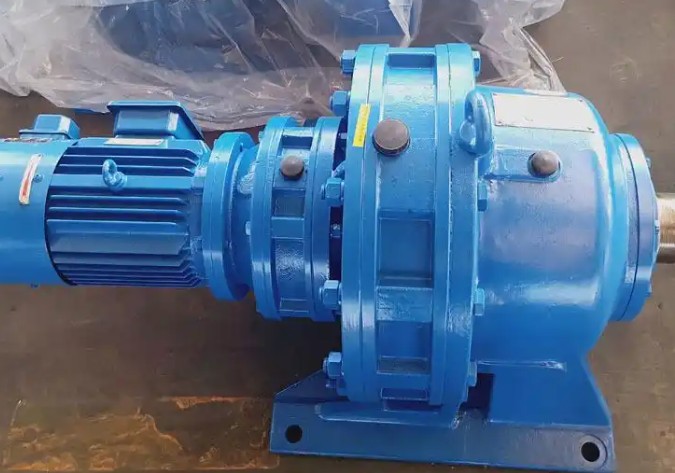
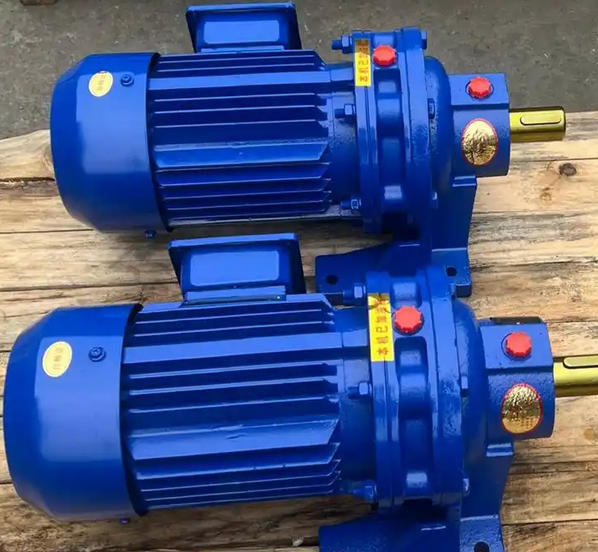
What are the hazards of wear on the output shaft of BWD12-23-3KW cycloidal pinwheel reducer
The following are the 8 core hazards of wear on the output shaft of BWD12-23-3KW cycloidal pinwheel reducer. Combining the structural characteristics and operating scenarios of this model (No. 12 machine base, 23 level transmission ratio, 3KW power), each one explains the hazard performance, impact mechanism, and potential risks, providing accurate judgment basis for equipment maintenance:The significant decrease in transmission accuracy leads to equipment operation deviation: the clearance between the output shaft and the coupling, gears, and other mating components increases due to wear (normal mating clearance is 0.01-0.03mm, which can easily exceed 0.1mm after wear), resulting in idling, impact, or positioning errors during the transmission process. For scenarios such as automated production lines and precision conveying equipment that require precise control of speed/displacement, it can cause problems such as material conveying deviation and processing size deviation. The accumulation of errors under the 23 level transmission ratio will further amplify the quality defects of the operation and affect the product qualification rate.
Vibration and noise intensify, accelerating the aging and failure of the entire machine: wear leads to an increase in the coaxiality deviation of the output shaft (severe radial runout exceeding 0.05mm), causing high-frequency vibration of the gearbox housing and machine base during operation, and the impact friction of the mating surface will cause noise exceeding 85dB. Long term vibration not only causes loosening of fixing bolts and detachment of seals, but also transmits to core components such as internal cycloidal gears and needle teeth, exacerbating gear meshing wear and bearing raceway damage, shortening the overall service life of the gearbox by 30% -50%.
The interlocking failure of the lubrication system triggers multiple wear cycles: the roughness of the output shaft surface increases after wear (Ra value increases from ≤ 0.8 μ m to over 1.6 μ m), which quickly wears down the failed skeleton oil seal lip and leads to lubricant leakage; At the same time, the iron filings generated by wear are mixed into the oil (the lubrication capacity of the 3KW model is only 2-3L, and pollution spreads rapidly), forming abrasive wear, further scratching the shaft surface, bearings, and gear meshing surfaces, forming a vicious cycle of "wear pollution more severe wear", ultimately leading to component jamming.
The output torque attenuates and cannot meet the rated working condition requirements: wear causes a decrease in the contact area of the mating surface, an increase in the force per unit area, and the output shaft is prone to elastic/plastic deformation, resulting in a 10% -20% decrease in torque transmission efficiency. For loads such as fans, pumps, and small conveying equipment driven by 3KW motors, there may be a decrease in output speed, insufficient power, and even inability to start the rated load, resulting in production process interruption or inefficient operation of the equipment.