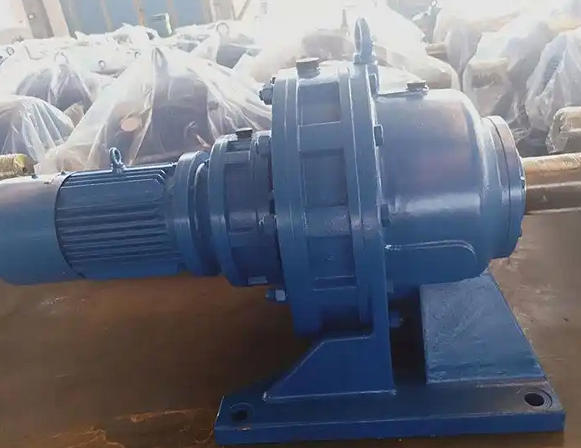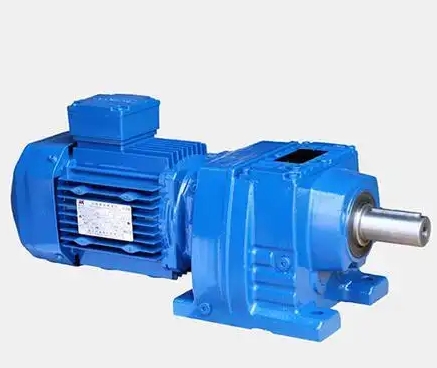

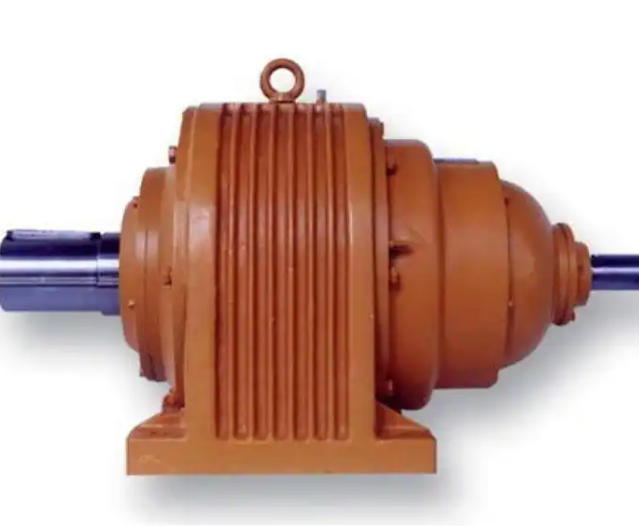
What impact does the choice of welding current and voltage have on the performance of the NGW73-45-37KW planetary reducer base made of cast iron?
The selection of welding current and voltage directly determines the welding heat input, weld quality, and microstructure of the heat affected zone, which in turn affects the welding strength, crack resistance, dimensional accuracy, and long-term operational stability of the cast iron machine base. The specific impact and adaptation requirements are as follows:1、 The core influence of welding current
Current is the core parameter that determines the intensity of heat input. Cast iron has high brittleness and a strong tendency to harden, and current deviation can directly cause cracks or performance degradation.
The impact of excessive current
1.1 The sharp increase in heat input leads to a significant increase in the width of the heat affected zone, which destroys the graphite morphology of the cast iron base material and generates a hard and brittle white microstructure and martensite. After welding, the brittleness of the machine base skyrockets, making it easy to produce cold cracks and delayed cracks.
1.2 Excessive melting depth increases the fusion ratio of the base material, increases the proportion of cast iron in the weld, and reduces the crack resistance advantage of nickel based/high vanadium welding rods.
The NGW73 machine base has a large wall thickness and strong rigidity, and local overheating leads to concentrated shrinkage stress. The dimensions of key parts such as bearing holes and installation flanges exceed the tolerance, which affects assembly and transmission accuracy.
1.4 Coarse grain size in welds and heat affected zones reduces the plasticity and toughness of welds.
The impact of low current
2.1 The welding rod arc is unstable, and the fusion between the weld and the base material is insufficient, resulting in defects such as incomplete penetration and slag inclusion. The machine base is prone to cracking from the weld when subjected to load.
2.2 Weak arc blowing force, poor protection effect of the molten pool, easy to produce pores, reduce the density of the weld seam, affect the sealing of the machine base, and pose a risk of lubricating oil leakage.
2.3 Low welding efficiency requires repeated welding repairs, indirectly increasing local accumulated heat input and increasing stress risk.
Adaptation points: The minimum current shall not be lower than the lower limit of the rated current of the welding rod, and the standard for the welding rod with a diameter of 3.2mm shall not be lower than 80A, based on stable arc and clear molten pool.
2、 The core influence of welding voltage
Voltage is directly related to arc length and needs to be matched with current, otherwise it will amplify the negative effects of current, which is crucial for controlling the heat affected zone of cast iron.
The impact of high voltage (long arc)
1.1 Arc dispersion, uneven heat distribution, increased width of heat affected zone, intensified hardening tendency of cast iron, and increased risk of cracking.
1.2 Air easily invades the molten pool, producing nitrogen and hydrogen pores, reducing the strength and density of the weld seam; Hydrogen is the core cause of delayed cracking in cast iron welding.
1.3 Excessive weld seam height, severe undercutting, and increased stress concentration factor can lead to cracking at stress concentration points when the machine base is subjected to long-term torque vibration during gearbox operation.
Adaptation points: using short arc welding, matching voltage and current; The voltage corresponding to a 3.2mm welding rod (90~120A) is 16~19V; the voltage corresponding to a 4.0mm welding rod (120~15A) is 18~22V, with arc length ≤ welding rod diameter.
Related News