
Which components of the gearbox will be damaged if the tilt exceeds the standard
1、 The core transmission components are the first to be damagedBearing: It is the first failed component due to excessive tilt, and the additional bending moment will cause the bearing to bear asymmetric radial/axial forces outside the design. The local contact stress between the rolling elements and the raceway exceeds the standard, quickly causing pitting and peeling, and in severe cases, directly locking and burning. The service life can be reduced to less than 30% of the original design.
Gear pair: Tilting causes the tooth surface to change from full tooth width contact to edge offset load, and the contact stress suddenly increases from 1500MPa to over 3000MPa. Soft tooth surface models will experience plastic deformation of the tooth surface within 1-2 weeks, while hard tooth surface models will experience fatigue pitting corrosion within 1-3 months, ultimately leading to tooth surface peeling and tooth breakage.
Shaft system: Continuous alternating bending stress acts on the input/output shaft, causing rapid eccentric wear and elliptical deformation of the shaft neck. Long term operation can lead to fatigue cracks, ultimately resulting in bending or even fracture of the shaft body.
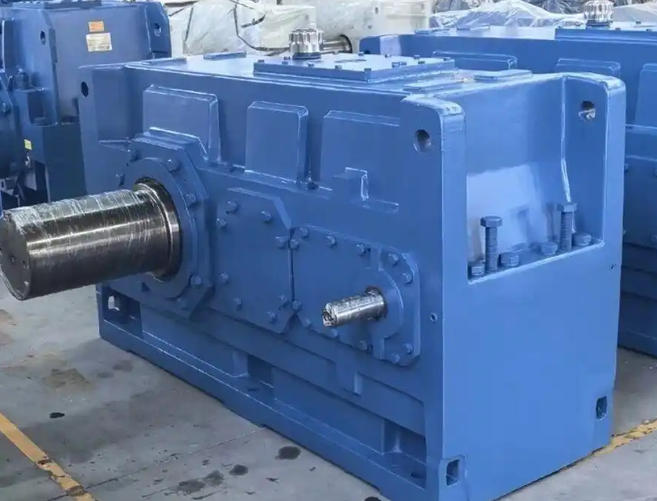
2、 Rapid failure of sealing and connecting components
Sealing element: The eccentric rotation trajectory of the shaft will cause sustained high-pressure friction at the lip of the oil seal, leading to eccentric wear failure and oil leakage within 3-6 months; External dust and moisture intrusion form abrasive wear, further exacerbating secondary damage to gears and bearings.
Couplings: The connecting bolts of rigid couplings will withstand additional shear forces and may break in the short term; The elastic components such as the plum blossom pad and diaphragm of the elastic coupling will rapidly fatigue and crack due to repeated deformation, completely losing their compensation ability.
3、 Hidden damage to the box and structural components
Gearbox body: Long term eccentric vibration can cause eccentric wear and roundness of the bearing seat holes, and fatigue cracks on the joint surface due to repeated alternating stress. In severe cases, the entire machine base may crack.
Fasteners and foundation: Periodic impact loads can cause the anchor bolts and end cap bolts to loosen repeatedly, further amplifying the tilt deviation. Under extreme working conditions, it can also cause equipment foundation displacement, forming a vicious cycle of "tilt → vibration → further tilt".
Related News