
What is the difference between worm gear reducer and double curved reducer
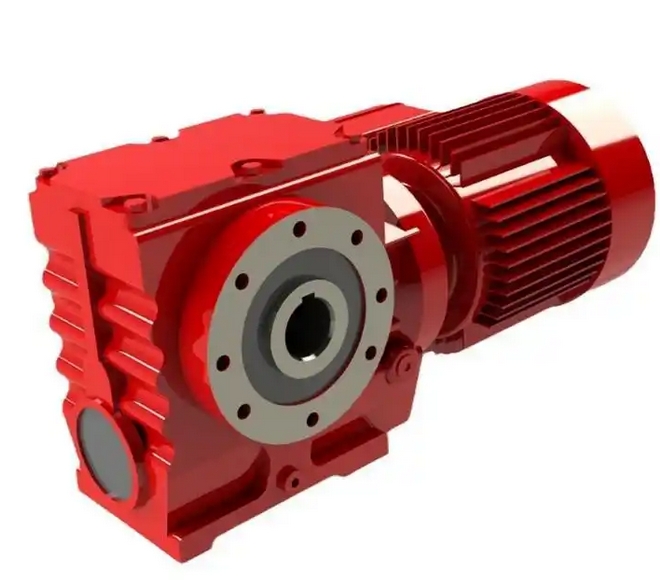
The appearance similarity between hyperbolic reducer and RV worm gear reducer is extremely high, often confused by people. However, the internal structure, transmission efficiency, and performance of the two devices are fundamentally different, and they are two completely different transmission devices.The core difference between the two lies in their internal transmission structure. The RV reducer relies on the combination of worm gear and worm gear for transmission, with the core components being the worm shaft and worm gear. The worm gear is driven by the helical teeth of the worm gear to complete the reduction transmission, with a simple structure and a special transmission method. The internal transmission structure of the dual surface reducer is completely different, consisting of a combination of spiral bevel teeth and straight teeth (helical gears) for transmission, relying on gear meshing to complete power transmission. There is no worm gear or worm structure, which is also the fundamental reason for all performance differences between the two reducers.
The self-locking performance is the most practical functional difference between the two. The RV worm gear reducer has a self-locking function. After the equipment is stopped, the worm gear cannot reverse the rotation of the worm gear, which can effectively prevent the load from reversing. It is suitable for working conditions such as elevators and lifting platforms that require anti reversal. However, the double curved reducer does not have self-locking ability, and the load can drive the equipment in reverse. When used, it needs to be equipped with a brake device, which cannot achieve anti reverse operation alone.
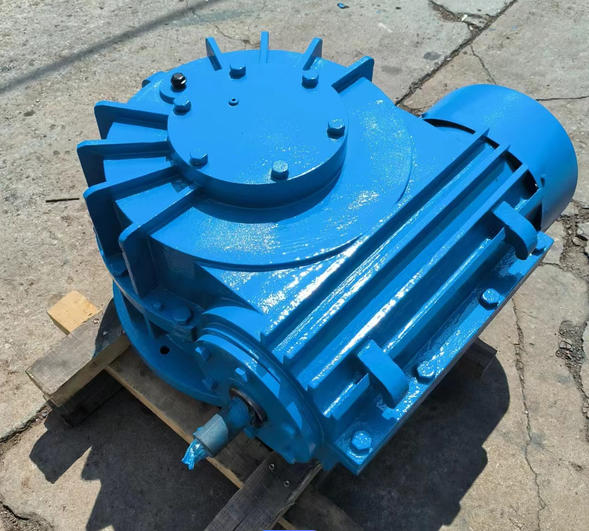
Overall, although the two reducers have similar appearances, there is a significant difference in their structural principles and performance parameters. The RV reducer is superior in its built-in self-locking function, suitable for anti reverse scenarios; Hyperbolic reducers focus on ultra-high transmission efficiency and are suitable for working conditions that require energy consumption and transmission accuracy.