
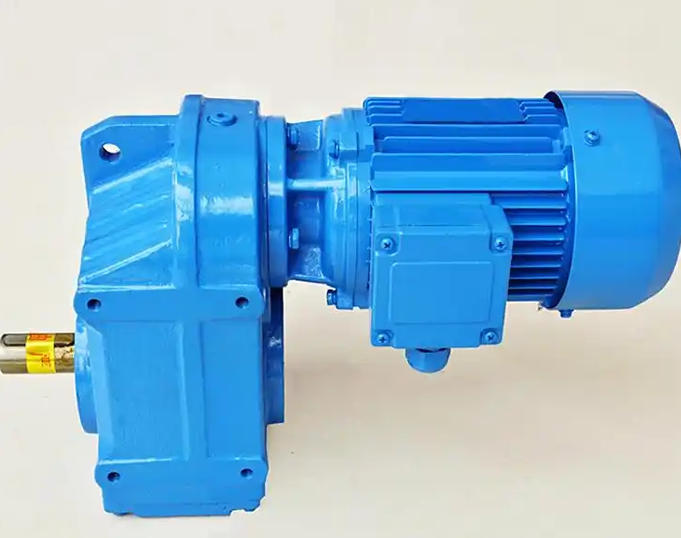
F67 Reducer Bearings Installation Precautions 66.13 Ratio 2.2KW
The following covers key precautions for installing bearings on the F67-66.13-2.2KW gear reducer, with a comprehensive explanation based on installation specifications and typical field issues:
- Pre-installation Preparation Cleaning and Inspection Clean bearings and shaft journals using refined kerosene to remove all metallic debris. For sealed bearings, only wipe the surface with anti-rust oil. Check the diameter deviation of the shaft journal (≤ 0.01 mm) and roundness error of the bearing housing (≤ 0.02 mm). Repair any components that exceed tolerance limits.
Lubrication Fill open-type bearings with grease, occupying 1/3 to 1/2 of the bearing cavity. Sealed bearings can be mounted directly.
- Installation Process Control Force Application Rules For interference fit of the inner ring, strike only the inner ring (avoid striking rolling elements) with a copper rod, or adopt hydraulic pressing with a feed rate ≤ 2 mm/s. For hot mounting, heat parts in an oil bath to 80–100 ℃. The temperature for sealed bearings must not exceed 80 ℃.
Axial Positioning Mount the bearing tightly against the shaft shoulder. After cooling, rotate the bearing manually; rotation should be smooth with no sticking. The axial clearance must comply with design specifications.
- Post-installation Verification
- No-load Running Test Run the reducer with no load for 30 minutes. The bearing temperature rise shall not exceed 25 ℃, and the maximum operating temperature of rolling bearings is 80 ℃. Use a dial indicator to measure axial runout, with allowable value ≤ 0.02 mm.
- Seal Inspection Apply soapy water on mating surfaces, then introduce 0.2 MPa compressed air and hold pressure for 15 minutes. No air leakage is permitted.
- Prevention of Common Faults Overload risk: Do not apply excessive preload force, which may lead to raceway deformation. Lubrication failure: Inspect grease condition periodically. For variable-frequency motor applications, take measures to prevent shaft current corrosion.
Related News