
How to avoid premature failure of lubricating grease for gears and bearings of RX107-YB18.5-3.07 reducer
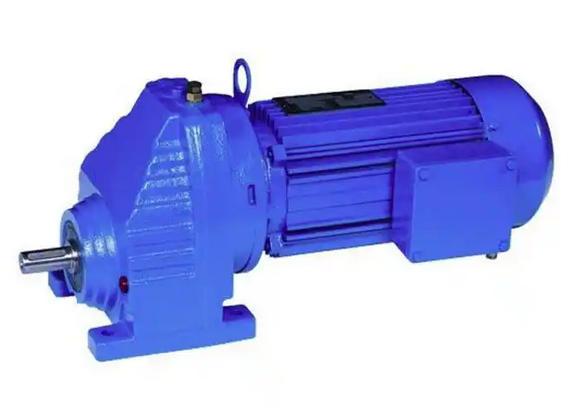
RX107-YB18.5-3.07 is a hard toothed helical gear reducer with an 18.5KW adapter and a transmission ratio of 3.07. The gears and bearings are lubricated in a closed manner (mostly with gear oil, and a few bearings are lubricated separately). The core causes of premature failure of the lubricating medium are incorrect selection, incorrect oil level, pollution, high temperature, and non-standard oil change. The following key points can be controlled to completely avoid them, and on-site maintenance is required:1. Accurately selecting the right lubricating medium to prevent failure from the source (core premise)
Gear lubrication: Suitable for medium load industrial closed gear oil, L-CKC 320 # (normal temperature condition) and L-CKC 460 # (high temperature ≥ 35 ℃/continuous operation under heavy load) are preferred. It is strictly prohibited to use hydraulic oil or machine oil as substitutes, and different brands and models of oil are also prohibited from mixing
Bearing lubrication: If the bearing is lubricated separately, choose lithium based pressure grease (model LGMT 3 #) with a drip point ≥ 180 ℃ and a cone penetration of 220-250, suitable for the working conditions of the reducer bearing; If the bearing and gear share gear oil lubrication, there is no need to inject grease separately. Ensure that the gear oil covers the bearing raceway
Adjustment for adaptation conditions: Replace L-CKC 220 # gear oil in low-temperature environments (≤ 5 ℃), choose water-resistant and corrosion-resistant gear oil in humid and dusty environments, and add extreme pressure anti-wear type (including sulfur and phosphorus additives) for impact loads to avoid rapid damage to the lubricating film due to incorrect selection
2. Strictly control the specification of lubricating medium filling and prevent human failure
Strictly control the oil level/grease amount: The gear oil level must be between the upper and lower limits of the oil level gauge. If it is lower than the lower limit, it will cause insufficient lubrication, and if it is higher than the upper limit, it will intensify stirring and heating. If the oil level is too high, it will be the core cause of oil temperature rise and oil oxidation; The amount of grease injected into the bearing is 1/2-2/3 of the internal volume of the bearing. Insufficient dry grinding and excessive heat accumulation can cause deterioration
Cleaning before filling: Before filling oil/grease, wipe the filling port, oil gun, and funnel to prevent dust, iron filings, and debris from entering; New oil needs to be filtered and added (with a filter mesh accuracy of ≥ 100 mesh) to avoid impurities scratching the gear tooth surface and bearing raceway, while accelerating the deterioration of the lubricating medium
Prohibition of mixing and pollution: It is strictly prohibited to mix lubricating media of different models and grades. Mixing them will damage the physical and chemical properties of the oil, resulting in layering and flocculation; When replacing grease, it is necessary to thoroughly clean the residual old oil in the box. Failure to clean the old oil thoroughly can contaminate the new oil, leading to premature failure of the new oil
3. Strictly control the operating temperature to avoid high temperature accelerating lubrication failure
Clarify the normal oil temperature threshold: When the gearbox is operating under rated conditions, the oil temperature should be ≤ 80 ℃, and the maximum short-term temperature should not exceed 90 ℃. Oil temperature exceeding 90 ℃ will rapidly accelerate oil oxidation and lipid carbonization, causing the lubricating medium to lose its lubrication performance
Proper heat dissipation control: Regularly clean the cooling fins of the reducer (if any) to avoid dust and oil blockage and ensure smooth heat dissipation; When the ambient temperature is too high (≥ 40 ℃), install a cooling fan or cooling device; Avoid overloading operation, as overloading can exacerbate internal friction and heat generation, leading to sudden oil temperature changes