
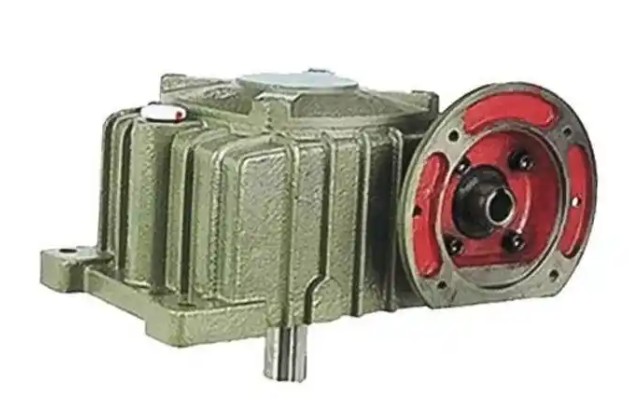
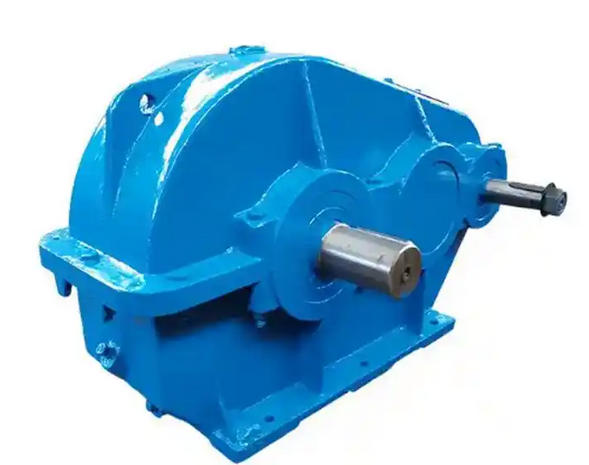
How to avoid errors related to the foundation and fixation during the installation of ZQ650-25-IZ reducer
ZQ650-25-IZ belongs to the ZQ series reducer, and common errors in its installation and fixation are mainly concentrated in the base not meeting standards and improper bolt fastening. This can be avoided through standardized basic construction, precise control of fixed processes, and post installation review and maintenance. Specific measures are as follows:1. Standardize basic construction and build a solid foundation for installation
Ensure the strength and flatness of the foundation: If it is a concrete foundation, it is necessary to ensure that it is cured for 28 days after completing the secondary grouting, and the strength reaches C30 or above; If it is a steel structure platform, Q235B and above plates with a thickness of not less than 20mm should be selected, and UT inspection should be carried out at the welding points to prevent virtual welding. At the same time, the installation surface is treated with a diamond grinding plate to achieve a surface roughness of Ra3.2 or above, with a flatness error controlled within 0.05mm/m. A laser level can also be used to perform 3D inspection of the base to ensure compliance with the installation standard.
Precision pre embedded anchor bolts: Check the installation drawings to ensure that the position, quantity, and specifications of the anchor bolts are consistent with the drawings, and the aperture error does not exceed 1mm. During installation, control the verticality deviation of the bolts to be ≤ 0.1%, clean the bolt holes, and apply butter to reduce friction; If installed in a waterproof area, epoxy resin should be added to the bolt holes for sealing to prevent corrosion of the bolts caused by moisture in the later stage, which may affect the fixing effect.
Clean and treat the installation surface: Before installation, clean the fitting surface between the base and the bottom of the reducer with acetone multiple times to thoroughly remove oil stains, rust, and impurities. If necessary, apply polymer interface agent to enhance the tightness of the bonding surface and prevent vibration caused by gaps in the contact surface during operation.
2. Control fixed processes to avoid assembly deviations
Standardize bolt tightening operation: Develop a pre tightening plan based on bolt specifications. For anchor bolts above M24, it is recommended to use a hydraulic tensioner to load them in three stages (50%, 80%, 100%) to the specified torque; Use a calibrated torque wrench to tighten regular bolts in a symmetrical and gradual sequence. At the same time, spring washers are added to the bolts and threaded locking adhesive is used to form a dual anti loosening insurance to prevent bolt loosening during equipment operation.
Reasonable use of shims for fine adjustment: If there is a slight height difference in the base, a steel shim with uniform thickness and qualified material should be selected for fine adjustment. The shim specifications should preferably cover commonly used sizes such as 0.05-0.1mm, and the number of stacking layers should not be too many to prevent deformation of the shim and affect equipment stability. It is strictly prohibited to replace regular shims with debris.
To avoid distortion of the casing due to force: During the fastening process, observe the status of the gearbox casing in real time. If slight deformation is found on the flange or casing, immediately stop the operation and adjust the tightening sequence and force. Eliminate one-time brute force tightening of bolts to prevent deformation of the box and damage to the accuracy of the internal shaft system.
3. Carry out review and maintenance to consolidate installation quality
Static verification after installation: After fixing is completed, use a level to check the levelness of the reducer again to ensure that the deviation meets the requirements; Use a feeler gauge to check the clearance between the reducer and the base at multiple points, ensuring uniformity ≤ 0.03mm. At the same time, check whether all the anchor bolts are tightened in place, without looseness or skewness.