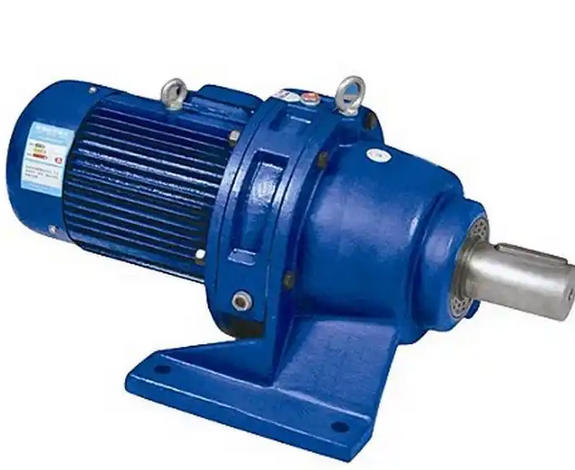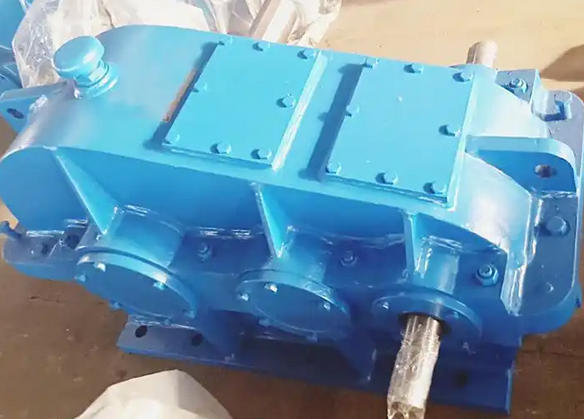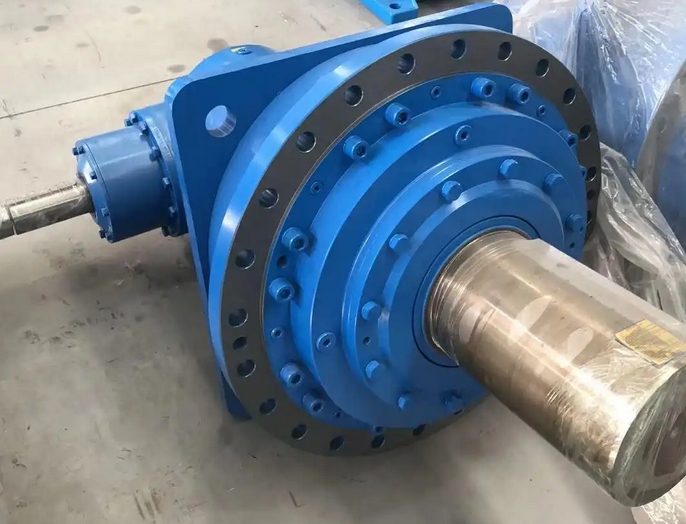


How to determine the effectiveness of the collected vibration signal of QJRS-D280-100-1P reducer by analyzing the degree of noise interference
To determine the effectiveness of the vibration signal of QJRS-D280-100-1P heavy-duty gear reducer, the core is to use "quantitative analysis of noise interference level+equipment feature matching" to eliminate invalid signals (such as environmental noise and installation interference) and retain effective signals that can reflect the true state of the equipment. Here are 8 straightforward judgment methods (sorted by practical priority):Calculate the signal-to-noise ratio (SNR) threshold: Export the effective value (RMS) of the signal through a vibration acquisition instrument, where SNR=signal RMS/background noise RMS. The effective signal of the gear reducer needs to meet the SNR ≥ 10dB (which can be relaxed to SNR ≥ 6dB under heavy load conditions). If SNR<6dB, it indicates that the noise masks the true vibration of the equipment and the signal is invalid.
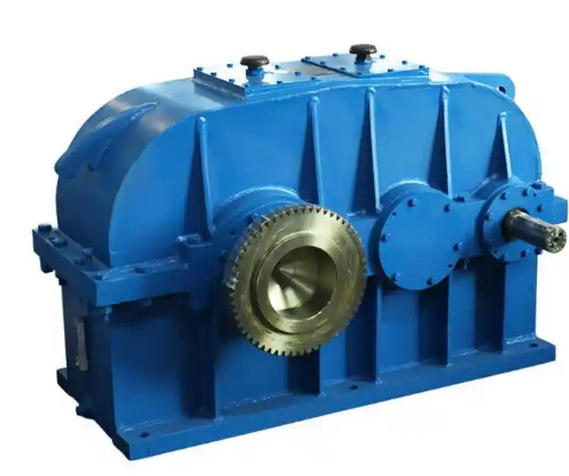
Comparison of background noise benchmark: Collect environmental background noise (at the same measurement point and parameter) when the equipment is stopped. If the difference between the peak/effective value of the vibration signal during operation and the background noise is less than 30%, or if there are no device characteristic frequencies in the spectrum (such as gear meshing frequency and bearing characteristic frequency), then the signal is too affected by environmental noise interference and is invalid.
Analyze the matching degree of spectral features: The spectrum of the effective signal should clearly present the inherent characteristic frequency of the equipment - gear meshing frequency (f_z=motor speed x gear teeth/60), bearing outer ring/inner ring/rolling element characteristic frequency, and the amplitude of these characteristic frequencies should be higher than the noise amplitude by more than 3dB; If the spectrum is chaotic, with only broadband noise peaks and no obvious characteristic frequencies, the signal is invalid.
Observation of time-domain signal stability: The time-domain waveform of the effective signal should exhibit periodic fluctuations (matching the equipment speed and load), without sudden spikes (non impact faults) or irregular chaotic waveforms; If the time-domain signal frequently experiences irregular jumps and amplitude fluctuations exceeding ± 50%, and is unrelated to the operating status of the equipment (such as load changes, speed adjustments), it is mostly electromagnetic interference or installation vibration interference, and the signal is invalid.
Verify the correlation between noise sources: Determine the source of interference by changing the acquisition conditions - ① Turn off surrounding high-power devices (such as fans and pumps). If the amplitude of the vibration signal decreases by ≥ 40%, it indicates that the original signal is invalid due to external electromagnetic/mechanical interference; ② Adjust the installation torque of the sensor (ensure it fits the measured surface, torque ≥ 20N · m). If the signal amplitude changes significantly and tends to stabilize, the original signal will be affected by noise interference due to loose installation and will be invalid.
Comparing the consistency of multiple measurement points: Collect signals from three characteristic measurement points at the input shaft end, output shaft end, and middle of the gearbox. The effective signals should show a "same trend change" (such as when the load increases, the vibration amplitude of the three measurement points synchronously increases); If the signal of a certain measuring point differs from other measuring points by more than 50% and there is no reasonable fault explanation (such as damage to a single point bearing), then the signal of that measuring point is affected by local interference (such as loose sensors or oil stains on the measuring point) and is invalid.
Related News