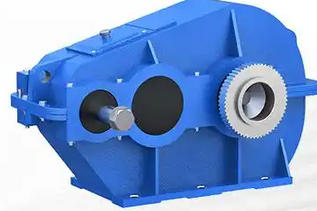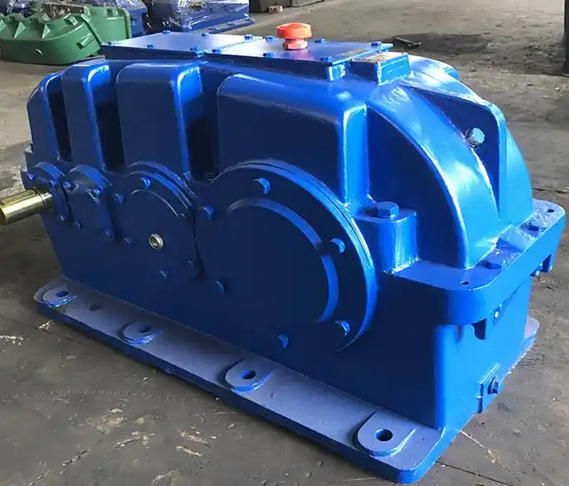

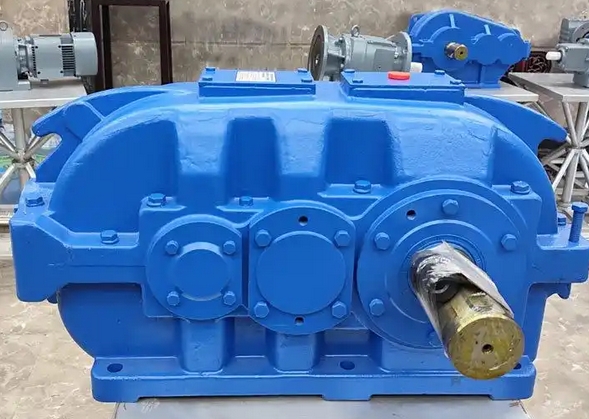
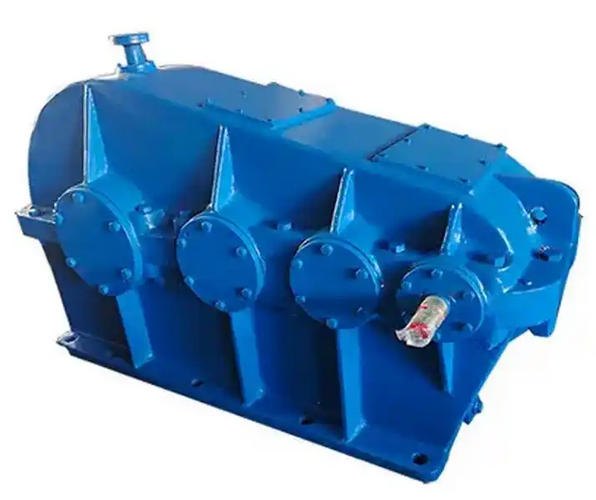
How to determine the material of ZS75-140-II soft tooth surface reducer
To determine the material of ZS75-140-II soft tooth surface reducer, it is necessary to focus on the three core components of gear, shaft, and housing, combined with the design conditions (medium low speed, medium light load, cost sensitive), heat treatment process requirements, and industry standards and specifications of the soft tooth surface reducer. The specific methods are as follows:1. Determination of gear materials (core basis: soft tooth surface quenching and tempering process+load-bearing requirements)
(1) Selection principle: Soft tooth surface gears should meet the hardness requirement of ≤ 350 HBS after quenching and tempering, have good cutting performance, tooth surface contact strength, and tooth root bending strength, and have moderate cost.
(2) Common materials and judgment methods
Priority is given to using 45 # steel: suitable for low-speed and light load conditions, with a hardness of 220-250 HBS after quenching and tempering treatment. Gear hobbing can meet the accuracy requirements and has the lowest cost. It is an economical choice for ZS series soft tooth surface reducers.
40Cr steel is selected for heavy-duty conditions: alloy structural steel, with a hardness of 240-280 HBS after quenching and tempering. Its strength and toughness are better than 45 steel, and its impact resistance is stronger. It is suitable for ZS75-140-II to withstand moderate impact loads.
Judgment criteria: Check the equipment technical drawings or nameplates, and mark "45 steel quenched and tempered" or "40Cr quenched and tempered" as typical identification; If there is no drawing, it can be distinguished by hardness testing (Brinell hardness tester measuring tooth surface hardness ≤ 350 HBS) combined with material composition analysis (spectrometer detecting chromium content, 40Cr contains 0.8% -1.1% chromium, 45 steel has no chromium).
(3) Industry standard reference: GB/T 3480.5-2021 "Calculation of Load Capacity of Cylindrical Gears Part 5: Strength and Quality of Materials" specifies that carbon structural steel or alloy structural steel quenching and tempering treatment is commonly used for soft tooth surface gears.
2. Determination of shaft material (core basis: torque transmission+flexural and torsional strength)
(1) Selection principle: The shaft needs to withstand the torque and radial load transmitted by the gear, and is required to have high comprehensive mechanical properties, match the gear material, and coordinate the heat treatment process.
(2) Common materials and judgment methods
Matching with 45 # steel gear: The shaft is made of 45 # steel and has a hardness of 220-250 HBS after quenching and tempering treatment, meeting the strength requirements of medium and low-speed shafts.
Paired with 40Cr gears or high-speed shafts: The shaft is made of 40Cr steel, which has higher strength after quenching and tempering, and can withstand greater torque and speed, avoiding journal wear or deformation.
Judgment criteria: Due to high speed and concentrated load, 40Cr is preferred for high-speed shafts (input shafts); 45 steel can be used for low-speed shafts (output shafts); Confirmation is assisted by shaft end hardness testing or composition analysis.
3. Determination of Box Material (Core Basis: Rigidity+Vibration Reduction+Casting Craftsmanship)
(1) Selection principle: The box should support the gear shaft system, seal the lubricating oil, and have sufficient rigidity, good vibration and noise reduction performance, and casting processing performance.