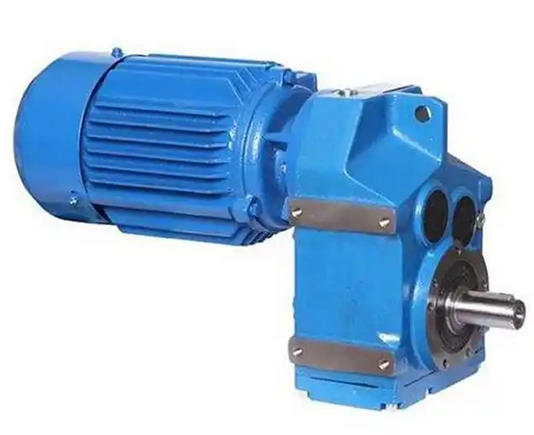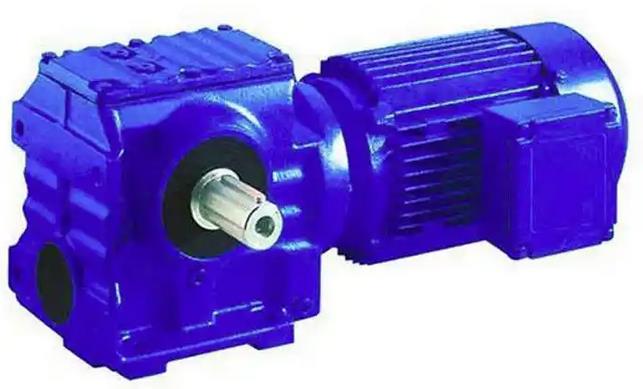

What is the impact of WHT08-63-8Z reducer box material on noise?
The impact of WHT08-63-8Z gearbox body material on noise is indeed a key factor in equipment noise reduction design. From the acoustic properties of the material itself to the structural stiffness, it directly affects vibration transmission and noise radiation levels. Based on current engineering practice and simulation research, cast iron enclosures have better noise reduction performance than cast steel in the mid to low frequency range, but the specific effect still depends on the internal damping characteristics of the material, wall thickness design, and surface treatment process.1、 The direct impact mechanism of box material on noise
The damping characteristics of materials determine their ability to attenuate vibrations
As a carrier of vibration energy propagation, the internal friction (damping) performance of the material of the box determines whether the vibration can quickly attenuate. Cast iron (especially gray cast iron HT250) has high internal damping due to the presence of flake graphite, which can effectively absorb the impact vibration generated by gear meshing and reduce structural noise radiation. In contrast, although cast steel has high strength, its damping performance is lower, and vibration is more likely to propagate continuously, leading to an increase in noise level.
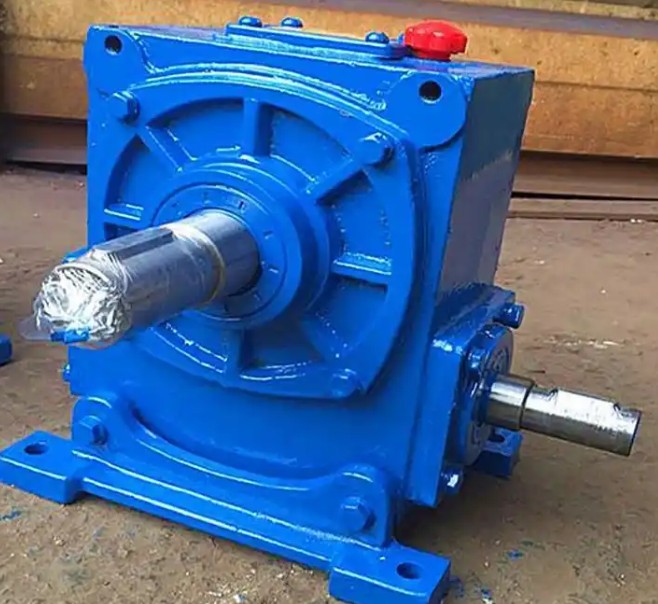
The influence of elastic modulus and density on acoustic radiation efficiency
The stiffness (elastic modulus) and mass (density) of a material jointly determine its acoustic radiation efficiency. High density materials such as cast steel (ρ≈ 7850kg/m ³) have a large mass and high inertia under the same excitation, which theoretically helps to suppress vibration amplitude; But if the damping is too high and insufficient, it will actually enhance the sound radiation in the high-frequency range. Therefore, a reasonable matching of stiffness and damping is crucial.
The rigidity of the box affects the resonance frequency distribution
If the stiffness of the box material is insufficient or the wall thickness design is unreasonable, resonance is prone to occur at the gear meshing frequency and its harmonics, significantly amplifying noise. By selecting high rigidity materials or optimizing the layout of reinforcement plates, the resonance point can be moved out of the working frequency band to avoid resonance amplification effects.
2、 The synergistic effect of machining accuracy and material compatibility on noise
The machining accuracy of box holes affects the bearing support stiffness
The dimensional accuracy, coaxiality, and parallelism of the box holes directly affect the installation status of the bearings. If the aperture deviation is too large, it will cause the outer ring of the bearing to loosen, which will cause high-frequency vibration of the bearing and transmit it to the housing, becoming one of the sources of noise. Research has shown that when the clearance between the housing hole and the outer ring of the bearing is ≤ 0.01mm, the contribution of the bearing to the overall noise of the machine can be significantly reduced.
Manufacturing and assembly errors exacerbate vibration transmission
Even if the material itself has good acoustic properties, if there are tooth alignment errors, tooth profile errors, or radial runout during the manufacturing process, vibrations will still be excited. These vibrations are transmitted to the box through the shaft system. If the damping of the box material is low, it is difficult to effectively suppress them and ultimately radiate out in the form of air noise.
Surface treatment process can assist in noise reduction
Applying damping coatings (such as epoxy resin based composite materials) on the inner and outer walls of the box can further enhance the surface damping performance, especially with a significant suppression effect on mid to high frequency noise. In addition, precision machining of the joint surface and application of sealant can also reduce secondary noise caused by micro loosening.