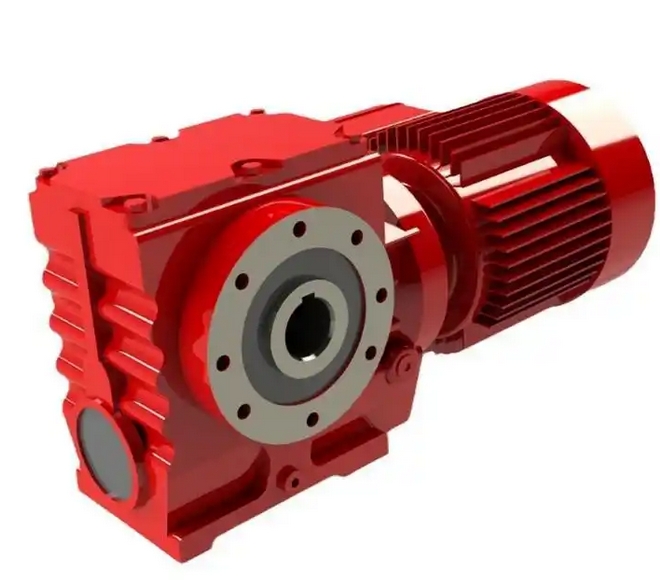

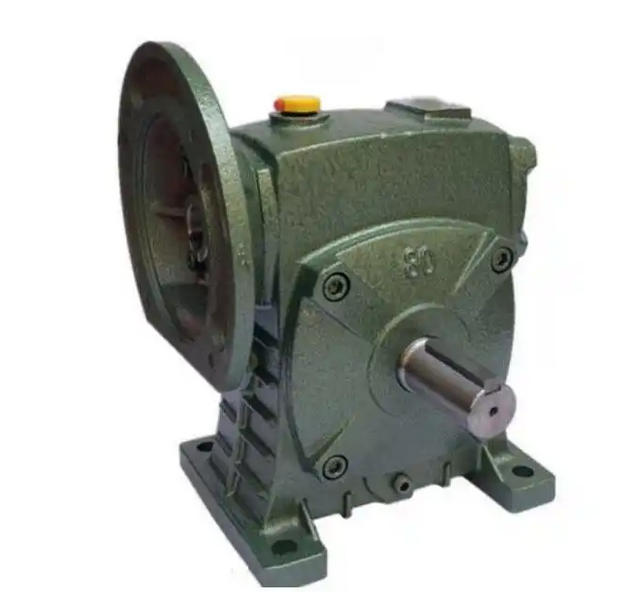
How to adjust the center distance of the worm gear of WPDS135-60-A-4kw reducer
Adjust the center distance of the worm gear of the WPDS135-60-A-4kw reducer. The core is to change the distance between the two axes by adding or removing shims or moving the bearing seat, with the goal of meeting the standards for meshing backlash and contact spots.1、 Preparation and measurement before adjustment
Measure the existing center distance: Use an inside micrometer or feeler gauge to measure the actual distance between the worm axis and the center plane of the worm wheel as the adjustment reference.
Check the verticality of the axis: Ensure that the verticality error of the two axes is ≤ 0.02mm/m, otherwise it will affect the meshing quality.
Measure backlash: Use a dial gauge or lead wire indentation method to measure the current backlash as a reference for adjustment.
2、 Center distance adjustment method
1. Increase center distance:
Loosen the fixing bolts of the worm gear bearing seat.
Install shims between the bearing seat and the base.
Move the bearing seat axially to keep the worm wheel away from the worm gear.
Re tighten the bolts and recheck the verticality.
2. Reduce center distance:
Loosen the bearing seat bolts.
Remove some gaskets or use thinner gaskets.
Move the bearing seat axially to bring the worm wheel closer to the worm gear.
Re tighten and recheck.
3、 Adjusted validation and key parameters
Coloring method to check contact spots: Apply red lead powder on the worm gear tooth surface, rotate the worm gear to observe the contact marks on the worm gear tooth surface. The ideal state is that the spot is centered, covering ≥ 50% along the tooth height direction and ≥ 70% along the tooth length direction.
Recheck the backlash: Adjust the backlash to within the range of 0.08-0.15mm (refer to the equipment manual for details).
Final tightening: After confirming that there are no errors, tighten all bolts in diagonal order and mark them with anti loosening marks.
Related News