

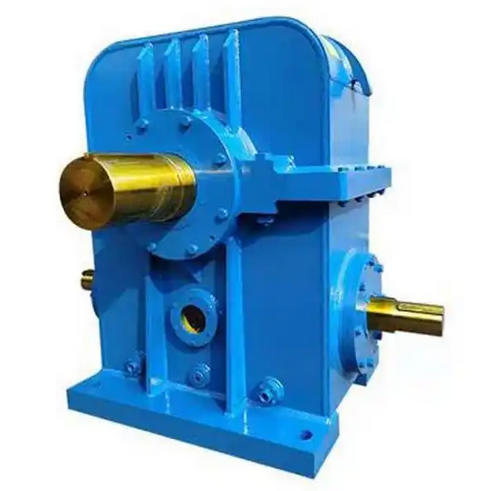
What are the specific effects of load fluctuations and start stop frequency on the performance of DBY series hard tooth surface gear reducers
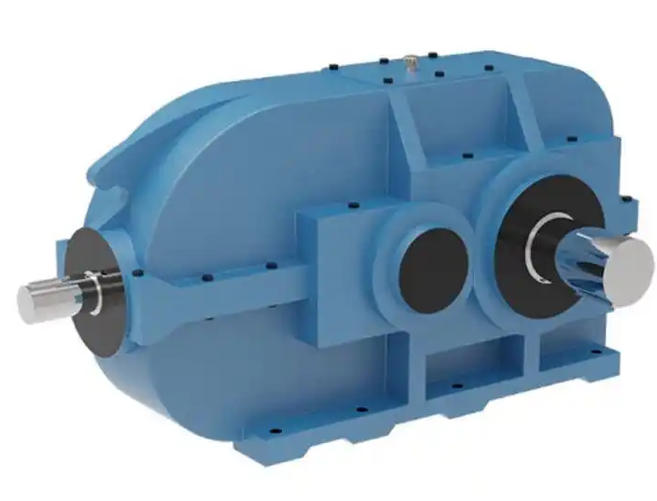
The impact of load fluctuations and start stop frequency on DBY series reducers is mainly reflected in four aspects: gear fatigue life, bearing reliability, temperature rise lubrication, vibration noise, and overall machine life. DBY belongs to a two-stage hard tooth surface conical cylindrical gear reducer, with the first stage being an arc tooth bevel gear and the second stage being a cylindrical helical gear. The tooth surface has high hardness and strong load-bearing capacity, but the hard tooth surface is sensitive to impact loads, lubricant film establishment, and installation accuracy.1. The impact of load fluctuations
2. The impact of start stop frequency
The start stop process is a typical non steady state operating condition, and changes in angular acceleration will significantly amplify the impact and vibration of the gear pair.
(1) Increased starting impact torque: The torque at the moment of starting is usually higher than the torque during steady operation. If the rated torque is selected without checking the peak torque, the bearing capacity of the gears and shafts will be higher for a long time.
(2) Insufficient establishment of lubrication film: At the beginning of each start-up, the oil film on the tooth surface and bearing has not yet been stably established, increasing the risk of dry friction or boundary friction, and accumulating wear faster.
(3) Fatigue acceleration of bearings and gears: Frequent start stop cycles cause the load to be in a cyclic impact state, making the bearing raceway, cage, and tooth root more prone to fatigue damage.
(4) Vibration and noise increase: During the start stop phase, the speed changes rapidly, the gear meshing impact increases, and abnormal vibrations are more likely to occur at the box, base, and coupling.
(5) Intensifying thermal cycling: Repeated start stop cycles can cause temperature fluctuations, making seals, oil seals, and fasteners more prone to aging or loosening, and increasing the risk of oil leakage.