
What are the steps for the on load trial operation of ZSY series hard tooth surface gear reducer
1、 Preparation before trial operation1. Disconnect the load from manual turning: Before officially loading, disconnect the output end load and manually rotate the input shaft to confirm that it rotates smoothly and smoothly without any jamming.
2. Check lubrication and connection: Confirm that the specified model and viscosity of lubricating oil have been injected into the box, and that the oil level is between the upper and lower limit markings specified on the oil gauge (usually at 1/2 to 2/3). At the same time, check whether the connection between the motor and the reducer is tight, whether the coupling is well aligned, and whether safety devices such as protective covers are installed in place.
3. Verify motor rotation direction: Confirm that the motor rotation direction is consistent with the direction indicated on the reducer, and use a phase sequencer to verify the phase sequence of the three-phase motor.
2、 No load trial operation (pre steps)
Before carrying out loaded operation, a no-load test must be conducted to investigate assembly or internal meshing issues:
1. Start the motor and gradually increase it to full speed at 25%~30% of the rated speed. The continuous no-load operation time shall not be less than 2 hours.
2. Monitor various parameters during operation: the temperature of the bearing part should be ≤ 75 ℃, and the temperature of the shell should be ≤ 60 ℃~65 ℃; Radial vibration of input shaft ≤ 2.8mm/s; Noise level at a distance of 1 meter from the device is ≤ 85dB (A); There is no oil leakage at each sealing point. Only after confirming smooth operation, no impact or noise, can we enter the loaded phase.
3、 Graded loaded trial operation
The trial operation with load must be carried out gradually, and direct full load operation is strictly prohibited (especially in high-temperature environments, it is necessary to preheat without load first to allow the lubricating oil to flow fully). The specific loading steps are as follows:
1. Light load operation: Apply 30%~50% of the rated load first and run for 15-30 minutes. Focus on monitoring the motor current (should be ≤ 60% of the rated current), observe whether the load runs smoothly (such as no jamming of the conveyor belt and no shaking of the mixing shaft), and check whether there is oil leakage on the shaft seal and joint surface.
2. Medium load operation: Load to 60%~80% of rated load and run continuously for 1-2 hours. A thermal imaging device can be used to detect the temperature distribution of the box and check for local overheating (which may indicate excessive bearing preload); Confirm that the output torque and speed meet the standards.
3. Rated full load operation: Load to 100% rated load and run continuously for 1-2 hours. Key monitoring indicators include:
Temperature: The temperature of the motor casing is ≤ 80 ℃, the temperature of the reducer casing is ≤ 90 ℃ (grease lubrication) or ≤ 100 ℃ (oil lubrication), the temperature of the bearing part does not exceed 95 ℃, and the oil temperature is ≤ 85 ℃.
Current: Continuously stable and not exceeding the rated current, short-term peak value ≤ 1.2 times the rated current. If the current suddenly rises, stop the machine immediately for troubleshooting.
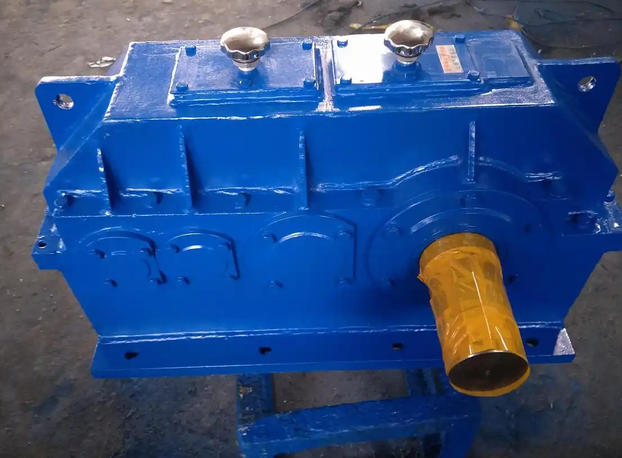
Transmission components: Check if there is any abnormal noise or looseness in the coupling and sprocket, and if the key connection is slipping.
4、 Overload capacity test (optional)
For important equipment, apply 120% rated load for a short period of time (lasting 1-2 minutes) and observe whether the motor can operate normally. After stopping the machine, check for signs of overheating (such as burnt smell) in the gearbox gears and motor windings. If any abnormalities are found, recheck whether the torque output meets the standard.
Related News