
What are the typical faults of the ZLYJ series gear reducers under different loads
1、 Typical faults under light or no-load conditionsUnder light load conditions, the torque borne by the gearbox is relatively small, and faults often expose hidden dangers in assembly accuracy, lubrication system, or sealing components.
Abnormal vibration and periodic abnormal noise: If there is a noticeable "buzzing" or periodic impact sound when unloaded or lightly loaded, it is usually not a problem with gear strength, but rather due to poor installation alignment, loose anchor bolts, or abnormal clearance caused by early bearing wear.
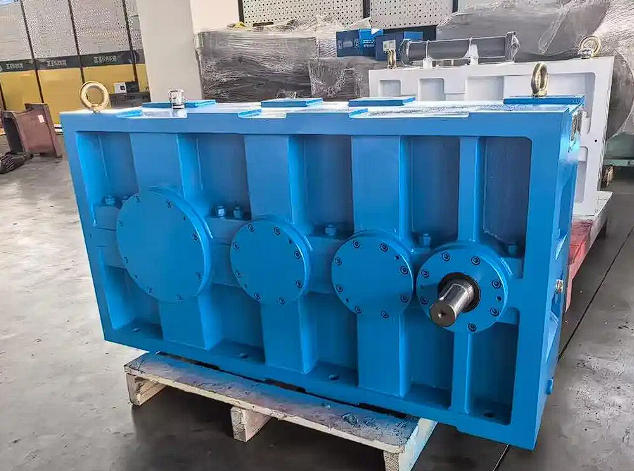
Sealing failure and oil leakage: Under light load, the oil temperature is relatively low, but if there is leakage at the joint surface of the box and the oil seal of the input/output shaft, it indicates that the sealing components have aged or the pressure inside the box has increased due to the blockage of the ventilation cap.
Dry friction noise caused by poor lubrication: If the oil level is too low or the viscosity of the oil does not match, even under light load, gears and bearings will continue to produce friction noise due to the inability to form an effective oil film.
2、 Typical faults under rated load
Continuous operation under rated load mainly tests the thermal balance capability of the gearbox and the fatigue life of its components.
Excessive temperature rise (severe heating): When the load reaches the rated value, if the oil temperature significantly increases (temperature rise exceeds 70 ℃ or oil temperature exceeds 80 ℃), it is usually due to poor heat dissipation, deteriorated lubricating oil, increased oil level leading to increased oil mixing loss, or severe internal bearing/gear friction.
Uniform wear and fatigue pitting on the tooth surface: Long term operation under rated load results in significant cyclic contact stress on the gear meshing surface. If lubrication and maintenance are not in place, the hard tooth surface is prone to early fatigue pitting or uniform wear, resulting in gradually increasing transmission noise.
Abnormal increase in bearing temperature: Under rated load, the bearing is subjected to normal radial and axial forces. If the bearing seat temperature is abnormal, it is necessary to be alert to bearing raceway peeling, cage deformation, or grease failure.
3、 Typical faults under heavy load, overload or impact load
When equipment faces heavy load/impact conditions such as frequent start stop, forward and reverse rotation, or material jamming, faults often have suddenness and destructiveness.
Tooth surface peeling and tooth breakage: In high torque or impact load scenarios such as engineering plastic extrusion and building material mixing, gears are prone to fatigue peeling of the tooth surface due to overload impact, and in severe cases, tooth breakage may occur, leading to instantaneous transmission interruption.
Box deformation and bearing jamming: Excessive impact loads may cause local deformation of the box or wear of the bearing seat holes, thereby damaging the original installation accuracy; At the same time, if lubrication fails under heavy load, it is highly likely to cause tooth surface adhesion or instantaneous bearing jamming.
Output shaft fracture: If the actual torque far exceeds the rated value (such as overload operation), the output shaft may fracture due to stress concentration and fatigue accumulation, which is an extremely serious mechanical failure.