
Comprehensive comparison of performance between LLSH series three ring reducer and traditional reducer without stepping on pits
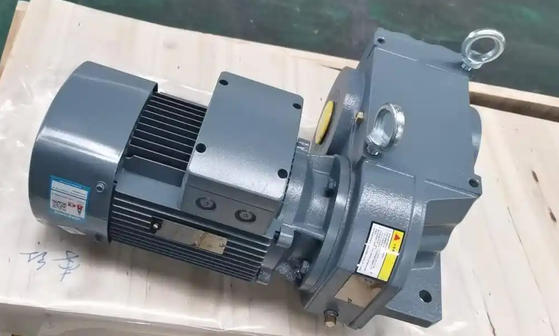
There are many types of industrial reducers, including planetary reducers, cycloidal pinwheel reducers, worm reducers, and ordinary gear reducers, each with their own characteristics. Many companies find it difficult to choose when upgrading equipment or replacing parts. As a new generation of three ring transmission equipment, the LLSH series three ring reducer achieves breakthroughs in multiple performance dimensions with its unique transmission technology. This article provides a comprehensive comparison between it and mainstream traditional reducers, helping everyone to clearly distinguish differences and make accurate selections.1. Firstly, compare the load-bearing capacity with the overload performance. Traditional single-stage gear reducers usually only have 2-3 pairs of teeth meshing, with limited load-bearing capacity, and are prone to tooth breakage and wear when facing impact loads; The contact area of the tooth surface of the worm gear reducer is small, and its overload capacity is weak. The LLSH series three ring reducer relies on three ring plates to achieve 9-18 pairs of teeth meshing simultaneously, with evenly distributed force and significantly improved rated load capacity. The instantaneous overload torque can reach 2.7 times the rated value, making it more adaptable to heavy impact conditions such as mining and metallurgy. Although the cycloidal pinwheel reducer has a decent load-bearing capacity, the wear rate of the needle teeth is fast, and the failure rate during long-term heavy-duty operation is higher than that of the three ring reducer.
2. Next, look at the transmission ratio and transmission efficiency. In terms of transmission ratio, the LLSH series single-stage transmission ratio is 11-99, and the maximum transmission ratio after two-stage series connection can reach 9801, with dense grading, which can meet the speed regulation needs of different equipment. The transmission ratio of ordinary single-stage gear reducers generally does not exceed 10, and the volume will increase significantly after multi-stage combination; Under high transmission ratios, the efficiency of worm gear reducers will sharply decrease. In terms of efficiency, the LLSH series transmission efficiency remains stable at 85% -94%, and approaches 95% under good working conditions. The efficiency of worm gear reducers is generally lower than 80%, and the higher the transmission ratio, the lower the efficiency; Due to significant friction losses, the efficiency of the cycloidal pinwheel reducer will gradually decline over time.
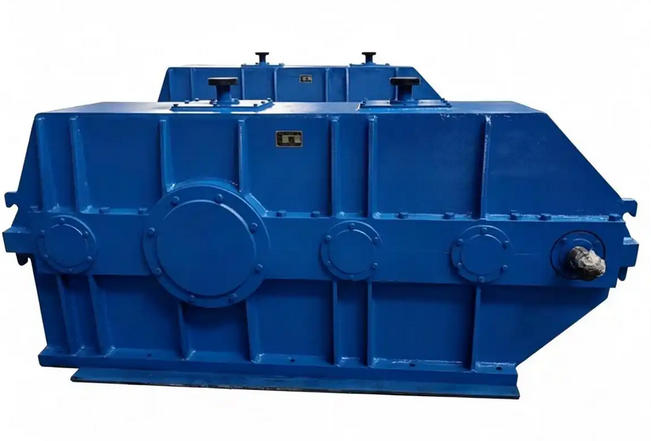
3. Compare the structural volume with the difficulty of operation and maintenance. Under the same torque output conditions, the LLSH series three ring reducer has a compact structure, with a volume only 1/2-1/3 of traditional soft tooth surface gear reducers, lighter weight, flexible installation methods, and can be adapted to various installation forms such as foot and flange. To achieve a large transmission ratio, multi-stage gear reducers require the stacking of multi-stage gears, which are bulky and occupy a large amount of installation space. At the operation and maintenance level, the LLSH series adopts a split type box design, with a well-organized layout of internal components, making disassembly and maintenance very convenient. The number of vulnerable parts is small, and the gear wear is uniform, requiring only regular replacement of lubricating oil for daily use. Worm gears and cycloidal pinwheel reducers are both high loss components that require frequent replacement, resulting in higher maintenance costs in the later stages.
Related News