
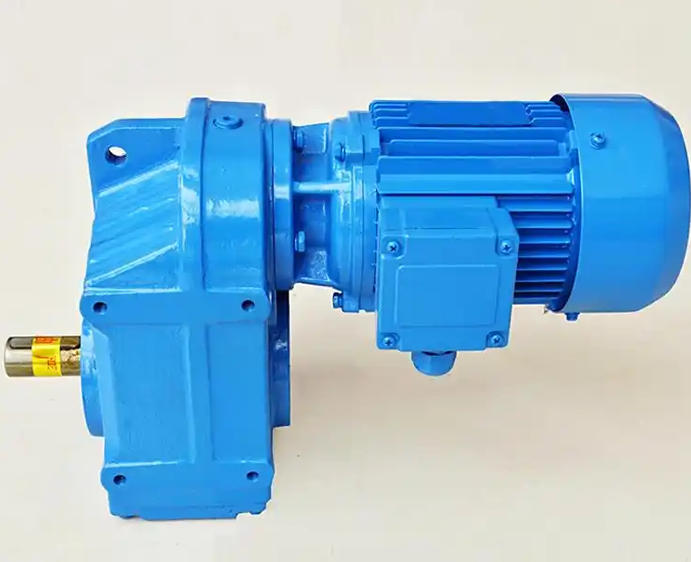
What safety and technical precautions apply to F67 66.13 2.2KW reducer bearing installation
Below are the key precautions for bearing installation of the F67-66.13-2.2KW reducer, summarized based on installation specifications and common faults:
1. Pre-installation Preparation
Cleaning and Inspection
Clean bearings and shaft journals with refined kerosene to remove metal debris. For sealed bearings, only wipe off surface anti-rust oil. Check the diameter tolerance of shaft journals (≤0.01mm) and roundness error of bearing housings (≤0.02mm). Repair components if the tolerance exceeds the limit.
Lubrication
Fill open-type bearings with grease, occupying 1/3 to 1/2 of the bearing cavity. Sealed bearings can be mounted directly.
2. Installation Process Control
Force Application Method
For interference fit of inner rings, strike only the inner ring (not rolling elements) with a copper rod, or adopt hydraulic pressing with a feeding speed ≤2mm/s. For hot mounting, heat the bearing in an oil bath to 80–100°C. The temperature of sealed bearings shall not exceed 80°C.
Axial Positioning
Ensure the bearing fits tightly against the shaft shoulder. After cooling, manually rotate the bearing; it should run smoothly without jamming. The axial clearance must meet design requirements.
3. Post-installation Verification
- Running Test Perform no-load operation for 30 minutes. The temperature rise of bearings shall be ≤25°C, and the maximum operating temperature of rolling bearings shall not exceed 80°C. Measure axial runout with a dial indicator (allowable tolerance ≤0.02mm).
- Seal Inspection Apply soapy water on mating surfaces, then feed compressed air of 0.2 MPa and hold pressure for 15 minutes. No air leakage is permitted.
4. Prevention of Common Problems
Overload Risk: Avoid excessive preload which causes raceway deformation. Lubrication Failure: Regularly check grease condition. Take measures to prevent shaft current corrosion for variable frequency motors.
Related News